


Mga Nilalaman
Ipakita
1. Pagpapakilala
Honeycomb aluminum panel combine lightweight geometry with exceptional strength.
At its core, this composite material consists of two thin aluminum face sheets bonded to a hexagonal aluminum core.
Since the 1960s, manufacturers have refined core expansion and bonding techniques, driving widespread adoption in aerospace, konstruksiyon, at transportasyon.
In addition to its structural benefits, honeycomb aluminum panel offer excellent thermal insulation and acoustic damping.
This article examines material composition, manufacturing processes, performance properties, standards, and applications to demonstrate why honeycomb aluminum panel continue to set benchmarks for high-performance cladding and structural components.
2. Material Composition and Structural Design of Honeycomb Aluminum Panel
Core Components
Aluminum Face Sheets
- Alloy Selection:
- 3003-H24 (Al-Mn Alloy):
- Komposisyon: 1.0–1.5% Mn, balance Al; tensile strength 140–180 MPa, elongation 8–12%.
- Mga kalamangan: Mahusay na kakayahang umangkop, katamtamang lakas, at pagiging epektibo ng gastos (cost: $2.5–3.5/kg).
- Application: General architectural and interior panels.
- 5052-H14 (Al-Mg Alloy):
- Komposisyon: 2.2–2.8% Mg, tensile strength 210–240 MPa, salt spray resistance 1,000+ Mga oras (ASTM B117).
- Mga kalamangan: High corrosion resistance, ideal for coastal buildings and transportation.
- 3003-H24 (Al-Mn Alloy):
Honeycomb Core
- Material:
- 3003 Aluminum Foil-H18:
- Kapal: 0.04–0.06 mm; foil tensile strength 180–200 MPa, ensuring core stability.
- 3003 Aluminum Foil-H18:
- Geometric Parameters:
- Cell Size: 5–6 mm (standard), 3–4 mm (high-strength), 8–10 mm (magaan ang timbang); smaller cells offer higher shear strength (1.8 MPa for 5mm cells vs. 1.2 MPa for 10mm cells).
- Core Thickness: 10–100 mm, customized for load requirements (hal., 25mm core for curtain walls, 50mm core for roofing).
- Structural Mechanics:
- Hexagonal Geometry: Minimizes material usage while maximizing load distribution; each cell acts as a load-bearing column, converting vertical pressure into horizontal shear stress.
Adhesive Layers
- Types:
- Polyurethane Adhesive:
- Mga Katangian: Shear strength ≥40 N/cm, service temperature -40°C to 120°C; commonly used for interior panels.
- Epoxy Resin:
- Mga Katangian: Shear strength ≥60 N/cm, fire resistance (UL 94 V-0), ideal for structural and exterior applications.
- Polyurethane Adhesive:
- Bonding Process:
- Adhesion Promotion: Chromate conversion coating (CAA) or plasma treatment increases bond strength by 30%, reducing delamination risk (defect rate <0.5%).
Structural Design of Honeycomb Aluminum Panel
The honeycomb structure consists of a series of hexagonal cells arranged in a uniform pattern.
This design is inspired by natural structures, such as beehives, which optimize space and material usage.
Dahil dito, panels achieve a flexural stiffness increase of up to 40 % compared to solid aluminum of equivalent weight.
The configuration allows for a lightweight panel that still maintains high levels of strength and rigidity.
The cells provide internal support, preventing buckling and deformation under load while allowing for efficient load distribution across the panel.
3. Manufacturing Processes and Quality Control
Manufacturing Processes of Honeycomb aluminum panel
Aluminum honeycomb core manufacturing
- Materyal na Paghahanda
- Alloy selection: Typical alloys are 3003, 5052, o 6061 Serye, chosen for formability, paglaban sa kaagnasan, at lakas.
- Foil production: Aluminum is hot-rolled into thick coil, then cold-rolled in multiple passes to final foil thickness (commonly 0.03–0.10 mm). Intermediate annealing steps restore ductility.
- Surface treatment: Depending on bonding adhesive, the foil faces may be chemically cleaned or lightly etched to ensure optimal adhesion.
- Stacking & Bonding (“Pre-bonded Block”)
- Stacking: Sheets of cleaned foil are stacked with a thin adhesive layer (thermosetting epoxy or thermoplastic film) between each sheet.
- Cold pre-bond: The stack is lightly pressed to force adhesive into contact zones without fully curing.
- Curing: The pre-bonded billet is placed in an autoclave or heated platen press per adhesive cure cycle (hal., 180 °C for 60–90 min under 0.5–1 MPa pressure).
- Expansion into Honeycomb
- End-grain scoring: The cured block is cut or slit along one axis to create vertical channels.
- Mechanical expansion: Gripping fixtures pull the two ends of the block apart; the unbonded sections between bond lines fan out into hexagonal cells.
- Dimensional control: Tooling ensures uniform cell size (3–25 mm cell diameter) and core thickness to tight tolerances (±0.2 mm).
- Post-Expansion Treatment
- Secondary bonding (if needed): To stabilize honeycomb height or add face-sheets, additional adhesive layers can be applied on one or both faces.
- Heat treatment/Aging: A mild bake (hal., 120 °C for 2 h) may be used to relieve residual stresses and fully stabilize the adhesive network.
Face Sheet Preparation
- Coating: PVDF or polyester coatings applied via roll-to-roll processes (thickness tolerance ±1%).
- Paggamot sa ibabaw: Plasma or chromate pretreatment improves adhesive bonding (peel strength ≥3 N/mm).
Composite Lamination
- Vacuum Pressing: Face sheets and core are bonded under 0.8–1.2 MPa pressure at 120–150°C for 30–60 minutes.
- Post-Processing: CNC machining for precision edges (pagpapaubaya ±0.5 mm) and custom finishes (hal., Email Address *, perforation).
Finishing Options
- Pagpapahid ng langis: Provides a 5–20 µm oxide layer for corrosion protection.
- PVDF Coatings: Offer 70 % resin solids, UV resistance, and color stability for over 20 taon.
- Powder Coatings: Achieve 80–120 µm thicknesses, delivering impact resistance and a wide color palette.

Kontrol sa Kalidad
- Non-Destructive Testing:
- Ultrasonic Scanning: Detects delamination or voids (resolution ≥0.1 mm).
- Visual Inspection: Automated cameras check coating uniformity (color deviation ΔE ≤1.0).
- Pagsubok sa Mekanikal:
- Bending Test: ASTM C393-17 specifies ≥200 MPa flexural strength for structural panels.
- Fire Resistance: Passes EN 13501-1 (Class A2-s1, d0) with smoke density ≤150 Dm.
4. Mechanical and Physical Properties
| Property Category | Metric | Typical Value/Range | Unit/Notes |
|---|---|---|---|
| Structural Performance | Flexural stiffness | 30 – 50 | kN·m²/m |
| Flexural strength | ≥ 5 | MPa | |
| Shear strength | 2 – 4 | MPa | |
| Tensile strength | ≥ 5 | MPa | |
| Thermal Behavior | Thermal conductivity | 0.12 ± 0.02 | W/(m · K) (≈1/5 of solid aluminum) |
| Thermal insulation (R-value) | 0.8 – 1.2 | m²·K/W | |
| Thermal expansion coefficient | 12 – 15 | μm/(m · ° C) (compatible with structural steel) | |
| Acoustic & Damping | Sound attenuation | 20 – 25 | dB @ 500–2000 Hz |
| Damping ratio | 0.04 – 0.06 | – (reduces vibration amplitude by ~15%) | |
| Fire Resistance & Smoke | Flame spread rating (NFPA 285) | Class A | Can also meet A1 under EN 13501-1 |
| Smoke density & toxicity | ≤ 150 | Ds ≤ 150; releases negligible toxic gases |
5. Mga Pamantayan, Certification, and Regulatory Framework
To ensure consistent performance, safety, and environmental compliance, honeycomb aluminum panel must meet a variety of international standards, building codes, and product certifications.
International Standards
- ASTM B843 specifies dimensional tolerances, core density limits, and mechanical requirements for aluminum honeycomb cores. Manufacturers adhere to this standard to guarantee uniform cell geometry and predictable strength properties.
- EN 13169 covers factory-produced sandwich panels, defining requirements for materials, bonding quality, and reaction-to-fire performance. By complying with EN 13169, producers demonstrate that their panels can withstand real-world loads and environmental exposures.
- ISO 9001 lays out criteria for a quality-management system. When a manufacturer achieves ISO 9001 certification, it confirms that they follow systematic processes—from raw-material inspection to final testing—ensuring consistent panel quality and traceability.
Building Codes and Cladding Regulations
- NFPA 285 mandates that multi-story building façades undergo full-scale fire-propagation testing. Honeycomb aluminum panel, when tested according to NFPA 285, must prevent vertical and horizontal flame spread beyond defined limits.
- EN 13501-1 classifies construction products by their performance in fire tests (flame spread, heat release, smoke, and burning droplets). Panels that achieve Class A1 or A2 demonstrate negligible contribution to fire growth and minimal smoke emission, assuring architects and code officials of their safety in façades and interior applications.
Environmental and Safety Certifications
- LEED (Leadership in Energy and Environmental Design) awards points for recycled content, regional manufacturing, and low-emitting materials. Honeycomb aluminum panel often contribute 2–4 credits in the Materials & Resources category by incorporating up to 75 % recycled aluminum.
- RoHS (Restriction of Hazardous Substances) limits the use of lead, cadmium, hexavalent chromium, and other toxic elements in electrical and electronic equipment. Although panels primarily serve in construction, many manufacturers ensure RoHS compliance to meet global supply-chain demands.
- REACH (Registration, Evaluation, Authorization and Restriction of Chemicals) requires companies to register and manage the safe use of chemicals in the European market. By registering their adhesives, coatings, and aluminum alloys under REACH, panel producers demonstrate that they monitor potential health and environmental impacts throughout the product lifecycle.

6. Key Advantages of Honeycomb Aluminum Panel
Exceptional Strength‐to‐Weight Ratio
- Low density: Core densities typically range from 30 sa 80 kg/m³, giving overall panel densities around 3–5 kg/m² per mm of thickness.
- High stiffness: In‐plane (longitudinal/transverse) elastic moduli often exceed 1 000 MPa, while out‐of‐plane bending stiffness can be 5–10× that of a solid plate of equivalent mass.
- Load capacity:
- Compressive strength (flatwise): 2–10 MPa
- Shear strength: 1–5 MPa
- Tensile peel strength: 0.3–1.0 MPa
Energy Absorption & Impact Resistance
- Progressive collapse: Under crush loads, the hexagonal cells progressively fold, dissipating large amounts of energy (ideal for crash structures and blast mitigation).
- High specific energy absorption: 10–50 kJ/kg, depending on cell size and foil thickness.
Thermal & Acoustic Performance
- Thermal conductivity: Core k-values as low as 0.04 W / m · K (depending on cell size), making them modest insulators compared to solid aluminum.
- Sound damping: The cellular structure breaks up sound transmission paths; insertion loss of 5–15 dB in the mid‐frequency range (500–2 000 Hz).
Corrosion & Fire Resistance
- Corrosion: Naturally forms a protective oxide; can be anodized or coated for marine or chemically aggressive environments.
- Fire rating: Non-combustible aluminum core; panels can achieve ASTM E84 Class A ratings when combined with suitable face-sheet and edge-seal materials.
Dimensional Stability & Fabricability
- Flatness tolerances: ±0.2 mm over 1 m span for aerospace‐grade panels.
- Kakayahang machining: Easily cut, drilled, and routed without core collapse, allowing for complex cutouts and tapers.
- Formability: Minor bending (<10 mm radius) possible; for tighter radii, grooving or pre‐forming may be employed.
Environmental & Lifecycle Benefits
- Kakayahang mag-recycle: Both core and face‐sheets are 100 % aluminum—fully recyclable with no performance loss.
- Mahabang buhay ng serbisyo: Minimal creep or fatigue degradation under cyclic loads when properly specified.
7. Applications of Honeycomb Aluminum Panel
Honeycomb aluminum panel excel across diverse industries by leveraging their high strength-to-weight ratio, thermal performance, and design flexibility.
Architectural Engineering
In modern façades and curtain-wall systems, honeycomb panels deliver sleek aesthetics without sacrificing structural integrity.
Architects specify panel spans up to 3 m wide by 10 m tall, reducing substrate framing by 20 % while maintaining wind-load resistance per ASCE 7 standards.
Bukod pa rito, customizable finishes—ranging from PVDF coatings to anodized textures—ensure both color stability over 20 taon and low maintenance.
Dahil dito, project owners report lifecycle cost savings of 10–15 % in cleaning and repaint cycles.
Sektor ng Transportasyon
Across aerospace, rail, and marine applications, weight reduction directly translates into fuel efficiency and payload capacity.
Halimbawa, airline manufacturers integrate honeycomb floor panels and bulkheads that weigh 40 % less than conventional composites, cutting per-flight fuel burn by up to 3 %.
Similarly, high-speed trains adopt honeycomb interior partitions and flooring to reduce car weight by 15 %, enabling higher acceleration and lower energy consumption.
In naval vessels, panels resist corrosion in harsh saltwater environments, extending maintenance intervals by 30 %.
Pang-industriya at Consumer Goods
In clean-room facilities and cold-storage warehouses, honeycomb panels maintain tight temperature control thanks to their low thermal conductivity (≈ 0.12 W / m · K). As a result, refrigeration systems operate 10 % more efficiently.
Meanwhile, manufacturers of office partitions, modular furniture, and exhibition booths rely on panel flatness (≤ 0.5 mm/m deviation) and lightweight handling, cutting installation labor by 25 %.
The panels’ intrinsic rigidity also supports heavy attachments—such as shelving and fixtures—without additional sub-framing.
Signage and Displays
Sign-makers favor honeycomb aluminum panel for large-format graphics, trade-show backdrops, and outdoor wayfinding.
Panels up to 5 mm thick achieve impressive flatness and dimensional stability under temperature swings (−40 °C to 80 ° C), preventing image distortion.
Furthermore, backlit installations benefit from the panels’ fire-safe profiles (Class A) and minimal smoke generation, which comply with city fire-marshal requirements.
In turn, clients experience faster project turnaround—print-to-installation timelines shrink by 30 %—and durable, eye-catching displays that resist warping over years of use.
8. Comparison with Alternative Materials
| Material | Densidad ng katawan (kg/m³) | Flexural Stiffness (kN·m²/m) | Thermal kondaktibiti (W / m · K) | Relative Weight | Relative Cost | Kakayahang mag-recycle | Mga Tipikal na Aplikasyon |
|---|---|---|---|---|---|---|---|
| Honeycomb Aluminum Panel | 50–100 | 30–50 | 0.12 | 1.0× | 1.2× | > 90 % aluminyo | Façades, aerospace flooring, clean rooms |
| Aluminum-Polymer Composite | 500–600 | 15–20 | 0.20 | 4.5× | 0.9× | Mababa (< 50 %) | Email Address *, interior cladding |
| Steel Sandwich Panel | 400–600 | 20–30 | 45.0 | 5.0× | 1.0× | ≥ 85 % bakal | Cold storage, industrial walls |
| Solid Aluminum Plate (same gage) | 2,700 | 20–30 | 237.0 | 27× | 1.1× | 100 % aluminyo | Structural plates, fixtures |
9. Environmental Considerations
Kakayahang mag-recycle
- Closed-Loop Process: At end-of-life, panels are shredded, melted, and reused; 95% of aluminum is recovered, with recycling requiring just 5% of the energy needed for primary production.
- Industry Initiatives: The Aluminum Association’s “Foils for the Future” program aims to achieve 75% recycling rates by 2030, reducing landfill waste significantly.
Pagpapanatili
- Green Manufacturing: Low-VOC adhesives and energy-efficient lamination processes cut carbon emissions by 40% compared to decade-ago methods.
- Life Cycle Benefits: A 20-year lifecycle analysis shows honeycomb panels reduce building energy use by 15%, offsetting their initial carbon footprint within 5 taon.
10. Konklusyon
In conclusion, honeycomb aluminum panel represent a pinnacle of engineering, delivering unmatched strength-to-weight ratios, versatile finishes, and robust thermal and acoustic properties.
As regulatory bodies emphasize sustainability and safety, these panels align perfectly with industry demands.
Dahil dito, architects, mga inhinyero, and manufacturers should consider honeycomb aluminum panel for next-generation lightweight structures and façade systems, ensuring performance, pagsunod, and environmental stewardship.
Mga FAQ
Q1: What is the typical lifespan of honeycomb aluminum panel?
A: 25–50 years with proper maintenance, depending on environmental exposure. PVDF coatings retain color (ΔE ≤3) para sa 30+ taon.
Q2: Can honeycomb panels be used in high-humidity environments?
A: Oo nga, with corrosion-resistant 5052H14 face sheets and closed-cell cores (water absorption ≤0.1%).
Q3: How to recycle honeycomb panels?
A: Separate face sheets and core via thermal decomposition (450-500 ° C), then remelt aluminum for reuse.
Q4: What is the fire resistance of honeycomb panels?
A: Class A2-s1, d0 (EN 13501-1), suitable for fire-rated partitions in buildings.
Q5: Are there size limitations for honeycomb panels?
A: Standard sizes up to 1,500×4,000 mm; custom sizes (hal., 3,000×6,000 mm) available with reinforced cores.
Mga Kaugnay na Produkto
-
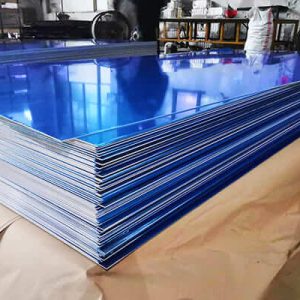
 Aluminyo Sheet Plate, Mga Produkto
6082 Aluminyo Sheet Plate
Pangalan
6082 Aluminyo Sheet PlateKapal
0.3-200mmWidth
100mm – 2600mm,CustomizeSurface
Bright, polished, hair line, brush, sand blast, checkered, embossed, pag-ukit, atbp.Technical
Hot rolled (DC)、Cold rolling (CC) -
 Aluminyo Sheet Plate
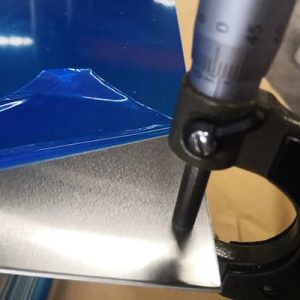
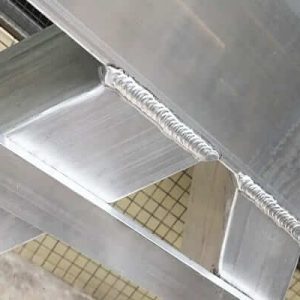
5086 Sheet ng aluminyo
¥3,750.00Unlock the technical advantages of 5086 Sheet ng aluminyo. In-depth analysis of its durability, excellent weldability, and supreme corrosion proofing for critical structures and harsh conditions.
-
 Aluminyo Sheet Plate
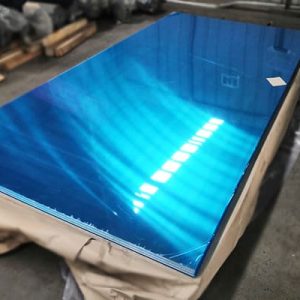
5083 Sheet ng aluminyo
¥3,780.00Discover high-performance 5083 aluminyo sheet, engineered for shipbuilding, Sasakyan, and structural applications. Superior corrosion resistance, weldability, and durability.
-

 Aluminyo Sheet Plate
3104 Sheet ng aluminyo
¥3,500.00Tuklasin ang Mga Pangunahing Tampok ng 3104 aluminyo sheet, kabilang ang mahusay na paglaban sa kaagnasan nito, Kakayahang umangkop, at lakas. Understand its production process and how it compares to other aluminum alloys in the…
-

 Aluminyo Sheet Plate
3004 Sheet ng aluminyo
¥3,860.00Ang 3004 aluminyo sheet mula sa Langhe Aluminum Co. Ito ay isang maraming nalalaman na materyal na kilala para sa kanyang kaagnasan paglaban, katamtamang lakas, at mahusay na kakayahang umangkop. Pangunahin na binubuo ng aluminyo at mangganeso, ito ay…
-
 Aluminyo Sheet Plate
3003 Plato ng aluminyo
¥3,350.003003 aluminyo plate: lumalaban sa kaagnasan, nabubuo, Perpekto para sa mga tangke, bubong & Transportasyon. Magagamit sa H14 / H24 / O tempers, kapal 0.2-150mm. Piliin ang gilingan, naka-embossed o pininturahan na mga tapusin.
-

 Aluminyo Sheet Plate
1000 Serye ng Aluminyo Sheet
¥3,250.001000 serye ng aluminyo sheet: Kilala para sa kanyang mahusay na paglaban sa kaagnasan, Mataas na kondaktibiti ng kuryente, at kakayahang umangkop. Perpekto para sa mga aplikasyon sa kagamitan sa kemikal, Pagproseso ng Pagkain, at mga proyekto sa arkitektura
-
 Aluminyo Sheet Plate
1100 Sheet ng aluminyo
¥3,482.001100 aluminyo sheet mahusay na kaagnasan paglaban, Kakayahang umangkop, Ginagawa itong perpekto para sa mga aplikasyon sa mga kagamitan sa kemikal, Pagproseso ng Pagkain, at mga proyekto sa arkitektura. Alamin kung bakit ito ay isang nangungunang pagpipilian para sa industriya…
-

 Aluminyo Sheet Plate
5754 Sheet ng aluminyo
¥5,208.005754 Ang aluminyo plate ay malawakang ginagamit dahil sa mahusay na ratio ng lakas-sa-timbang nito, paglaban sa kaagnasan at kakayahang machining. Tulad ng: aerospace, Sasakyan, barko, Mga Aplikasyon sa Konstruksiyon, Paglapag ng Pressure Vessel, atbp.
-

 Aluminyo Sheet Plate
1060 Sheet ng aluminyo
¥3,468.001060 Ang aluminyo plate ay isang pangkaraniwang magaan na materyal na kabilang sa 1000 serye ng aluminyo haluang metal. Sikat ito sa merkado dahil sa mababang presyo nito, malakas na paglaban sa kaagnasan at…