




Contents
show
1. Introduction
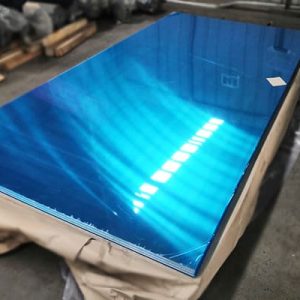
5083 aluminum sheet is a high-magnesium aluminum alloy, also containing significant amounts of manganese and chromium.
It belongs to the 5xxx series of wrought aluminum alloys, which engineers primarily strengthen through strain hardening (work hardening) rather than heat treatment.
Its chemical composition makes it exceptionally resistant to attack by seawater and industrial chemical environments.5083 aluminum stands as a formidable material in the world of non-heat-treatable alloys.
Renowned for its exceptional performance in extreme environments, particularly marine applications, this alloy offers a unique combination of high strength, outstanding corrosion resistance, and excellent weldability.
This article will guide you through the core advantages, detailed technical specifications, processing and fabrication techniques, key applications, comparisons with other alloys, purchasing considerations, and potential limitations of 5083 aluminum sheet.
Our goal is to equip you with a profound understanding of this versatile material.
2. Core Advantages & Salient Features of 5083 Aluminum Sheet
Several distinct advantages make 5083 aluminum sheet a preferred material for challenging projects.
Exceptional Corrosion Resistance
5083 aluminum exhibits outstanding resistance to general corrosion.
It particularly excels in marine environments (saltwater) and against many industrial chemicals.
This resilience is largely due to its magnesium content.
Furthermore, specific tempers, such as H116 and H321, manufacturers specifically process to provide superior resistance to exfoliation corrosion and stress corrosion cracking (SCC), crucial for long-term durability in aggressive settings.
High Strength Characteristics
Among non-heat-treatable aluminum alloys, 5083 aluminum sheet boasts one of the highest strength levels.
This makes it suitable for structural applications where load-bearing capacity is essential.
Its impressive strength-to-weight ratio also contributes to lighter structures without compromising integrity, a significant benefit in transportation and mobile equipment.
Excellent Weldability
Engineers can readily weld 5083 aluminum using various common techniques, including MIG (GMAW) and TIG (GTAW).
The alloy retains a high percentage of its base metal strength in the as-welded condition, producing strong, ductile, and reliable weld joints.
This weldability is a major factor in its widespread use for fabricated structures.
Good Low-Temperature Performance (Resistance to Cryogenic Brittleness)
Unlike many ferrous metals that become brittle at low temperatures, 5083 aluminum sheet actually increases in strength and maintains excellent toughness at cryogenic temperatures.
This property makes it an ideal material for constructing liquefied natural gas (LNG) storage tanks and other cryogenic vessels.

Good Fatigue Resistance
5083 aluminum sheet also demonstrates good resistance to fatigue, an important characteristic for structures subjected to cyclic loading, such as ship hulls and vehicle components.
3. Specifications & Material Science of 5083 Aluminum Sheet
Understanding Chemical Composition
This alloy conforms to various international standards, such as ASTM B209/B928 (for sheet/plate), EN AW-5083, and specific classification society rules (e.g., DNV, ABS, LR, CCS) for marine applications.
| Element | Content (%) (Typical for ASTM B209) |
|---|---|
| Silicon (Si) | ≤ 0.40 |
| Iron (Fe) | ≤ 0.40 |
| Copper (Cu) | ≤ 0.10 |
| Manganese (Mn) | 0.40 – 1.0 |
| Magnesium (Mg) | 4.0 – 4.9 |
| Chromium (Cr) | 0.05 – 0.25 |
| Zinc (Zn) | ≤ 0.25 |
| Titanium (Ti) | ≤ 0.15 |
| Others, each | ≤ 0.05 |
| Others, total | ≤ 0.15 |
| Aluminum (Al) | Balance |
- Magnesium (Mg): The primary alloying element (typically 4.0-4.9%). It significantly enhances strength through solid solution strengthening and improves corrosion resistance.
- Manganese (Mn): Typically 0.4-1.0%. It contributes to strength and controls grain structure.
- Chromium (Cr): Typically 0.05-0.25%. It improves corrosion resistance, especially stress corrosion cracking resistance, and also helps control grain structure.
- Titanium (Ti): Often added as a grain refiner.
Decoding Mechanical Properties (By Temper)
The mechanical properties of 5083 aluminum vary significantly with its temper. Common tempers include:
- O (Annealed): Softest, most ductile state.
- H111: Strain-hardened by a slight amount of working during final shaping.
- H112: Strain-hardened from shaping processes, with no special control over the amount of strain hardening but with mechanical property limits.
- H116: Strain-hardened, specifically for improved resistance to exfoliation and stress corrosion cracking (marine applications). Properties are achieved by specific fabrication processes and controls.
- H32/H34: Strain-hardened and then stabilized (low-temperature thermal treatment) to a quarter-hard/half-hard condition.
- H321: Strain-hardened and stabilized, also for improved resistance to exfoliation and stress corrosion cracking (marine applications).
Table: Typical Mechanical Properties of 5083 Aluminum Sheet (Values are approximate and can vary with thickness and specific standard)
| Temper | Tensile Strength (MPa) | Yield Strength (0.2% offset) (MPa) | Elongation (% in 50mm) | Hardness (Brinell, HBW) |
|---|---|---|---|---|
| O | 275 – 350 | 125 – 180 | ≥ 16 | 65 – 75 |
| H111 | 285 – 360 | 140 – 200 | ≥ 12 | 70 – 80 |
| H116 | ≥ 305 | ≥ 215 | ≥ 10 | ~80 |
| H32 | 305 – 385 | 215 – 295 | ≥ 10 | 80 – 90 |
| H321 | ≥ 305 | ≥ 215 | ≥ 10 | ~80 |
- Tensile Strength: The maximum stress a material can withstand while being stretched or pulled before necking.
- Yield Strength: The stress at which a material begins to deform plastically.
- Elongation: A measure of ductility, indicating how much the material can stretch before fracture.
- Fatigue Strength: Approximately 130-150 MPa for 5×10^7 cycles in rotating beam tests, varying with temper.
Physical Properties
These inherent material characteristics are largely independent of temper.
- Density: Approximately 2.66 g/cm³ (0.096 lb/in³)
- Melting Range: Approximately 570 – 640 °C (1060 – 1180 °F)
- Thermal Conductivity: Approximately 110 – 120 W/m·K (at 25 °C)
- Electrical Resistivity: Approximately 5.8 – 6.0 µΩ·cm (at 20 °C) / Electrical Conductivity: ~29% IACS
- Modulus of Elasticity (Young’s Modulus): Approximately 70.3 GPa (10,200 ksi)
- Coefficient of Thermal Expansion: Approximately 23.8 µm/m·°C (20-100 °C)
4. Processing and Fabrication Guide for 5083 Aluminum Sheet
Effective utilization of 5083 aluminum sheet depends on understanding its processing behavior.
Weldability – A Key Focus
5083 aluminum offers excellent weldability.
- Recommended Welding Methods:
- Gas Metal Arc Welding (GMAW or MIG) is widely used for its speed and efficiency, especially on thicker sections.
- Gas Tungsten Arc Welding (GTAW or TIG) provides high-quality, precise welds, often preferred for thinner gauges or critical joints.
- Recommended Filler Metals:
- 5183: Specifically designed for welding 5083 and similar high-magnesium alloys, offering excellent strength and toughness. It closely matches the base metal’s corrosion resistance.
- 5356: A more general-purpose filler for 5xxx series alloys. It provides good strength but may have slightly lower corrosion resistance in specific severe environments compared to 5183.
- 5556: Offers higher as-welded strength than 5356 or 5183 but might have slightly lower ductility.
- Welding Process Considerations:
- Thorough cleaning of the joint area to remove oxides, moisture, and contaminants is crucial.
- For thicker plates (typically >12mm), preheating to around 100-150°C can reduce thermal stresses and improve weld quality.
- Proper joint design and control of welding parameters are essential to minimize distortion and ensure weld integrity.
Formability
While strong, 5083 aluminum sheet has moderate formability.
- Cold Bending Performance: It can be bent, but requires larger bend radii compared to more ductile alloys like 5052 aluminum sheet, especially in harder tempers. The ‘O’ temper offers the best bendability.
- Deep Drawing and Stamping: Not generally recommended for complex deep drawing due to its higher strength and lower ductility compared to alloys specifically designed for such operations.
- Work Hardening: 5083 aluminum work hardens rapidly. This must be considered during forming operations, as multiple forming stages might require intermediate annealing.
Machinability
The machinability of 5083 aluminum sheet is generally rated as fair.
- It produces somewhat gummy chips, especially in the annealed (O) temper. Harder tempers (e.g., H111, H32) can improve machinability.
- Sharp tools, appropriate rake angles, high cutting speeds, and proper coolants are recommended to achieve good surface finish and minimize tool wear.
Surface Treatment
Various surface treatments can enhance the properties or appearance of 5083 aluminum sheet.
- Anodizing: Can be anodized to further improve its already excellent corrosion resistance and provide a harder surface. However, its decorative anodizing quality (brightness, color uniformity) is generally not as good as alloys like 5005 or 5052.
- Coating (Paint/Powder Coating): 5083 aluminum provides a good substrate for painting and powder coating after proper surface preparation (cleaning, etching, and often a conversion coating). This is a common practice for marine applications to provide additional protection and aesthetic appeal.
- Chemical Conversion Coating: Chromate or non-chrome conversion coatings improve paint adhesion and offer an added layer of corrosion protection.
5. Exploring Key Application Areas of 5083 Aluminum Sheet (5083 in Practice)
The unique properties of 5083 aluminum sheet make it indispensable in several demanding sectors.
Marine Engineering & Shipbuilding (Core Application)
This is the primary domain for 5083 aluminum plate. Its superior corrosion resistance in saltwater, high strength, and excellent weldability make it ideal for:
- Ship hulls, decks, and superstructures for patrol boats, ferries, yachts, and workboats.
- Components for offshore oil and gas platforms.
- Fishing vessel construction.
Cryogenic & Pressure Vessels
Its excellent toughness and increased strength at low temperatures make 5083 aluminum sheet a prime choice for:
- Liquefied Natural Gas (LNG) storage tanks and transportation vessels.
- Storage tanks for other cryogenic liquids (e.g., liquid nitrogen, oxygen).
- Unfired pressure vessels requiring good corrosion resistance.
Transportation
The high strength-to-weight ratio and good weldability benefit various transport applications:
- Tanker truck bodies for transporting fuels, chemicals, and bulk powders.
- Structural components for rail vehicles.
- Dump truck bodies and components for heavy-duty vehicles requiring durability and corrosion resistance.
Structural Components & Heavy-Duty Equipment
Its strength and weldability lend 5083 aluminum to:
- Welded structural assemblies where high strength is critical.
- Crane booms and other components for heavy machinery.
- Mining equipment parts exposed to corrosive environments.
- Certain grades and processes are used for military vehicle armor plate.
Other Applications
Other uses include tooling plate, general engineering applications requiring high corrosion resistance, and heat exchangers where its properties are advantageous.
6. 5083 Aluminum Sheet vs. Other Common Alloys
Choosing the right aluminum alloy is critical for project success. Understanding how 5083 aluminum sheet stacks up against other commonly used aluminum grades and even other materials like steel can help engineers and designers make informed decisions. The following table provides a comparative overview:
| Feature | 5083 Aluminum Sheet | 5052 Aluminum Sheet | 6061-T6 Aluminum Sheet | 7075-T6 Aluminum Sheet | Marine-Grade Steel |
|---|---|---|---|---|---|
| Primary Strengthening | Non-heat-treatable (Strain Hardened, Solid Solution) | Non-heat-treatable (Strain Hardened, Solid Solution) | Heat-treatable | Heat-treatable | Alloying & Heat Treatment |
| Typical Strength | High (for non-heat-treatable Al) | Moderate | High (Comparable to some 5083 tempers) | Very High (Significantly stronger than 5083) | Very High |
| Corrosion Resistance | Excellent, especially in seawater (H116/H321 for SCC) | Very Good, good in marine environments | Good, but less resistant than 5xxx series in aggressive environments | Poor, susceptible to SCC | Poor (Requires extensive coating & maintenance in marine) |
| Weldability | Excellent (High as-welded strength retention) | Excellent | Fair (Significant strength loss in HAZ without PWHT) | Poor (Generally not recommended for fusion welding) | Good (Well-established processes) |
| Formability | Moderate (Larger bend radii needed) | Good to Excellent | Moderate (Less formable than 5052 in T6) | Poor | Good (Varies by grade) |
| Performance at Low Temp | Excellent (Increases strength, maintains toughness) | Good | Good | Fair (Can become brittle) | Can become brittle (Requires special grades for cryogenic) |
| Density (Approx.) | ~2.66 g/cm³ | ~2.68 g/cm³ | ~2.70 g/cm³ | ~2.81 g/cm³ | ~7.85 g/cm³ |
| Primary Applications | Marine structures, LNG tanks, pressure vessels, heavy transport | General sheet metal, marine (less structural), fuel tanks | General structural, architectural, automotive components | Aerospace, high-stress structural parts (non-corrosive) | Heavy structural, shipbuilding (traditional) |
| Cost (General) | Moderate to High | Moderate | Moderate | High | Low to Moderate (Material cost) |
Selection Guide: When Should You Prioritize 5083 Aluminum Sheet?
Based on these comparisons, you should prioritize 5083 aluminum sheet when your application demands:
- Maximum corrosion resistance, especially in saltwater or chemical environments.
- High strength among non-heat-treatable alloys.
- Excellent weldability with good as-welded properties.
- Good performance at cryogenic temperatures.
- A favorable strength-to-weight ratio for structural components where weight saving is crucial.
This tabular comparison highlights the distinct advantages and trade-offs of 5083 aluminum sheet against other materials, aiding in optimal material selection for specific engineering challenges.
7. Supply Specifications & Purchasing Considerations for 5083 Aluminum Sheet
When sourcing 5083 aluminum sheet, several factors are important.
Common Supply Forms
5083 aluminum is primarily available as sheet (typically <6.35mm thick) and plate (≥6.35mm thick).
Thinner gauges may be available in coil form, though less common for the typical applications of 5083.
Typical Thickness, Width, and Length Ranges
- Thickness: Commonly ranges from 3mm up to 150mm or more for plate.
- Width & Length: Standard widths (e.g., 1250mm, 1500mm, 2000mm, 2500mm) and lengths (e.g., 2500mm, 3000mm, 6000mm) are available. Custom sizes can often be sourced.
Surface Conditions
Typically supplied with a mill finish. Protective PVC/PE film coating on one or both sides can be specified to prevent surface damage during handling and fabrication.
How to Choose the Right Temper
The choice of temper is critical:
- O Temper: For maximum formability.
- H111/H112: General purpose, moderate strength with some formability.
- H116/H321: Specifically for marine applications requiring guaranteed resistance to exfoliation and stress corrosion cracking. These are often mandated by classification societies.
- H32/H34: Strain-hardened and stabilized for good strength and stability.
Certification Requirements
For marine and pressure vessel applications, certification from relevant classification societies (e.g., DNV, ABS, Lloyd’s Register, Bureau Veritas, CCS) is often mandatory.
Ensure your supplier can provide material with the required certifications.
8. Limitations & Potential Challenges When Using 5083 Aluminum Sheet
While highly capable, 5083 aluminum sheet has some limitations to consider.
Susceptibility to Stress Corrosion Cracking (SCC)
While generally resistant, 5083 aluminum sheet (especially in highly cold-worked tempers not intended for such service) can become susceptible to SCC if exposed to sustained temperatures above 65°C (150°F) for prolonged periods.
This is due to the precipitation of beta phase (Mg₂Al₃) along grain boundaries, sensitizing the material.
- Mitigation: Using SCC-resistant tempers like H116 or H321, which are specially processed to control microstructure and resist sensitization, is crucial for applications involving elevated temperatures or requiring maximum SCC resistance. Avoid prolonged exposure to temperatures above 65°C for standard tempers.
Formability Limitations
Compared to more ductile alloys like 3003 or 5052, 5083 aluminum sheet is less formable.
It requires larger bend radii and is not ideal for intricate deep-drawing operations.
Cost Considerations
5083 aluminum sheet is generally more expensive than common general-purpose aluminum alloys like 3003 or 5052, and sometimes even 6061, due to its higher alloy content and often more stringent processing controls, especially for certified marine grades.
Decorative Anodizing Appeal
While it can be anodized for protection, the aesthetic quality (brightness, color clarity) of anodized 5083 aluminum sheet is typically inferior to that of alloys like 5005 or even 5052.
This is due to its higher alloy content.
9. Conclusion
5083 aluminum sheet unequivocally proves its worth as a high-performance engineering material.
Its exceptional combination of superior corrosion resistance (especially in marine environments), high strength among non-heat-treatable alloys, and excellent weldability makes it an indispensable choice for critical applications.
From the vastness of the oceans in shipbuilding to the extreme cold of cryogenic storage, 5083 aluminum consistently delivers reliability and durability.
While designers must consider its specific characteristics, such as SCC sensitivity at elevated temperatures and moderate formability, proper temper selection and adherence to best practices in design and fabrication allow its remarkable advantages to be fully realized.
For engineers and designers facing challenging environments, 5083 aluminum sheet remains a trusted and often unparalleled solution.
10. Frequently Asked Questions (FAQ)
Q1: Can 5083 aluminum sheet be used directly in seawater?
A: Yes, 5083 aluminum sheet exhibits excellent corrosion resistance in seawater, making it a prime material for marine applications.
Tempers like H116 and H321 are specifically designed for this purpose.
Q2: What’s the main difference between 5083-H116 and 5083-H321?
A: Both H116 and H321 are tempers of 5083 aluminum sheet designed for superior resistance to exfoliation and stress corrosion cracking in marine environments.
H116 is a strain-hardened only temper, while H321 is strain-hardened and then stabilized (a low-temperature thermal treatment).
Both meet specific corrosion performance criteria, but the processing route differs. Mechanical properties are generally similar.
Q3: What are key precautions when welding 5083 aluminum?
A: Key precautions include meticulous cleaning of the joint, using appropriate filler metals (like 5183 or 5356), controlling heat input, and considering preheating for thicker sections.
Proper joint design and technique are essential to minimize distortion.
Q4: Can 5083 aluminum sheet be heat-treated for strengthening?
A: No, 5083 aluminum sheet is a non-heat-treatable alloy.
Its strength is primarily achieved through solid solution strengthening by magnesium and manganese, and further enhanced by strain hardening (cold working).
Q5: How does the cost of 5083 aluminum compare to other alloys?
A: 5083 aluminum sheet is generally more expensive than common alloys like 3003 or 5052.
Its cost is influenced by higher alloying content and the specialized processing required for tempers like H116/H321, especially when marine certifications are needed.
However, its long-term performance and durability in harsh environments can offer better life-cycle value.
Related products
-

 Aluminum Sheet Plate, Products
6005 Aluminum Sheet
Name
6005 Aluminum SheetThickness
0.3-6.0 mmWidth
1000 mm – 2600 mm,CustomizeSurface
Bright, polished, hair line, brush, sand blast, checkered, embossed, etching, etc.Technical
Wrought alloy、Cold rolling (CC)、Heat treated (T4/T6) -

 Aluminum Sheet Plate
High‑Strength 2024 Aluminum Sheet Plate – Superior Lightweight Performance
¥6,800.00Elevate your projects with 2024 Aluminum Sheet Plate, offering an exceptional strength‑to‑weight ratio, outstanding corrosion resistance, and reliable fatigue strength—ideal for aerospace, automotive, and marine applications.
-

 Aluminum Sheet Plate
Amazing 2024 Aluminum Sheet – The Ultimate Strength Breakthrough
¥6,500.00Explore premium 2024 aluminum sheet, offering exceptional fatigue resistance and elevated tensile strength for aerospace, defense, and high‑performance engineering. Available in T3, T4, and T6 tempers.
-

 Aluminum Sheet Plate
Honeycomb aluminum panel
¥4,500.00Discover how honeycomb aluminum panel deliver superior flexural stiffness, thermal insulation, and fire safety—all at 70% less weight than solid metal. Ideal for façades, aerospace, and industrial design.
-

 Aluminum Sheet Plate
3105 Aluminum Sheet
¥3,450.00Learn why 3105 aluminum sheet is the go-to for packaging, construction, and transportation. With tensile strength up to 210 MPa (H34 temper), food-grade safety, and easy deep drawing, it delivers…
-

 Aluminum Sheet Plate
3104 Aluminum Sheet
¥3,500.00Explore the key features of 3104 aluminum sheet, including its excellent corrosion resistance, formability, and strength. Understand its production process and how it compares to other aluminum alloys in the…
-
 Aluminum Sheet Plate
5005 Aluminum Sheet
¥3,680.00Unlock the potential of 5005 aluminum sheet, ideal for superior anodized finishes in architectural, decorative, and electrical uses. Learn its benefits and why it stands out.
-
 Aluminum Sheet Plate
5052 Aluminum Sheet
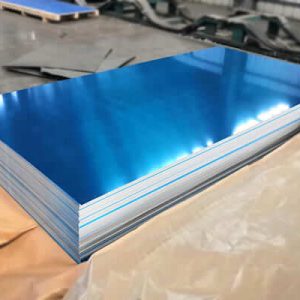
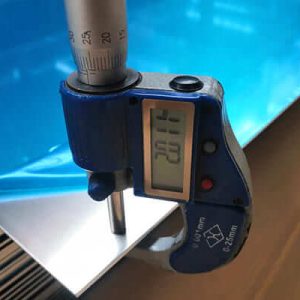
¥5,880.005052 aluminum sheet belongs to the 5000 series aluminum alloy. The main added element is Mg. It is obtained by rolling the aluminum alloy. It has strong corrosion resistance and…
-

 Aluminum Sheet Plate
1060 Aluminum Sheet
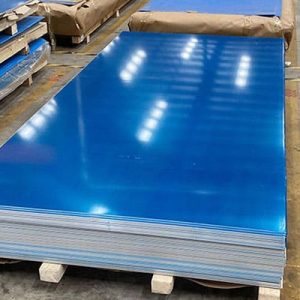
¥3,468.001060 aluminum plate is a common lightweight material belonging to the 1000 series aluminum alloy. It is popular in the market due to its low price, strong corrosion resistance and…
-
 Aluminum Sheet Plate
1050 Aluminum Sheet
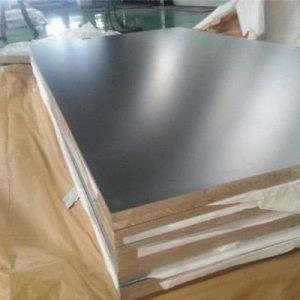
¥3,428.001050 aluminum sheet is a commercially pure aluminum alloy (99.5% aluminum content) that belongs to the 1000 series of aluminum alloys.