




Contents
show
1. Introduction
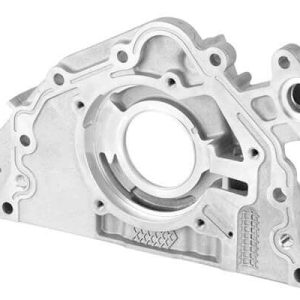
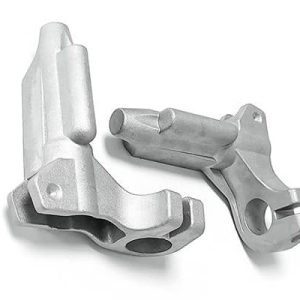
Customized A356 casting aluminum parts deliver tailored solutions for industries demanding high strength, lightweight components, and precise geometries.
By leveraging the A356 aluminum alloy’s unique combination of silicon, magnesium, and titanium, manufacturers achieve superior performance in automotive, aerospace, and energy applications.
As modern manufacturing shifts toward bespoke, high‑volume production, A356 stands out for its adaptability and cost‑efficiency.
2. Understanding A356 Aluminum Alloy
A356 Chemical Composition
| Element | Typical Range | Role in Alloy |
|---|---|---|
| Si | 6.5–7.5 % | Lowers melting point, enhances fluidity and castability |
| Mg | 0.25–0.45 % | Enables age hardening (T6 temper) for higher strength |
| Ti | ≤ 0.20 % | Acts as grain refiner, improving toughness |
| Fe, Cu, Mn, Zn | ≤ 0.20 % each | Controlled impurities minimize brittle phases |
Moreover, A356’s eutectic silicon forms fine, acicular particles after proper heat treatment.
This refined microstructure boosts tensile strength by up to 30 % compared to as‑cast 356.0 alloys, while maintaining excellent ductility.
Mechanical Properties
A356 aluminum alloy offers a compelling suite of mechanical properties, particularly after appropriate heat treatment (e.g., T6 temper – solution heat-treated and artificially aged).
Typical mechanical properties for A356-T6 can include:
- Ultimate Tensile Strength (UTS): 230 – 330 MPa (33 – 48 ksi)
- Yield Strength (YS): 165 – 280 MPa (24 – 41 ksi)
- Elongation (%): 3 – 15% (highly dependent on casting quality and heat treatment)
- Hardness (Brinell): 70 – 100 HB
Physical Properties
- Density: Approximately 2.68 g/cm³ (0.097 lb/in³), significantly lighter than steel or cast iron.
- Thermal Conductivity: Around 151-167 W/m·K, facilitating good heat dissipation.
- Electrical Conductivity: Approximately 37-41% IACS (International Annealed Copper Standard).
- Melting Range: Approximately 570 – 615 °C (1060 – 1140 °F).
3. Advantages of Customized A356 Casting Parts
Excellent Castability:
A356 is renowned for its superior fluidity and low shrinkage, allowing it to fill complex mold cavities and produce intricate, near-net-shape parts.
This reduces the need for extensive secondary machining, saving time and material.
Good Strength-to-Weight Ratio:
This is a hallmark of aluminum alloys, and A356 excels here.
Components can be designed to be robust and durable while minimizing overall product weight, which is critical in automotive, aerospace, and portable equipment.

Ductility and Toughness:
When properly processed and heat-treated, A356 exhibits good ductility and toughness, enabling parts to withstand impact and deformation without fracturing.
Low iron content and silicon modification further enhance these properties.
Fatigue Resistance:
A fine-grained microstructure, achieved through grain refinement and proper casting techniques, imparts good fatigue resistance, making A356 suitable for components subjected to cyclic loading.
Weldability and Machinability:
A356 exhibits good weldability using common TIG and MIG welding processes, allowing for assembly and repair.
It also possesses good machinability, though tool wear can be a consideration with the silicon content.
Corrosion Resistance:
Like other aluminum alloys, A356 forms a protective oxide layer, offering good inherent resistance to atmospheric corrosion.
This can be further enhanced through surface treatments like anodizing.
Heat Treatability:
A356 responds exceptionally well to heat treatment.
Through processes like solution treatment and aging (e.g., T5, T6, T7 tempers), its mechanical properties can be significantly enhanced and tailored to specific application requirements, from peak strength (T6) to improved dimensional stability and stress corrosion resistance (T7).
4. Langhe’s Casting Process for Customized A356 Casting Aluminum Parts
Langhe Precision Manufacturing leverages a suite of advanced casting processes, each carefully selected and optimized to produce high-quality customized A356 aluminum parts.
Our approach ensures that the chosen method aligns perfectly with the part’s complexity, required volume, and performance specifications.
Overview of Casting Processes Employed by Langhe
Langhe possesses expertise in several key casting technologies to effectively meet diverse customer needs for A356 components.
This multi-process capability allows us to offer the most suitable and cost-effective solution for each unique project.
Gravity Die Casting (Permanent Mold Casting)
In this process, molten A356 alloy is poured into reusable metal (typically steel or iron) molds, filling the cavity under the force of gravity.
- Process: We utilize precision-engineered permanent molds, often incorporating sophisticated cooling channels and coatings to control solidification. This results in A356 castings with good dimensional accuracy, a smoother surface finish than sand casting, and enhanced mechanical properties due to the faster cooling rate leading to a finer grain structure.
- Suitability: Ideal for medium to high-volume production of A356 parts requiring consistent quality and moderate complexity.
Low-Pressure Die Casting (LPDC)
LPDC involves introducing molten A356 alloy into the die cavity from below, using low gas pressure (typically 0.02-0.1 MPa) applied to the surface of the melt in a sealed furnace.
- Process: Our LPDC systems enable controlled, non-turbulent filling of the die, minimizing oxide formation and gas porosity. This process yields A356 castings with high integrity, excellent mechanical properties, and high metal yield (often >90%).
- Suitability: Excellent for complex, pressure-tight A356 components like automotive wheels, suspension parts, and intricate housings where structural integrity is paramount.
Sand Casting
This traditional method uses expendable sand molds formed around a pattern.
- Process: We employ both green sand and chemically bonded sand systems (e.g., resin sand) for A356. This allows for flexibility in producing prototypes, very large A356 components, or low-volume custom parts where tooling costs for permanent molds would be prohibitive. We focus on precise pattern making and core setting to achieve the best possible quality from this versatile process.
- Suitability: Best for prototypes, low-volume orders, very large parts, or highly complex internal geometries requiring intricate core work.
Investment Casting (Lost Wax Process)
Investment casting involves creating a ceramic mold around an expendable wax pattern.
- Process: For highly intricate A356 parts with fine details, undercuts, and demanding surface finish requirements, Langhe utilizes investment casting. This process delivers exceptional dimensional accuracy and allows for casting complex geometries that are difficult or impossible with other methods.
- Suitability: Ideal for premium A356 components in aerospace, medical, and high-performance industrial applications where complexity and precision are critical.
Process Selection Criteria at Langhe
The decision on which casting process to use for a customized A356 part is a critical one, guided by:
- Part Complexity and Geometry: More intricate designs may necessitate investment casting or LPDC.
- Production Volume: Die casting and LPDC suit high volumes; sand casting is better for low volumes.
- Dimensional Tolerances and Surface Finish: Investment casting and die casting offer the tightest tolerances and smoothest finishes.
- Mechanical Property Requirements: LPDC and well-controlled gravity die casting often yield superior integrity for demanding applications.
- Cost Considerations: Tooling costs vs. per-part costs are carefully evaluated.
Langhe’s engineering team collaborates closely with clients to determine the optimal casting process for their specific A356 component needs.
5. Langhe Customized A356 Casting Parts Solutions
At Langhe, “customized” means more than just producing a part to a drawing. It signifies a comprehensive solutions-oriented approach. This involves:
- Collaborative Design & Engineering:
We engage early with clients, offering Design for Manufacturability (DFM) support to optimize part designs for A356 casting.
This includes guidance on material temper selection, feature optimization for casting, and potential cost-saving modifications. - Simulation & Prototyping:
Advanced solidification and flow simulation software helps us predict and mitigate potential casting defects before tooling is made.
We also offer rapid prototyping options for A356 parts, allowing for design validation and functional testing. - Tailored Tooling:
Molds and dies are custom-designed and fabricated (or sourced under strict Langhe supervision) specifically for each A356 part, considering alloy characteristics, expected part life, and production volume. - Flexible Production:
Whether it’s a small batch of highly specialized A356 components or a large-scale production run, Langhe has the flexibility to meet diverse volume requirements.
6. Surface Finishes and Secondary Operations
To provide a complete solution, Langhe offers a range of secondary operations and finishing options for customized A356 casting aluminum parts.
Heat Treatment Capabilities
Langhe possesses in-house or closely managed capabilities for various heat treatments, crucial for optimizing A356 properties:
- T5 Temper: Cooled from an elevated temperature shaping process and then artificially aged.
- T6 Temper: Solution heat treated and then artificially aged (most common for high strength).
- T7 Temper: Solution heat treated and then overaged/stabilized (for improved dimensional stability or stress corrosion resistance).
Precise control over furnace atmospheres, temperatures, soak times, and quench rates (e.g., water quench typically provides quench rates of 30-100°C/s for sections up to 25mm) ensures that the A356 castings achieve the desired mechanical properties.
Machining Services
Many A356 castings require subsequent machining for tight tolerances or specific features. Langhe provides:
- Precision CNC Machining: Multi-axis CNC milling and turning centers to achieve exacting dimensional requirements, threaded holes, and critical mating surfaces on A356 parts.
Surface Treatment and Finishing
To enhance appearance, corrosion resistance, or wear resistance, we offer:
- Anodizing: (Type II and Type III/Hardcoat) for improved corrosion/wear resistance and aesthetics.
- Powder Coating & Liquid Painting: For durable and decorative finishes in various colors.
- Chromate Conversion Coating (e.g., Alodine): For corrosion protection and paint adhesion.
- Shot Blasting & Deburring: For surface cleaning and preparation.
Assembly Services
Where applicable, Langhe can provide light assembly services, integrating A356 castings with other components to deliver sub-assemblies, simplifying the client’s supply chain.
7. Applications and Industries Served by Langhe’s Customized A356 Parts
The versatility and performance of Langhe’s customized A356 castings make them indispensable across numerous demanding sectors:
Automotive:
Critical components such as suspension parts (control arms, knuckles), engine blocks, cylinder heads, transmission housings, and increasingly, structural components for electric vehicles (EVs) like battery enclosures and motor housings.
The automotive sector consumed over 18 million metric tons of aluminum in 2022, a significant portion being castings.
Aerospace:
Structural brackets, avionics housings, non-flight critical components, and ground support equipment where lightweight and reliability are paramount.
Industrial Machinery:
Pump housings, valve bodies, robotic arm components, and machine tool parts requiring durability and precision.
Energy Sector:
Components for renewable energy systems (e.g., solar panel frames, wind turbine gearbox housings), heat sinks for power electronics, and parts for traditional power generation.
Medical Equipment:
Structural frames, housings for diagnostic and therapeutic devices, and components requiring biocompatibility (with appropriate surface treatments).
Electronics and Telecommunications:
Enclosures for sensitive electronics, chassis for communication equipment, and heat management components where A356’s thermal conductivity is beneficial.
8. Why Choose Langhe for Customized A356 Castings?
Selecting Langhe aluminum as your partner for customized A356 casting aluminum parts offers distinct advantages:
- Deep A356 Expertise: Extensive metallurgical knowledge and practical experience with A356 alloy and its various tempers.
- True Customization: A genuinely collaborative approach, tailoring every aspect from design to finishing to meet specific client needs.
- Process Versatility: A comprehensive suite of casting processes ensures the optimal method is chosen for each unique part.
- Stringent Quality Assurance: Robust QMS, in-process controls, and advanced inspection (X-ray, CMM, etc.) guarantee consistent quality and reliability. For instance, our X-ray inspection can detect internal porosity as small as 0.5mm.
- End-to-End Solutions: From initial design consultation and prototyping through to machining, finishing, and assembly, Langhe provides a seamless, integrated service.
- Responsive Customer Support: Clear communication and dedicated project management ensure a smooth and efficient partnership.
9. Conclusion
Customized A356 casting aluminum parts have become indispensable in modern manufacturing, offering a winning combination of properties that meet the diverse needs of various industries.
From its unique chemical composition and excellent mechanical and physical properties to the wide range of casting processes available for customization, A356 aluminum provides endless possibilities for engineering innovation.
Langhe, with its comprehensive suite of services and expertise in A356 casting, is at the forefront of delivering high-quality, customized solutions.
As industries continue to evolve and demand more efficient, lightweight, and reliable components, the role of customized A356 casting aluminum parts, and companies like Langhe, will only become more significant in shaping the future of manufacturing.
10. FAQs
Q1: What makes A356 superior for casting?
A356’s high silicon content enhances fluidity and reduces hot tearing, while magnesium enables heat‑treatable strength.
Q2: How thin can Langhe cast A356 walls?
With investment or LPDC, Langhe reliably casts walls down to 2 mm thickness.
Q3: Can I get fully machined, coated, and assembled parts?
Yes. Langhe offers end‑to‑end services, including CNC milling, anodizing, and mechanical assembly.
Q4: How quickly can Langhe prototype A356 parts?
Rapid tooling enables prototypes in as little as 7–10 days, depending on complexity.
Q5: Is A356 suitable for high‑temperature applications?
A356’s service limit sits around 150 °C; for higher temperatures, consider 319 or 356 alloys.
Q6: What is A356 chemical composition?
A356 composed of aluminum (Al), with key alloying elements being Silicon (Si) typically 6.5-7.5%, Magnesium (Mg) typically 0.25-0.45%.
It also contains small amounts of Titanium (Ti) and controlled levels of impurities like Iron (Fe).
Related products
-
 Customized casting aluminum
Mastering ADC12 Aluminum Alloy: The Ultimate Die-Casting Handbook
¥4,200.00Unlock the full potential of ADC12 aluminum alloy—learn its chemical makeup, HPDC best practices, heat-treatment strategies, and top applications from automotive to electronics.
-
 Customized casting aluminum
A380 Aluminum Alloy: The Ultimate Guide to Die-Casting Performance
¥4,225.00Unlock the secrets of A380 aluminum alloy—its composition, mechanical properties, castability, and finishing techniques. Learn why A380 reigns as the die-casting benchmark in automotive, electronics, and industrial applications.