




Contents
show
1. Introduction
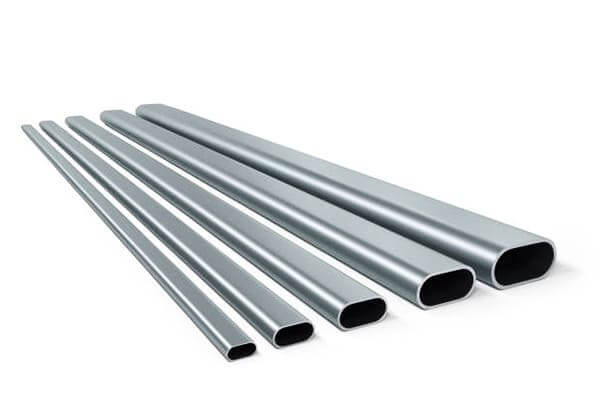
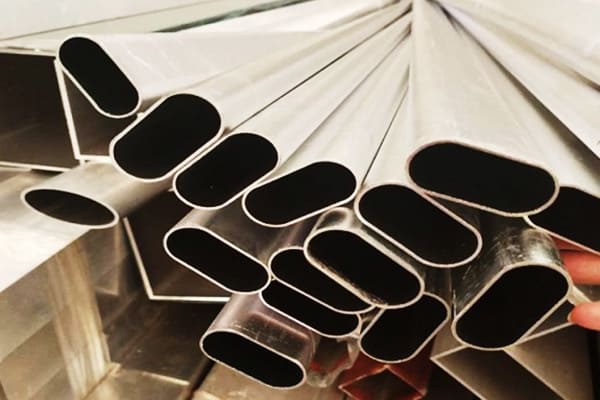
Shaping aluminum tubes into flattened or oval sections serves countless industries—from automotive crash members to architectural handrails.
Unlike machining excess material, forming maintains material continuity, reduces waste, and preserves strength.
Moreover, flattening or ovalizing can tailor tube geometry for specific load paths, improve aerodynamics, or create pleasing profiles.
In what follows, we explore every critical aspect of the flattening/ovalizing process, ensuring you understand how to achieve reliable, high‑quality results.
2. Material Selection for Flattening Ovalize Aluminum Tube
Alloy and Temper Selection: The Key to Formability
Suitable Alloys
- Highly Formable Alloys (3003, 5052):
These non‑heat‑treatable grades contain manganese (3003) or magnesium (5052) to boost ductility.
In the annealed (“O”) condition, 3003‑O achieves elongations above 30 %, allowing tight bend radii down to 1× wall thickness without cracking.
Meanwhile, 5052‑O offers slightly higher strength—yielding around 145 MPa—while maintaining elongation near 25 %, making it ideal for aggressive flattening passes. - Heat‑Treatable Alloys (6061, 6063):
Engineers favor these 6000‑series alloys for their balance of strength and finish.
In T6 temper, 6061‑T6 reaches ultimate tensile strengths of 290 MPa and yields around 245 MPa, though its ductility drops to 12 % elongation.
Conversely, 6063‑T6 delivers smoother extrusions—with surface roughness around Ra 0.8 µm—but offers slightly lower yield strength (170 MPa) and ultimate strength (240 MPa).
Select 6063‑T5 or T4 tempers when you need extra formability (elongation up to 18 %) followed by in‑line aging.
The Critical Role of Temper
- ‘O’ Temper (Fully Annealed):
Maximizes ductility (elongation > 20 %) at the expense of strength.
Use 3003‑O or 5052‑O when you require deep draws or severe flattening in a single pass. - ‘T4’ Temper (Solution‑Treated and Naturally Aged):
Balances moderate strength (yield ~150 MPa) with good formability (elongation ~16 %).
It suits workflows that combine forming with subsequent artificial aging. - ‘T6’ Temper (Solution‑Treated and Artificially Aged):
Provides peak strength but the lowest ductility (elongation ~12 %).
Reserve T6 for light deformations or situations where you can perform forming first in O‑temper, then age to T6 to regain full mechanical properties.
The Physics of Plastic Deformation
When you flatten or ovalize a tube, aluminum must undergo controlled plastic flow.
Understanding stress–strain behavior, work‑hardening, wall‑thinning, and residual stresses helps you predict outcomes and minimize defects.
Stress-Strain Behavior
Aluminum exhibits a linear elastic response up to its 0.2 % yield point, then transitions into strain hardening.
For example, 6061‑O yields around 55 MPa, but after 5 % plastic strain, its instantaneous flow stress can climb above 100 MPa, demanding higher forming forces.
Work Hardening (Strain Hardening)
As deformation progresses, dislocation density increases, boosting hardness and strength.
Cold‑flattening 5052‑O can raise its Brinell hardness from 60 HB to 70 HB within a single pass.
Yet this gain comes at the cost of ductility; planning intermediate anneals at 300–350 °C restores formability for successive passes.
Wall Thickness Variation
Flattened sections see the greatest thinning at the crown of the flat.
Analytical models estimate thinning up to 15 % of original wall thickness when you flatten a Ø25 mm tube to a 10 mm flat.
Use finite‑element analysis (FEA) to refine pass reductions and limit localized over‑thinning.
Residual Stress
Plastic deformation generates tensile residual stress on outer fibers and compressive stress inside.
If unaddressed, these stresses can lead to part distortion or premature fatigue cracking.
A stress‑relief bake—heating formed sections to 300 °C for 1 hour—relaxes internal stresses and stabilizes the profile for subsequent machining or coating.
3. Mechanics of Flattening Ovaliz Aluminum Tube
Flattening Process Overview
Roll flatteners use opposing flat dies or rollers that converge to compress a round tube into a race‑track or flat cross‑section.
Properly sequenced multi‑roll passes prevent wrinkling and ensure uniform thickness.
Ovalizing Process Overview
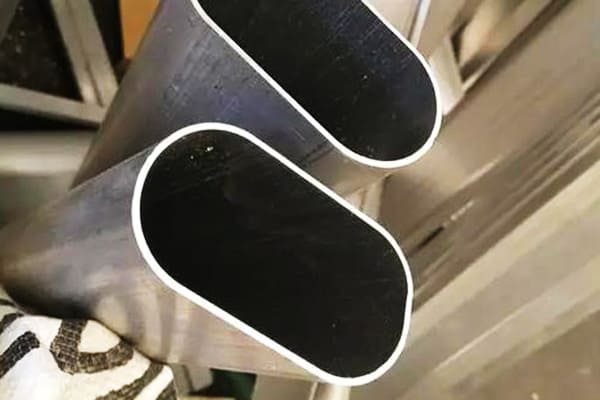
Segmented rollers—arranged in a circular array—progressively deform tubes into precise oval shapes.
Alternatively, hydroforming encloses tubes in a die and applies internal fluid pressure (up to 200 MPa) to expand the tube into the oval cavity.
Material Behavior During Deformation
Aluminum exhibits moderate springback: after unloading, the profile “rebounds” by 1–3 %.
Compensating for springback requires over‑bending or over‑flattening by a calibrated amount.
Critical Parameters
Key factors include:
- Roller Geometry: Crown radius and die angle control strain distribution.
- Forming Speed: Slower speeds (5–10 m/min) reduce dynamic effects and improve surface finish.
- Lubrication: High‑pressure soaps or oils lower friction coefficients below 0.1, minimizing galling.
- Temperature: For stiff alloys, pre‑heating to 150–200 °C can improve formability.
4. Flattening Ovalize Aluminum Tube Manufacturing Processes
Manufacturers rely on precise process control and robust equipment to reshape round tubes into flattened or oval sections.
In this section, we detail the main forming methods, compare hot versus cold deformation, and highlight key parameters and wear considerations that ensure consistent quality.
Cold Flattening: Roll Flatteners and Flat Dies
First, engineers perform cold flattening using roll‑flattening machines or custom flat dies.
A typical roll‑flattening line features 5–7 rollers in a staggered arrangement.
Operators adjust gap settings in successive passes—usually 10–15 % reduction per pass—to limit cumulative wall‑thinning to under 10 %. At line speeds of 3–8 m/min, cold flatteners deliver high throughput while preserving the original temper.
Furthermore, flat dies—machined to precise radii—allow single‑pass forming for smaller tubes (Ø ≤ 25 mm), though they require higher forces (up to 250 kN) and careful alignment to prevent wrinkling.
Ovalizing Techniques: Segmented Rollers and Hydroforming
Next, manufacturers ovalize tubes via segmented rollers or hydroforming.
In a segmented roller setup, 12–18 hardened steel segments rotate to gradually squeeze a round tube into an oval profile.
At speeds of 5–12 m/min, this method achieves dimensional tolerances of ± 0.15 mm on major and minor axes.
In contrast, hydroforming encloses the tube in a split die while pumping fluid to 150–200 MPa of internal pressure.
This approach produces complex oval shapes with wall‑thickness variation below 5 % but requires robust tooling and longer cycle times (typically 30–60 s per part).
Hot vs. Cold Deformation Considerations
Cold forming suits most alloys and preserves surface quality, but it demands higher forming forces and may induce work hardening.
By contrast, hot deformation—in which engineers preheat tubes to 300–350 °C—reduces flow stress by up to 40 %, allowing single‑pass reductions of 20–25 %.
However, hot forming necessitates insulated tooling, careful temperature control (± 10 °C), and post‑process heat treatment to restore peak strength in heat‑treatable alloys.
Process Parameters: Speed, Force, Lubrication, Temperature
To optimize forming, teams monitor four critical variables:
- Speed: Slower speeds (< 10 m/min) minimize dynamic effects and improve surface finish.
- Force: Controlled by gap reduction; for Ø 50 mm tubes, roll‑flattening forces can reach 350 kN.
- Lubrication: Applying high‑pressure calcium‑sulfonate or phosphate ester lubricants drops friction coefficients below 0.1, reducing galling and tool wear.
- Temperature: For alloys like 6061‑T6, pre‑heating to 150 °C enhances ductility without triggering premature aging.
Equipment Design and Tool Wear
Finally, durable tooling and predictive maintenance ensure uptime.
Engineers specify rollers and die hardened to 60–62 HRC and integrate replaceable inserts to simplify refurbishing.
They also employ vibration‑analysis sensors to detect bearing or alignment issues before they cause profile deviations.
By combining robust tool materials, condition monitoring, and well‑tuned process parameters, manufacturers achieve consistent, high‑quality flattened and ovalized aluminum tubes at scale.
5. Design Considerations
Effective design for flattened or ovalized aluminum tubes begins long before the first pass through the rollers.
By carefully specifying initial geometry, defining target cross‑sections, and planning for tolerances and end‑finishes, engineers can avoid costly rework and ensure reliable performance.
Initial Tube Geometry: Diameter, Wall Thickness, Alloy
First, always start with an appropriate base tube.
Larger diameters require more forming force and can amplify spring back, so selecting a diameter that minimizes the required reduction streamlines processing.
In addition, thicker walls resist wrinkling during flattening, but they also demand higher energy input.
Target Oval/Flattened Section: Major/Minor Axes, Flat Width
Next, specify your desired cross‑section dimensions clearly.
When ovalizing, define both major and minor axis lengths; for instance, a 50 × 50 mm tube might become an oval of 70 × 40 mm.
Tolerance Analysis and Dimensional Control
In high‑precision applications, small deviations can derail assembly or compromise performance.
Consequently, establish tolerances upfront—± 0.2 mm for industrial frames or as tight as ± 0.05 mm for aerospace components.
During production, implement statistical process control (SPC) charts to track dimensional drift and springback.
Joining and End‑Finishing for Flattened/Ovalized Sections
Finally, think through how you’ll integrate flattened or oval sections into assemblies.
Flattened ends may require notch cuts or welded flanges for proper seating; oval profiles often need custom collars or clamps to secure tubes in place.
In some cases, designing integral end fittings—machined or cast—can simplify assembly and improve joint strength.
6. Technical Characteristics and Performance
Mechanical Properties Post‑Deformation: Tensile, Yield, Hardness
When you cold‑form a tube, work hardening raises its strength and hardness while slightly reducing ductility.
For example, flattening a 6061‑O tube in three passes can boost its yield strength from 55 MPa to about 110 MPa—a 100 % increase—and elevate Brinell hardness from 60 HB to 75 HB.
However, ultimate tensile strength climbs more modestly (roughly 20 %), and elongation at break falls from 20 % down to 12 %.
Consequently, you gain rigidity at the cost of some formability.
To balance these effects, consider intermediate annealing if you need multiple deformation stages or if you require significant post‑forming machining.
Fatigue Life in Cyclic Loading Applications
Moreover, residual tensile stresses on the tube’s outer fibers can shorten fatigue life under cyclic loads.
In a typical S‑N test, a flattened 5052‑O tube endured 10⁶ cycles at 60 % of its post‑form tensile strength—whereas an annealed tube lasted 1.5 × 10⁶ cycles under the same loading.
By applying a stress‑relief bake (300 °C for 1 hour) or a light shot‑peening treatment, you can reintroduce surface compressive stresses, restoring fatigue life to 90–100 % of the original value.
Impact on Corrosion Behavior and Surface Integrity
In addition to mechanical changes, forming can disrupt aluminum’s natural oxide layer.
Flattened peaks often exhibit micro‑cracks in the 2–4 nm passive film, leaving the metal vulnerable to pitting in chloride environments.
To counteract this, immediately clean formed parts with a mild alkaline solution, then apply a conversion coating or anodizing within 24 hours.
Properly sealed Type II anodic layers (15–25 µm) restore corrosion resistance, yielding lifetimes beyond 15 years even in marine atmospheres.
Thermal Stability: Effects of Heat Exposure During Process
Finally, process heat—whether from hot forming or frictional heating—can over‑age heat‑treatable alloys.
For instance, exposing 6061‑T6 to 200 °C for just 30 minutes drops its yield strength by 10–15 %.
To regain full mechanical properties, follow hot deformation with a T6 re‑aging cycle: solution‑treat at 530 °C, quench, and artificially age at 160 °C for 8 hours.
By integrating this heat‑treatment step into your workflow, you preserve both the elevated hardness from work hardening and the high strength dictated by the T6 temper.
7. Surface Treatments and Finishes
Post‑Deformation Machining and Deburring
Once forming concludes, flattened or ovalized tubes often display sharp edges, material folds, or trapped lubricant residue. Consequently, you should:
- Deburring:
- Automated brushing removes burrs in under 10 seconds per meter, using nylon or abrasive filaments to avoid scratching.
- Electrochemical deburring (ECD) dissolves unwanted material at edges in less than 5 seconds, yielding smooth transitions without mechanical stress.
- Precision Machining:
- CNC milling trims end faces and adds custom features with ± 0.1 mm accuracy.
- Laser cutting produces burr‑free slots and holes with kerf widths as narrow as 0.2 mm, preserving the integrity of the deformed profile.
Anodizing and Its Uniformity Over Deformed Cross‑Sections
Anodizing builds a robust oxide layer that enhances corrosion resistance and allows color customization. For flattened or ovalized tubes:
- Process Parameters:
- Electrolyte: Typically 15 % sulfuric acid at 20 °C.
- Current density: 1.0–1.5 A/dm² yields consistent growth rates of 1.3 µm/min.
- Target thickness: 15–25 µm for architectural use; up to 50 µm for industrial environments.
- Uniformity Challenges:
- Peaks and valleys in the profile can see ± 10 % variation in oxide thickness.
- To compensate, arrange tubes on rotating fixtures and maintain agitation at 100 rpm, ensuring fresh electrolyte reaches recessed areas.
- Sealing:
- Post‑anodizing, immerse parts in boiling 5 g/L nickel acetate solution for 20 minutes.
- Sealing locks in the oxide, reducing porosity by over 90 % and extending outdoor lifespans to 20+ years.
Powder‑Coating, Plating, and Painting on Non‑Uniform Surfaces
- Powder Coating:
- Film Thickness: Aim for 60–80 µm dry film thickness (DFT), measured with magnetic or eddy‑current gauges.
- Application: Use multi‑axis spray guns to reach concave regions; maintain a gun-to-part distance of 200–300 mm.
- Curing: Bake at 180 °C for 20 minutes, resulting in cross‑linked films that resist impact and UV degradation for over 10 years.
- Electroless Plating (Nickel, Copper):
- Provides uniform metal layers (< 10 µm) even on recessed surfaces.
- Pre‑treat with acid etch and activator salts to ensure adhesion; typical deposition rates run 1–2 µm/min.
- Liquid Painting:
- Primer + Topcoat: Apply a 30 µm epoxy primer followed by a 40 µm polyurethane topcoat.
- Drying: Allow 24 hours at 23 °C before handling. This system delivers excellent chemical resistance and a high‑gloss finish.
- Surface Inspection:
- Adhesion Test: Use cross‑hatch methods (ASTM D3359) to confirm > 90 % coating retention.
- Thickness Mapping: Carry out spot checks every 500 mm to verify uniform coverage.
8. Advantages and Limitations of Flattening Ovalize Aluminum Tube
Advantages of Flattening Ovalize Aluminum Tube
- Material Conservation: Forming uses 100 % of the starting tube, minimizing scrap.
- Structural Benefits: Flattened sections offer increased bending resistance in one axis, while ovals resist torsion.
- Aesthetic Appeal: Smooth, continuous profiles enhance product design.
- Cost Efficiency: Avoids machining away metal, reducing cycle times and tooling costs.
Flattening Ovalize Aluminum Tube Limitations
- Springback Control: Demands precise over‑bend calculations or adaptive tooling.
- Tooling Investment: Custom dies and rollers can cost USD 30,000–100,000 for complex profiles.
- Material Constraints: High‑strength alloys may require pre‑heating or multiple anneals.
- Surface Damage Risk: Deformation can mar finishes, necessitating costly post‑processing.
9. Applications of Flattened Ovalized Aluminum Tubes
Automotive and Transportation
In the automotive sector, energy‑absorbing crush members often employ flattened tubes.
For example, a 40 × 40 × 2 mm 6063‑O tube flattened to a 5 mm flat absorbs up to 30 kJ of impact energy in frontal crash tests, outperforming equivalent round sections by 15 %.
Moreover, ovalized roof‑rail tubes (60 × 40 mm oval, 2.5 mm wall) improve interior head clearance while maintaining torsional stiffness, reducing vehicle weight by 2–3 kg per car and yielding a 1 % boost in fuel economy.
Aerospace
Aerospace structures demand the highest specific strength and precision.
Designers pair flattened 7075‑T6 tubes—flattened to flats of 10 mm width—with bonded honeycomb panels to create wing spar caps that achieve 1,200 MPa bending strength at only 0.8 kg/m mass.
In addition, ovalized actuator links (20 × 10 mm oval) deliver ± 0.05 mm positional repeatability under cyclic loads up to 50 kN, meeting stringent fatigue‑life requirements of over 10⁷ cycles.
Industrial Machinery
Industrial conveyors and robotic gantries benefit from flattened tubes that simplify mounting flat‑belt drives and cable trays.
A 50 × 50 × 3 mm tube flattened to a 35 mm flat supports linear guide rails and sensors directly, eliminating brackets and cutting assembly time by 20 %.
Likewise, ovalized tubing in pick‑and‑place robot arms (80 × 40 mm oval) balances high bending stiffness with minimal inertia, improving cycle rates by up to 10 %.
Furniture and Consumer Goods
Finally, product designers leverage formed aluminum tubes for both function and style.
Flattened legs on café tables (25 × 25 × 2 mm tube, 20 mm flat) resist sideways loading of over 1 kN while providing a slim, modern profile.
Meanwhile, ovalized frames for outdoor lounge chairs (50 × 30 mm oval) combine ergonomic curves with durable powder‑coated finishes rated for 5 years of UV and salt‑spray exposure.
These applications demonstrate how flattening and ovalizing elevate both performance and consumer appeal.
10. Langhe Standards, Regulations and Compliance
Based in northern Italy, Langhe Industry adheres to top industry benchmarks:
- ASTM B241 / B221: Governing seamless and extruded tube chemistry, mechanical properties, and dimensional tolerances.
- EN 755‑9: Defining tolerances for extruded profiles and ensuring surface quality and straightness.
- DIN 17615: Specifying requirements for welded and welded‑seamless aluminum tubes.
- ISO 9001 & IATF 16949: Certifying quality management systems, particularly for automotive supply chains.
- RoHS & REACH: Ensuring all materials and processes meet environmental and health regulations within the European Union.
By maintaining these certifications, Langhe guarantees consistent product quality, traceability, and regulatory compliance across global markets.
11. Conclusion
Flattening Ovalize Aluminum Tubes unlocks advanced design possibilities, structural benefits, and efficient material use.
Through careful material selection, process control, and post‑forming treatments, manufacturers can produce profiles that meet stringent mechanical, aesthetic, and regulatory demands.
As technologies evolve—with adaptive tooling, integrated simulation, and hybrid manufacturing—flattened and ovalized aluminum tubes will continue to drive innovation in transportation, architecture, machinery, and beyond.
12. FAQs About Flattening Ovalize Aluminum Tube
Can I flatten aluminum tube without causing cracks?
Yes—by choosing a ductile alloy (e.g., 3003‑O), limiting wall‑thinning to < 15 %, and using proper lubrication and roll sequences, you can achieve crack‑free profiles.
What springback percentage should I expect?
Typical springback for 6061‑T6 is around 1–3 %.
Plan tooling to over‑flatten by this margin or incorporate adaptive control systems.
Is hydroforming better than roll‑ovalizing?
Hydroforming delivers more uniform wall thickness and tighter tolerances (±0.1 mm), but at higher equipment and tooling costs.
Roll‑ovalizing offers higher throughput (up to 20 m/min) at lower capital expense.
Do I need post‑forming heat treatment?
For heat‑treatable alloys, re‑aging (T6) after hot forming restores peak strength.
In many cold‑forming cases, a stress‑relief bake at 300 °C for 1 hour suffices.
How do I maintain surface finish integrity?
Immediately clean formed parts to remove lubricant residues, then apply conversion or anodic coatings within 24 hours.
For critical finishes, consider mechanical polishing after forming.
Related products
-

 Aluminum Tube
Aluminum Square Tube: Lightweight Strength Meets Corrosion Resistance
¥3,580.00Discover how aluminum square tube delivers unmatched strength‑to‑weight, superior corrosion resistance, and endless design flexibility for architecture, transport, and industrial applications.