




1060 aluminum foil designation signifies a specific aluminum alloy known for its high purity, excellent formability, superior conductivity, and good corrosion resistance.
Often referred to as commercially pure aluminum, 1060 alloy provides a unique balance of characteristics that make it indispensable in various sectors, particularly electrical engineering, thermal management, and specialized packaging.
Understanding the nuances of 1060 aluminum foil – its precise composition, mechanical and physical properties, manufacturing intricacies, temper variations, and application spectrum – is crucial for engineers, designers, purchasers, and anyone specifying materials for demanding tasks.
Contents
show
1. Defining 1060 Aluminum Foil: Composition and Classification
Understanding 1060 aluminum foil begins with grasping the aluminum alloy designation system and the definition of “foil.”
1.1. The Aluminum Association Alloy Designation System
The Aluminum Association (AA) system provides a standardized nomenclature for wrought aluminum alloys.
The first digit indicates the principal alloying element(s).
- 1xxx Series: Represents commercially pure aluminum with a minimum purity of 99.00%.The last two digits indicate the minimum aluminum percentage above 99%.For example, 1060 signifies a minimum aluminum purity of 99.60%.The second digit (0 in 1060) indicates control over individual impurities.
1.2. Unpacking the 1060 Alloy Designation
Specifically, 1060 aluminum belongs to the 1xxx series.
- “1”: Indicates it is part of the pure aluminum series (≥ 99.00% Al).
- “0”: Denotes that the impurity limits are the standard ones for this purity level, without special controls on individual impurities beyond standard limits.
- “60”: Signifies that the minimum aluminum content is 99.60%.
Therefore, 1060 is a non-heat-treatable, commercially pure aluminum alloy containing at least 99.60% aluminum by weight.
The remaining fraction consists of controlled impurities like silicon (Si), iron (Fe), copper (Cu), manganese (Mn), magnesium (Mg), zinc (Zn), and titanium (Ti).
Its high purity is central to many of its desirable properties.
1.3. What Constitutes “Foil”?
The term “foil” refers to the product’s thickness or gauge.
Under international standards like ASTM B479 or EN 546, aluminum foil refers to a rolled aluminum product with a thickness below 0.2 millimeters (mm) or 0.0079 inches (in).
Some definitions may use a slightly different upper limit (e.g., 0.006 inches), but the sub-0.2mm range is widely accepted.
Material thicker than this is typically classified as aluminum sheet or strip.
1060 aluminum foil, therefore, is aluminum alloy 1060 produced in thicknesses below this threshold, available in various tempers to suit different applications.
2. Core Properties of 1060 Aluminum Foil: A Detailed Analysis
The performance of 1060 aluminum foil in various applications stems directly from its inherent properties, largely dictated by its high aluminum content.
2.1. Chemical Composition
The precise control of elemental composition defines the 1060 alloy and differentiates it from other grades.
Typical compositional limits according to major standards (e.g., ASTM B209, EN 573-3) are:
Table 1: Typical Chemical Composition Limits for 1060 Aluminum Alloy (% by weight)
| Element | Symbol | Maximum Content (%) | Significance |
|---|---|---|---|
| Silicon | Si | 0.25 | Common impurity; slightly increases strength, reduces conductivity. |
| Iron | Fe | 0.35 | Common impurity; reduces ductility and conductivity, can affect corrosion. |
| Copper | Cu | 0.05 | Impurity; significantly reduces corrosion resistance and conductivity if high. |
| Manganese | Mn | 0.03 | Impurity; minor effects at this level. |
| Magnesium | Mg | 0.03 | Impurity; minor effects at this level. |
| Zinc | Zn | 0.05 | Impurity; minor effects at this level. |
| Titanium | Ti | 0.03 | Can act as a grain refiner but typically an impurity at this level. |
| Other, Each | – | 0.03 | Limits presence of unspecified elements. |
| Other, Total | – | – | Usually implied by minimum Al content. |
| Aluminum | Al | ≥ 99.60 | Base element; determines core properties (conductivity, corrosion). |
Note: Specific limits may vary slightly between different standards (ASTM, EN, ISO, JIS).
The high aluminum content (minimum 99.60%) is the defining feature, directly contributing to its excellent electrical and thermal conductivity, superior corrosion resistance, and high ductility.
The tight control over impurities like iron and silicon is crucial for maintaining these desirable characteristics.
2.2. Physical Properties
These fundamental properties describe the material’s physical nature.
- Density: Approximately 2.70 g/cm³ (0.0975 lb/in³) at room temperature.This low density makes aluminum alloys, including 1060 foil, exceptionally lightweight compared to steel, copper, or brass.This is advantageous in applications where weight saving is critical (e.g., transportation, portable devices).
- Melting Point: The melting range for 1060 aluminum is approximately 646 – 657 °C (1195 – 1215 °F).While high compared to plastics, it’s lower than steel or copper, which influences high-temperature applications and recycling processes.
2.3. Mechanical Properties of 1060 Aluminum Foil
Mechanical properties describe how 1060 aluminum foil responds to applied forces.
These properties are highly dependent on the temper (degree of hardness or work-hardening) of the foil.
Common tempers include ‘O’ (fully annealed, soft) and various ‘H’ tempers (strain-hardened).
Table 2: Typical Mechanical Properties of 1060 Aluminum Foil (Approximate Values)
| Property | Temper ‘O’ (Annealed) | Temper H14 (Strain-Hardened, Half-Hard) | Temper H18 (Strain-Hardened, Full-Hard) | Units | Significance |
|---|---|---|---|---|---|
| Tensile Strength (UTS) | 60 – 100 | 105 – 145 | ≥ 140 | MPa (ksi) | Maximum stress before fracture.
Increases with cold work (H tempers). |
| Yield Strength (0.2%) | ≥ 20 | ≥ 85 | ≥ 115 | MPa (ksi) | Stress at which permanent deformation begins.
Significantly increases with cold work. |
| Elongation (% in 50mm) | ≥ 20 – 30 | ~3 – 8 | ~1 – 5 | % | Measure of ductility; how much it can stretch before breaking.
Decreases sharply with cold work. |
| Hardness (Brinell) | ~19 | ~32 | ~38 | HB | Resistance to indentation.
Increases with cold work. |
Note: Values are typical and can vary based on specific processing, thickness, and standard requirements.
- Temper ‘O’: Offers the highest ductility and formability, ideal for deep drawing, complex bending, or applications requiring maximum softness.It has the lowest strength.
- H Tempers (H1x, H2x, H3x): Result from cold rolling (strain hardening).Higher H numbers (e.g., H18) indicate more cold work, resulting in higher strength and hardness but significantly reduced ductility.Intermediate tempers like H14 or H24 offer a balance.Choosing the correct temper is critical for application success.
2.4. Thermal Properties
How 1060 aluminum foil interacts with heat is vital for many applications.
- Thermal Conductivity: Approximately 231 W/(m·K) at 25°C.This is exceptionally high, second only to copper among common industrial metals.This makes 1060 aluminum foil an excellent material for heat transfer applications like heat exchanger fins, heat sinks, and thermal insulation facings (where it helps distribute heat evenly).
- Thermal Reflectivity: Shiny aluminum foil is highly reflective to radiant heat (infrared radiation), reflecting up to 95-97%.This property, combined with low emissivity (poor ability to radiate heat), makes it effective in radiant barrier insulation.
- Specific Heat Capacity: Around 900 J/(kg·K).This indicates the amount of heat required to raise the temperature of the material.
- Coefficient of Thermal Expansion: Approximately 23.6 µm/(m·°C).Describes how much the material expands when heated.This needs consideration when joining aluminum to other materials with different expansion rates.
2.5. Electrical Properties
The high purity of 1060 aluminum translates directly into excellent electrical characteristics.
- Electrical Conductivity: Approximately 62% IACS (International Annealed Copper Standard).This means its conductivity is about 62% that of pure annealed copper by volume.On a weight basis, aluminum is often more conductive than copper due to its much lower density.
- Electrical Resistivity: The inverse of conductivity, approximately 2.78 µΩ·cm at 20°C.
This high electrical conductivity makes 1060 aluminum foil a primary choice for electrical applications like transformer windings, capacitor electrodes, cable wrapping, and busbars (though often in thicker forms for busbars).
2.6. Corrosion Resistance
1060 aluminum foil exhibits excellent resistance to atmospheric and chemical corrosion.
- Mechanism: Aluminum naturally forms a thin, tough, transparent, and self-healing layer of aluminum oxide (Al₂O₃) on its surface when exposed to air or oxygen.This passive oxide layer protects the underlying metal from further attack in many environments (pH range typically 4 to 9).
- Suitability: Performs well in contact with most foods, freshwater, atmospheric conditions, and many organic chemicals.
- Limitations: Susceptible to attack by strong acids (e.g., hydrochloric acid) and strong alkalis (e.g., sodium hydroxide).Galvanic corrosion can occur if 1060 aluminum is in contact with more noble metals (like copper or stainless steel) in the presence of an electrolyte.Pitting corrosion can occur in chloride-rich environments (e.g., seawater).
2.7. Workability and Formability
Due to its high purity and typically low strength (especially in the ‘O’ temper), 1060 aluminum foil possesses outstanding workability.
- Forming Operations: Easily bent, folded, stamped, drawn, spun, roll-formed, and embossed without cracking, particularly in softer tempers.This allows for the creation of complex shapes and intricate patterns.
- Machinability: Generally considered poor due to its softness, leading to gummy chips.Machining is not a common operation for foil but can be done with sharp tools, high speeds, and appropriate lubrication.
- Weldability: Readily weldable using methods like TIG (Tungsten Inert Gas) and MIG (Metal Inert Gas).Brazing is also possible.Resistance welding can be challenging due to the oxide layer and high conductivity.Welding thin foil requires specialized techniques and skill.
3. Manufacturing Process of 1060 Aluminum Foil
Producing high-quality 1060 aluminum foil involves a sophisticated, multi-step manufacturing process focused on achieving precise thickness, uniform properties, and desired surface characteristics.
3.1. Raw Material Preparation: Primary Aluminum Production
The journey starts with producing primary aluminum of the required purity (≥ 99.60% for 1060).
- Bauxite Mining: Extraction of bauxite ore, the primary source of aluminum.
- Alumina Refining (Bayer Process): Bauxite is chemically processed to extract aluminum oxide (alumina, Al₂O₃).
- Smelting (Hall-Héroult Process): Alumina is dissolved in molten cryolite and electrolytically reduced to produce molten primary aluminum.This energy-intensive step yields aluminum typically >99.7% pure.Alloying elements or controlled impurities are adjusted to meet the specific 1060 composition.
3.2. Casting: Creating the Starting Stock
The molten 1060 aluminum alloy is cast into large blocks suitable for rolling.
- Direct Chill (DC) Casting: The most common method.Molten metal is poured into a water-cooled mold, solidifying into large rectangular slabs (rolling ingots) or cylindrical billets.This process controls the grain structure for subsequent rolling.
3.3. Hot Rolling: Initial Thickness Reduction
The cast ingot, typically heated to around 450-550°C, undergoes hot rolling.
- Process: The heated slab passes repeatedly through large rolling mills, reducing its thickness significantly.Hot rolling allows for large deformations and helps homogenize the internal structure.
- Output: Produces a thick plate or coiled strip, still far thicker than foil.
3.4. Cold Rolling: Achieving Foil Gauges
Cold rolling is the critical step for producing foil with precise thickness control and desired mechanical properties (temper).
- Process: The intermediate strip (at room temperature or slightly elevated) passes multiple times through specialized rolling mills (e.g., 4-high or cluster mills like Sendzimir mills).Each pass reduces the thickness and imparts strain hardening (increasing strength, decreasing ductility).Lubricants are essential to reduce friction and dissipate heat.
- Pack Rolling: For very thin foils (typically below ~0.025 mm), two layers may be rolled together (“pack rolling”).The sides in contact have a matte finish, while the outer sides contacting the polished rolls have a bright finish.This is why standard household foil often has one shiny side and one dull side.
- Gauge Control: Sophisticated sensors (X-ray or isotope gauges) continuously monitor thickness, providing feedback to the mill controls to ensure uniformity across the width and along the length of the coil.
3.5. Annealing: Controlling Temper and Properties
Intermediate and final annealing steps are crucial for controlling the foil’s temper.
- Process: The cold-rolled coil is heated in large furnaces to specific temperatures for a set duration, followed by controlled cooling.
- Purpose:
- Full Annealing (‘O’ Temper): Heating to a higher temperature (e.g., 340-415°C) relieves internal stresses and recrystallizes the grain structure, resulting in the softest, most ductile state.
- Partial Annealing (Intermediate Tempers): Used to achieve specific H2x or H3x tempers by partially softening the strain-hardened material.
- Atmosphere Control: Annealing is often done in controlled atmospheres (e.g., nitrogen) to prevent excessive oxidation or surface discoloration.
3.6. Finishing Operations: Slitting and Packaging
The final wide coil of 1060 aluminum foil undergoes finishing steps.
- Slitting: The wide coil is precisely cut into narrower coils of the required width using rotary knives.
- Surface Treatments (Optional): Foils may undergo additional treatments like chemical cleaning, coating (e.g., lacquers for packaging), printing, or laminating to other materials (paper, plastic).
- Inspection: Quality control checks for thickness tolerance, surface defects, mechanical properties, and dimensional accuracy.
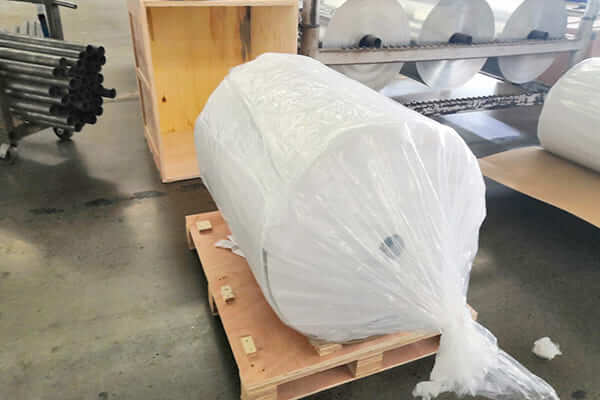
- Packaging: Finished coils are carefully packaged to protect them from damage, moisture, and contamination during transport and storage.
4. Understanding Temper Designations for 1060 Aluminum Foil
The temper designation is as crucial as the alloy number, as it dictates the foil’s mechanical properties and suitability for specific forming operations.
For non-heat-treatable alloys like 1060, tempers are achieved through strain hardening (cold work) and annealing.
4.1. ‘O’ Temper: Fully Annealed
- Description: Produced by fully annealing the foil after rolling.This process removes the effects of strain hardening, resulting in a recrystallized, stress-free microstructure.
- Properties: Lowest strength and hardness, highest ductility and formability.
- Applications: Ideal for applications requiring severe bending, deep drawing, complex shaping, embossing, or maximum softness (e.g., pliable gaskets, highly formable packaging components, artistic metalwork).
4.2. ‘H’ Tempers: Strain Hardened
‘H’ tempers indicate that the foil’s strength has been increased by cold rolling (strain hardening), sometimes followed by thermal treatments.
The designation typically has two or sometimes three digits:
- H1x: Strain Hardened Only:
- H12: Quarter-hard
- H14: Half-hard
- H16: Three-quarters-hard
- H18: Full-hard (maximum practical cold work)
- H19: Extra-hard (more cold work than H18, less common for foil)
- Significance: Strength and hardness increase progressively from H12 to H19, while ductility decreases.Chosen when higher strength is needed than ‘O’ temper, but some formability is still required (lower H numbers) or maximum strength is the priority (H18).
- H2x: Strain Hardened and Partially Annealed:
- H22, H24, H26, H28: Correspond roughly in final strength to H12, H14, H16, H18, respectively.
- Significance: The partial annealing after cold work results in slightly lower strength but potentially better ductility and formability compared to the equivalent H1x temper.Often used to achieve specific intermediate properties.
- H3x: Strain Hardened and Stabilized:
- H32, H34, H36, H38: Stabilization involves a low-temperature thermal treatment after cold work.
- Significance: Primarily used for alloys containing magnesium (like 5xxx series) to prevent age softening.Less common for 1060 foil, but H3x tempers might be specified occasionally.
4.3. Selecting the Right Temper
Choosing the correct temper for 1060 aluminum foil involves balancing strength requirements with formability needs:
- Need maximum formability? Choose ‘O’ temper.
- Need higher strength but still require some bending/forming? Consider H12, H14, H22, H24.
- Need maximum strength and stiffness, with minimal forming? Choose H18, H28.
Consulting material specification sheets and potentially conducting forming trials is essential for critical applications.
5. Key Applications of 1060 Aluminum Foil
The unique combination of high purity, conductivity, formability, and corrosion resistance makes 1060 aluminum foil suitable for a diverse range of applications, particularly where electrical or thermal performance is key.
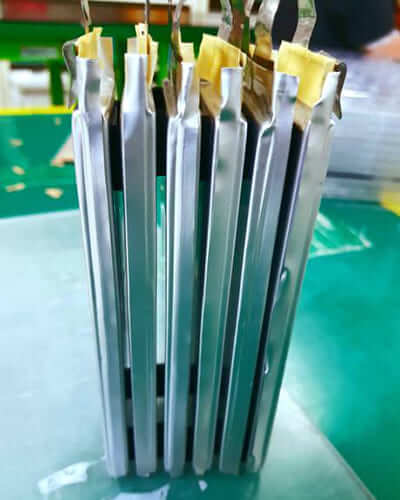
5.1. Electrical and Electronics Industry
This is a primary application area due to its high electrical conductivity and low weight.
- Transformer Windings: Thin 1060 aluminum foil (often in ‘O’ temper for flexibility) serves as an alternative to copper wire for windings in power and distribution transformers, especially dry-type transformers.It offers potential cost savings, weight reduction, and improved heat dissipation due to the large surface area.
- Capacitor Electrodes: Used as the conductive electrode material in electrolytic capacitors and film capacitors due to its high conductivity and ability to be etched or coated.
- Cable Shielding/Wrapping: Employed as a layer in power cables and communication cables to provide electromagnetic shielding (EMI/RFI shielding) and protect against moisture ingress.
- Flexible Printed Circuits (FPCs): Can be used as a conductive layer or base material in some types of flexible circuits, often laminated with insulating polymers.
5.2. Thermal Management and Heat Exchangers
Excellent thermal conductivity drives its use in heat transfer applications.
- Heat Exchanger Fins: 1060 aluminum foil (often in H14 or similar tempers for rigidity) is widely stamped or roll-formed into fins.These fins attach to tubes in devices like air conditioners, radiators, refrigeration coils, and industrial heat exchangers.They dramatically increase the surface area for efficient heat transfer between a fluid inside the tubes and the surrounding air or liquid.
- Heat Sinks: While thicker aluminum is more common for the base of heat sinks, foil might be used for fin extensions or in specialized lightweight heat sink designs.
- Radiant Barrier Insulation: Used as the reflective layer in building insulation (attics, walls), automotive heat shields, and thermal blankets.Its high reflectivity and low emissivity block radiant heat transfer effectively.Often laminated to paper, plastic films, or fiberglass.
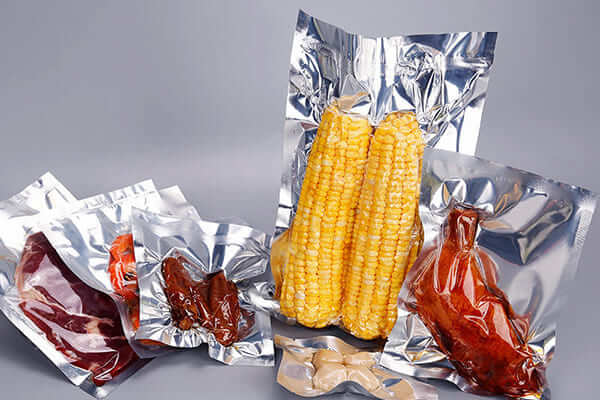
5.3. 1060 Aluminum Foil Packaging Applications
While alloys like 1235 or 8011 are more common for general flexible packaging due to slight property variations or cost factors, 1060 aluminum foil finds use in specific areas.
- Pharmaceutical Packaging: Used in blister pack backing (lidding foil), especially where high purity and excellent barrier properties are paramount.Must meet strict hygiene and food/pharma contact regulations.Often lacquered for heat sealing.
- Food Packaging: Can be used for lids (e.g., yogurt cups), container foil, or specific wrapping applications where its particular properties (e.g., dead-fold characteristics in ‘O’ temper) are beneficial.Requires food-grade certification and appropriate coatings.
- Aseptic Packaging: Components in multi-layer aseptic packaging (like juice or milk cartons) utilize aluminum foil’s absolute barrier properties against light and oxygen.1060 can be one of the alloys used.
5.4. Chemical and Industrial Equipment
Good corrosion resistance and formability lead to niche industrial uses.
- Gaskets and Seals: Soft ‘O’ temper 1060 aluminum foil serves as an ideal material for highly conformable gaskets, sealing joints in chemical equipment, engines, and piping systems where moderate temperatures and precise chemical compatibility are critical.
- Linings: Can be used as a protective lining material inside tanks or vessels containing certain chemicals, leveraging its corrosion resistance.
- Honeycomb Structures: Thin foil can be formed and bonded to create lightweight yet stiff aluminum honeycomb cores used in aerospace, automotive, and construction panels.
5.5. Other Notable Uses
- Cookware Bases: Sometimes used as a layer in the base of stainless steel cookware (impact-bonded base) to improve heat distribution due to its high thermal conductivity.
- Decorative Applications: Can be anodized or coated for decorative purposes, although higher strength alloys might be preferred for durability.
- Lithographic Printing Plates: High-purity aluminum (including grades like 1060) serves as the base material for some offset lithographic printing plates after specific surface treatments.
- Nameplates and Signage: Can be used for embossed or etched nameplates and labels.
6. Advantages of Using 1060 Aluminum Foil
Choosing 1060 aluminum foil offers several distinct benefits:
- High Electrical Conductivity: Excellent for electrical applications, offering a good performance-to-weight ratio compared to copper.
- Superior Thermal Conductivity: Ideal for heat transfer applications, enabling efficient heating or cooling.
- Excellent Corrosion Resistance: Performs well in various atmospheric and chemical environments due to its stable oxide layer.
- Outstanding Formability: Especially in the ‘O’ temper, it can be easily shaped into complex forms without fracture.
- Lightweight: Low density significantly reduces the weight of components and final products.
- Good Barrier Properties: Provides an excellent barrier against light, gases, moisture, and microorganisms, crucial for packaging.
- Non-Toxic and Food Safe: When processed and certified correctly, it is safe for direct contact with food and pharmaceuticals.
- High Reflectivity: Reflects both light and radiant heat effectively.
- Recyclability: Aluminum is highly recyclable without loss of quality, contributing to sustainability.
- Cost-Effectiveness: Generally less expensive than copper for equivalent electrical or thermal performance in many applications, particularly considering weight savings.
7. Considerations and Limitations
Despite its many advantages, 1060 aluminum foil also has limitations:
- Lower Mechanical Strength: Compared to aluminum alloys containing elements like magnesium, silicon, or copper (e.g., 3xxx, 5xxx, 6xxx series), 1060 has relatively low tensile and yield strength, especially in the annealed state.This limits its use in structural applications requiring high load-bearing capacity.
- Sensitivity to Strong Alkalis and Acids: While generally corrosion-resistant, it is vulnerable to attack outside the pH 4-9 range.
- Poor Machinability: Its softness can make machining difficult.
- Lower Wear Resistance: Not suitable for applications involving significant abrasion unless surface treated.
- Temperature Limitations: While the melting point is high, prolonged exposure to moderately elevated temperatures (above ~150-200°C) can lead to annealing effects (softening) in strain-hardened tempers.
- Galvanic Corrosion Risk: Care must be taken when using it in contact with dissimilar metals in corrosive environments.
8. Comparing 1060 Aluminum Foil to Other Common Foil Alloys
Understanding how 1060 aluminum foil compares to other frequently used foil alloys helps in material selection.
| Feature | 1060 Aluminum Foil | 1100 Aluminum Foil | 1235 Aluminum Foil | 3003 Aluminum Foil | 8011 Aluminum Foil |
|---|---|---|---|---|---|
| Min.
Al Purity |
≥ 99.60% | ≥ 99.00% | ≥ 99.35% | ~97% (Alloyed with Mn) | ~97-98% (Alloyed with Fe, Si) |
| Strength | Low | Very Low | Very Low | Moderate (Higher than 1xxx) | Moderate (Higher than 1xxx) |
| Formability | Excellent | Excellent | Excellent | Good | Good |
| Elect.
Conduct. |
Very High (~62% IACS) | High (~59% IACS) | High (~59-60% IACS) | Lower (~40-50% IACS) | Lower (~40-50% IACS) |
| Therm. Conduct. | Very High | High | High | Moderate | Moderate |
| Corrosion Res. | Excellent | Excellent | Excellent | Very Good | Very Good |
| Typical Temper | O, H14, H18 | O, H14, H18 | O, H18 | O, H14, H18, H22, H24 | O, H18, H22, H24 |
| Key Applications | Electrical, Thermal, Gaskets | General purpose, Fins, Chemical Eq. | Flexible Packaging, Capacitors | Cookware, Heat Exchangers, Containers | Flexible Packaging, Containers, Pharma |
| Relative Cost | Moderate | Low | Low | Moderate | Low-Moderate |
Summary of Comparison:
- 1060 vs. 1100/1235:
1060 offers slightly higher purity, leading to marginally better electrical/thermal conductivity and potentially better corrosion resistance in specific environments.1100 and 1235 are often considered more general-purpose pure aluminum foils, sometimes preferred for cost-sensitive packaging. - 1060 vs. 3003:
3003 contains manganese, significantly increasing its strength compared to 1060, but at the cost of reduced conductivity and slightly lower formability.3003 is better for applications needing higher rigidity or moderate structural integrity (like cookware or building panels). - 1060 vs. 8011:
8011 aluminum foil contains iron and silicon, providing higher strength than 1060, similar to 3003, but often optimized for deep drawing and packaging applications (container foil, pharmaceutical packaging).Conductivity is lower than 1060.
Designers typically choose 1060 aluminum foil when superior electrical or thermal conductivity is the primary requirement, or when a specific combination of high purity, excellent formability, and corrosion resistance is needed.
9. Selection Criteria for 1060 Aluminum Foil
When specifying 1060 aluminum foil for a project, consider these key factors:
- Thickness (Gauge): Determine the required thickness based on barrier needs, strength requirements, forming complexity, and electrical/thermal performance calculations.Specify tolerance limits.
- Temper: Select the temper (‘O’, H1x, H2x) that provides the necessary balance between strength, hardness, and formability for the manufacturing process and end-use application.
- Width and Coil Size: Specify the required width (with tolerance) and the desired inner/outer diameter or weight of the coils based on processing equipment.
- Surface Finish: Decide if a bright finish (one or both sides) or matte finish is required.Standard foil often has one bright and one matte side due to pack rolling.Specify requirements for surface cleanliness and freedom from defects (pinholes, scratches, stains).
- Coatings or Laminations: Determine if any surface treatments like lacquers (for heat sealing, protection, or printability), primers, or laminations (to paper or plastic) are needed.Ensure compatibility with food/pharma regulations if applicable.
- Relevant Standards: Specify compliance with necessary industry standards (e.g., ASTM B479 for foil, ASTM B209 for general sheet/plate, EN 546, EN 573-3) to ensure quality and consistency.
- Supplier Qualification: Choose reputable suppliers with robust quality control systems, traceability, and the ability to provide certifications and technical support.
10. Applicable Standards and Specifications
Adherence to established standards ensures consistency, quality, and interoperability.
Key standards relevant to 1060 aluminum foil include:
- ASTM B479: Standard Specification for Annealed Aluminum and Aluminum-Alloy Foil for Flexible Barrier, Food Contact, and Other Applications.(Covers temper, dimensions, quality).
- ASTM B209: Standard Specification for Aluminum and Aluminum-Alloy Sheet and Plate.(Defines chemical composition limits for 1060 alloy).
- EN 546: European Standard series for Aluminum and aluminum alloys – Foil.(Specifies properties, tolerances).
- EN 573-3: European Standard for Aluminum and aluminum alloys – Chemical composition and form of wrought products – Part 3: Chemical composition and form of products.(Defines 1060 composition).
- ISO 7593: International Standard for Aluminum alloy foil for capacitors.
- GB/T 3198 (China): Standard for Aluminum and aluminum alloys foil.
Always refer to the latest versions of these standards and specify the required standard(s) in purchase orders.
11. Sustainability and Recycling
Environmental considerations are increasingly important.
- Energy Intensity: Primary aluminum production is energy-intensive.Using recycled aluminum is crucial for sustainability.
- Recyclability: 1060 aluminum foil, like all aluminum, is highly recyclable.Recycling aluminum requires only about 5% of the energy needed for primary production.
- Recycling Challenges: Thin foil can be challenging to collect and re-melt efficiently.Coatings and food contamination can complicate the process.However, established processes exist, and consumer awareness about cleaning and collecting foil for recycling is growing.
- Life Cycle Assessment: The overall environmental impact depends on factors like the percentage of recycled content used, energy sources for production and recycling, and end-of-life management.The lightweight nature of aluminum often contributes positively to the life cycle impact of products where it’s used (e.g., lower fuel consumption in vehicles).
Manufacturers and users of 1060 aluminum foil should prioritize sourcing from suppliers who use sustainable practices and high recycled content, and support effective recycling programs.
12. Frequently Asked Questions (FAQ)
Q1: Is 1060 aluminum foil food grade?
A1: 1060 aluminum foil can be produced to meet food-grade standards, but it requires specific compliance regarding raw materials, lubricants used during rolling, cleaning processes, and potentially certified coatings if applied.
Always verify food-grade certification (e.g., FDA, EFSA compliance) from the supplier if the foil will contact food.
Q2: What is the main difference between 1060 and 1100 aluminum foil?
A2: The primary difference is purity.
1060 has a minimum aluminum content of 99.60%, while 1100 has a minimum of 99.00%.
This gives 1060 slightly higher electrical and thermal conductivity and potentially marginally better corrosion resistance.
1100 is sometimes considered a more general-purpose pure grade and may occasionally be lower cost.
Q3: Can I solder 1060 aluminum foil?
A3: Soldering aluminum is challenging due to its tenacious oxide layer and high thermal conductivity, which rapidly dissipates heat.
Specialized fluxes and solder compositions designed for aluminum are required.
Welding (TIG, laser) or brazing are often more reliable joining methods for aluminum, although difficult on thin foil.
Mechanical fastening or conductive adhesives might be alternatives.
Q4: How does the temper affect the electrical conductivity of 1060 foil?
A4: Temper has a relatively minor effect on the electrical conductivity of pure aluminum grades like 1060 compared to its significant impact on mechanical properties.
Cold working (strain hardening) slightly decreases conductivity, while annealing (‘O’ temper) provides the highest conductivity.
However, the difference between ‘O’ and H18 is usually small (perhaps 1-2% IACS).
Q5: Is 1060 aluminum foil magnetic?
A5: No, aluminum is non-magnetic (paramagnetic).
This property is advantageous in applications where magnetic interference must be avoided.
13. Conclusion: The Enduring Value of Purity and Performance
1060 aluminum foil stands out as a highly valuable material within the broader family of aluminum products.
Its identity is rooted in its high purity (≥ 99.60% Al), which translates directly into a compelling set of properties: outstanding electrical and thermal conductivity, excellent corrosion resistance, and remarkable formability, particularly in the annealed ‘O’ temper.
While not the strongest aluminum option, its specific combination of attributes makes it the preferred choice for critical applications ranging from efficient transformer windings and capacitor electrodes to high-performance heat exchanger fins and reliable gaskets.
Understanding the nuances of its chemical composition, the significant impact of temper (from soft ‘O’ to hard H18) on mechanical properties, and the intricacies of its manufacturing process allows for informed material selection and optimal application design.
By weighing its distinct advantages against its limitations and comparing it thoughtfully with alternative alloys, engineers and designers can leverage the unique capabilities of 1060 aluminum foil effectively.
As industries continue to seek lightweight, efficient, and recyclable materials, the blend of performance, versatility, and established manufacturing processes ensures that 1060 aluminum foil will remain a cornerstone material in electrical engineering, thermal management, and beyond for the foreseeable future.
Its enduring value lies in delivering high performance driven by high purity.
Related products
-

 Aluminum Foil
3004 Aluminum Foil
¥4,880.00Discover the unique advantages of 3004 aluminum foil. Learn about its enhanced strength, superior formability, corrosion resistance, and its key role in food packaging, cookware, and automotive industries. Get the…
-

 Aluminum Foil
1070 Aluminum Foil
¥5,360.00Discover why 1070 aluminum foil isn’t standard foil. Learn how its 99.7% purity drives superior conductivity, corrosion resistance & formability (O Temper) for specialized electrical, thermal, and industrial applications.
-

 Aluminum Foil
1050 Aluminum Foil
¥3,800.00Unlock the potential of 1050 Aluminum Foil. Discover how its >99.5% purity drives superior conductivity, formability & corrosion resistance. In-depth specs, applications & expert insights.
-

 Aluminum Foil
3003 Aluminum Foil
¥4,800.00Need aluminum foil stronger than pure grades yet highly formable? Discover 3003 Aluminum Foil – the optimal Mn-alloy solution for containers, HVAC & beyond.
-

 Aluminum Foil
1100 Aluminum Foil
¥4,560.00Discover the definitive guide to 1100 Aluminum Foil. Understand its high purity, excellent conductivity & formability, tempers, specs & key applications from heat exchangers to packaging. Learn why it’s the…
-

 Aluminum Foil
8006 Aluminum Foil
¥4,550.00Discover everything about 8006 aluminum foil, a high-performance Al-Fe-Si-Mn alloy ideal for food packaging, electronics, and automotive industries. Explore its chemical composition, mechanical properties, and advanced manufacturing processes.
-

 Aluminum Foil
1235 Aluminum Foil
¥4,250.001235 aluminum foil is high-purity aluminum material renowned for its excellent barrier properties and conductivity. Learn about its chemical composition, physical properties, and production processes. Discover the diverse applications of…
-

 Aluminum Foil
8079 Aluminum Foil
¥3,400.00A detailed guide to 8079 aluminum foil, covering composition, properties, production, and applications in packaging, electronics, and new energy. Highlights include high strength, corrosion resistance, sustainability, and industry standards
-

 Aluminum Foil
8021 Aluminum Foil
¥6,080.00Explore the exceptional properties and versatile applications of 8021 aluminum foil. Discover how its superior barrier protection, durability, and recyclability make it the top choice for pharmaceutical, food, and industrial…
-

 Aluminum Foil
8011 Aluminum Foil
¥4,880.008011 aluminum foil is a vital material across multiple industries. Its excellent chemical and physical properties make it widely used in food packaging and pharmaceutical packaging.