




Understanding the nuances of 5052 aluminum foil is crucial for engineers, designers, manufacturers, and purchasers seeking a material that balances durability with workability.
Its unique characteristics make it distinct from other common aluminum foils like 3003 or 1100, and its properties directly influence its suitability for everything from marine components and chemical drums to heat exchangers and high-end cookware.
Contents
show
1. Understanding the Foundation: What is 5052 Aluminum Foil?
Before focusing specifically on the foil format, it’s essential to understand the base material: 5052 aluminum alloy.
The 5xxx Series:
5052 belongs to the 5xxx series of aluminum alloys, where magnesium (Mg) is the principal alloying element.
Unlike the 2xxx, 6xxx, or 7xxx series alloys, 5xxx series alloys like 5052 are non-heat-treatable.
This means they primarily gain strength through strain hardening (also known as work hardening, done through processes like cold rolling) and solid solution strengthening from magnesium, rather than through heat treatment processes like solution heat treating and aging.
Key Alloying Elements:
The typical composition of 5052 aluminum includes:
- Magnesium (Mg): 2.2% – 2.8%
- Chromium (Cr): 0.15% – 0.35%
- Minor amounts of Iron (Fe), Silicon (Si), Manganese (Mn), Copper (Cu), Zinc (Zn).
- Aluminum (Al): Remainder.
The Role of Magnesium:
Magnesium is the star player in 5052.
It significantly enhances strength through solid solution strengthening compared to pure aluminum (1xxx series) or the manganese-alloyed 3xxx series.
Critically, magnesium also imparts excellent corrosion resistance, particularly in saltwater environments, earning 5052 the nickname “marine grade aluminum” (though other 5xxx alloys also share this).
The Role of Chromium:
The small addition of chromium works synergistically with magnesium, further enhancing corrosion resistance, especially against intergranular corrosion, and improving overall material characteristics.
Non-Heat-Treatable Nature:
Because heat treatment can’t strengthen 5052 aluminum, manufacturers control its strength through the amount of cold work applied during manufacturing and any subsequent annealing (softening) processes.
This is where temper designations become crucial.
2. Defining of 5052 Aluminum Foil
While 5052 alloy is available in various forms like sheet, plate, bar, and tube, this guide focuses specifically on 5052 aluminum foil.
Thickness Definition:
Industry standards generally define “foil” as rolled aluminum product with a thickness of less than 0.2 mm (0.0079 inches).
Anything thicker typically falls into the categories of sheet or plate.
Some definitions use a slightly lower threshold, such as 0.15 mm (0.006 inches), but most standards—like those from the Aluminum Association—widely accept the sub-0.2 mm definition.

Production:
Aluminum foil is produced through extensive cold rolling of aluminum slabs or thicker sheets.
Producing the thin gauges typical of foil requires multiple passes through rolling mills, which significantly increase hardness and strength through strain hardening unless followed by annealing.
Significance of Form:
The foil format combines the inherent properties of the 5052 alloy (corrosion resistance, moderate-to-high strength for a non-heat-treatable alloy) with the characteristics of a very thin material (flexibility, conformability, barrier properties, large surface area to volume ratio).
3.Key Properties of 5052 Aluminum Foil
The combination of the 5052 alloy composition and the foil format results in a material with a distinct and valuable set of properties:
3.1 Outstanding Corrosion Resistance
This is arguably the most significant advantage of 5052 aluminum foil.
Its magnesium and chromium content provide remarkable resistance to various corrosive environments:
- Marine Environments: Excellent resistance to saltwater, seawater spray, and general marine atmospheric conditions. This makes it ideal for applications near or on the ocean.
- General Atmospheric Corrosion: Highly resistant to weathering and atmospheric attack.
- Chemical Resistance: Good resistance to neutral or mildly alkaline solutions, many chemicals, and foodstuffs. However, like most aluminum alloys, it can be attacked by strong acids and strong alkalis. Compatibility testing is always recommended for specific chemical exposures.
- No Rusting: Unlike steel, aluminum does not rust; it forms a protective, tightly adherent aluminum oxide layer that prevents further degradation in many environments. The alloying elements in 5052 enhance this natural protection.
3.2 Good Strength (for a Non-Heat-Treatable Foil)
Compared to softer foil alloys like 1100 or 3003, 5052 aluminum foil offers significantly higher strength, especially in strain-hardened tempers (H3x series).
- Tensile & Yield Strength: The exact strength depends heavily on the temper (see Section 4). Strain-hardened tempers like H32 or H34 provide moderate strength levels suitable for applications requiring more rigidity and durability than softer foils can offer. Even in the annealed (O temper) state, it’s stronger than annealed 1100 or 3003.
- Fatigue Strength: 5052 alloy generally exhibits good fatigue strength, particularly compared to lower-strength aluminum alloys, making it suitable for applications involving vibration or cyclic loading. Its endurance limit is among the highest for non-heat-treatable aluminum alloys.
3.3 Excellent Formability
Despite its higher strength compared to 1xxx and 3xxx series foils, 5052 aluminum foil retains excellent formability, particularly in the annealed (O) temper or lower strain-hardened tempers (like H32).
- Bending & Shaping: It can be readily bent, stamped, drawn, and formed into complex shapes without fracturing. This is crucial for producing components like casings, pans, or complex heat exchanger fins.
- Temper Dependency: Formability decreases as the level of strain hardening (temper) increases. Fully hardened tempers will have limited formability compared to the O temper. Selecting the right temper is essential to balance strength and forming requirements.
3.4 Good Weldability
5052 aluminum alloy is readily weldable using common techniques, although welding foil requires specialized procedures due to its thinness.
- Methods: Gas Tungsten Arc Welding (GTAW or TIG) and Gas Metal Arc Welding (GMAW or MIG) are commonly used. Resistance welding is also possible. Laser beam welding can be effective for thin foils.
- Filler Metals: 5356 filler wire is typically recommended for welding 5052 to itself or other 5xxx series alloys to maintain good strength and corrosion resistance.
- Considerations: Welding heat will anneal the material in the heat-affected zone (HAZ), reducing the strength gained from strain hardening in that area. Thorough cleaning before welding is essential to remove oxides. Welding foil requires precise control of heat input to avoid burn-through.
3.5 Good Thermal Properties
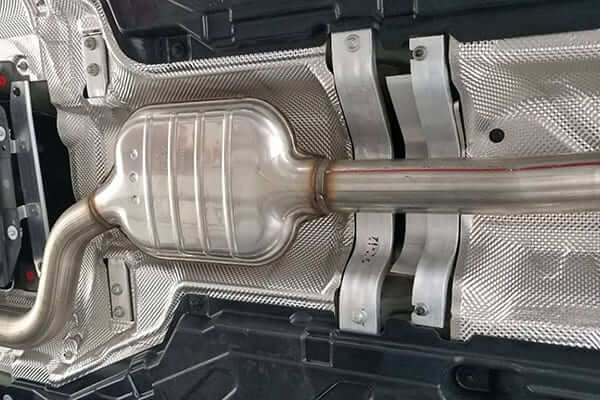
- Thermal Conductivity: Like most aluminum alloys, 5052 has good thermal conductivity (though slightly lower than pure aluminum or 1xxx/3xxx series). This makes 5052 aluminum foil suitable for heat transfer applications like heat exchangers, heat shields, and some cookware components where durability is also key.
- Reflectivity: Aluminum foil is highly reflective to radiant heat, contributing to its use in thermal insulation and shielding applications.
3.6 Electrical Properties
- Electrical Conductivity: Aluminum has high electrical conductivity (about 60% that of copper by volume, but lighter). 5052 foil maintains good conductivity, making it suitable for certain electrical shielding or conductor applications where its other properties (strength, corrosion resistance) are also beneficial.
3.7 Physical Properties
- Low Density: Aluminum alloys are lightweight (approx. 2.68 g/cm³ for 5052), offering significant weight savings compared to steel, copper, or brass. This is crucial in transportation and portable equipment.
- Non-Magnetic: 5052 aluminum is non-magnetic.
- Non-Toxic: Suitable for contact with foodstuffs (compliance with regulations required).
- Appearance: Can be provided with various surface finishes, from standard mill finish to brighter finishes depending on processing.
4. The Critical Role of Temper: Tailoring 5052 aluminum foil Properties
As a non-heat-treatable alloy, the mechanical properties (strength, hardness, ductility, formability) of 5052 aluminum foil are primarily controlled by its temper.
Temper designations indicate the degree of strain hardening and any subsequent thermal treatments.
Common tempers for 5052 foil include:
O Temper (Annealed):
- Condition: Fully softened through annealing.
- Properties: Lowest strength, highest ductility, maximum formability.
- Use: Applications requiring extreme forming operations where strength is less critical.
H3x Tempers (Strain-Hardened and Stabilized):
This is the most common temper group for 5052 foil used in applications requiring both formability and strength.
The “H3” indicates the material is strain-hardened and then stabilized by a low-temperature thermal treatment.
Stabilization prevents age-softening, ensuring properties remain stable over time.
The second digit indicates the final degree of hardness:
- H32 Temper: Strain-hardened to a “quarter-hard” level and stabilized. Offers a good balance of moderate strength, good formability, and excellent corrosion resistance. A very common temper for 5052 aluminum foil.
- H34 Temper: Strain-hardened to a “half-hard” level and stabilized. Higher strength and hardness than H32, but with reduced formability. Chosen when greater rigidity or strength is needed, and forming requirements are less severe.
- H36 Temper: Strain-hardened to a “three-quarter-hard” level and stabilized. Even higher strength, lower formability.
- H38 Temper: Strain-hardened to a “full-hard” level and stabilized. Highest strength in the H3x series for 5052, but with significantly limited formability. Less common for general foil applications requiring forming but may be used for flat parts needing maximum stiffness.
H1x Tempers (Strain-Hardened Only):
Sometimes seen, where the second digit (e.g., H14, H18) indicates the degree of strain hardening without the stabilization treatment.
Properties might be slightly less stable over time compared to H3x tempers.
Choosing the Right Temper:
The selection depends entirely on the application’s demands:
- Need extreme bending/drawing? Choose O temper.
- Need a good balance of strength and formability? H32 temper is often ideal.
- Need more stiffness and strength, with moderate forming? H34 temper is suitable.
- Need maximum strength for flat or minimally formed parts? Consider H38 (though availability in foil might be less common than H32/H34).
5. Comparative Analysis: 5052 Aluminum Foil vs. Other Common Foils
Understanding how 5052 aluminum foil stacks up against other widely used foil alloys clarifies its specific advantages and application niche.
| Feature | 5052 Foil | 3003 Foil | 1100 / 1145 Foil | 6061 Foil (Conceptual)* |
|---|---|---|---|---|
| Primary Alloying | Magnesium (Mg) | Manganese (Mn) | ~99% Pure Aluminum | Magnesium (Mg) & Silicon (Si) |
| Strength (Temper Eq.) | Higher | Moderate | Lowest | Highest (Heat Treated) |
| Corrosion Resistance | Excellent (esp. Marine) | Good (General) | Very Good (General) | Good (General) |
| Formability | Excellent (O) / Good (H32) | Excellent | Excellent | Fair (Annealed), Poor (T6 Temper) |
| Weldability | Good | Excellent | Excellent | Good |
| Heat Treatable? | No | No | No | Yes |
| Typical Tempers | O, H32, H34 | O, H14, H18, H24 | O, H18, H19 | O, T4, T6 |
| Cost | Moderate-High | Lower | Lowest | High |
| Key Advantages | Corrosion Res. (Marine), Strength | Good Formability, Cost | Max Formability, Cost, Conductivity | Highest Strength (Post-Treat) |
| Primary Limitations | Higher Cost vs 3003/1100 | Lower Strength, Lower Corrosion Res. | Lowest Strength | Lower Formability (T6), Cost, Needs HT |
*Note: 6061 is rarely produced or used as true foil due to its heat-treatable nature and different application focus (structural). It’s included for strength comparison.
Why Choose 5052 aluminum foil Over Others?
Compared with 3003 Foil:
Choose 5052 when higher strength, better fatigue resistance, and significantly better corrosion resistance (especially in saltwater or more chemically aggressive environments) are required.
3003 aluminum foil is often sufficient for general-purpose foil applications like packaging or standard heat exchangers where cost is a major driver and conditions are less demanding.
Compared with 1100/1145 Foil:
Choose 5052 when much greater strength and durability are needed.
1100/1145 offers maximum ductility for intricate forming or applications where high electrical/thermal conductivity is the priority (like electrical capacitors or fin stock), but it is very soft.
Compared with 6061 (if available/relevant):
5052 offers far superior formability in common tempers and excellent corrosion resistance without needing heat treatment.
6061 would only be considered if extremely high strength was needed in a foil format and heat treatment after forming was feasible (which is uncommon for foil applications).
6. Manufacturing Process: From Billet to 5052 aluminum foil
The production of high-quality 5052 aluminum foil involves several controlled stages:
6.1 Melting and Alloying
High-purity aluminum is melted in large furnaces.
Precise amounts of magnesium, chromium, and other minor elements are added to achieve the exact 5052 alloy specification.
The molten metal chemistry is carefully analyzed and adjusted.
6.2 Casting
The molten 5052 alloy is cast into large rectangular slabs called ingots or billets, often using Direct Chill (DC) casting methods for homogeneity.
6.3 Homogenization/Preheating
The cast ingot is heated to a specific temperature for an extended period.
This homogenizes the alloy structure, dissolves certain phases, and prepares it for rolling.
6.4 Hot Rolling
The preheated ingot is passed repeatedly through large rolling mills while still hot.
This process significantly reduces the thickness of the slab into a thinner plate or coil.
6.5 Cold Rolling
This is the critical stage for producing foil.
The coil from the hot rolling mill is passed multiple times through cold rolling mills (at room temperature or slightly elevated).
This process:
- Reduces the thickness down to the final foil gauge (<0.2 mm).
- Imparts significant strain hardening, increasing the strength and hardness.
- Improves surface finish and thickness control.
- Multiple passes are required, sometimes with intermediate annealing if the material becomes too hard to roll further. For very thin foils, two layers may be rolled together (“double rolling”), resulting in one side being bright and the other matte.
6.6 Annealing (Temper Control)
Depending on the desired final temper (O, H32, H34, etc.), the cold-rolled foil coil is subjected to controlled thermal treatments in annealing furnaces.
- Full Annealing (for O temper): Heats the foil sufficiently to recrystallize the grain structure, removing the effects of strain hardening, resulting in the softest condition.
- Partial Annealing / Stabilization (for H3x tempers): Uses lower temperatures or shorter times to partially recover ductility while retaining a specific level of strain hardening and stabilizing the properties.
6.7 Finishing and Slitting
The large annealed coils may undergo final finishing passes for surface quality or specific gauge control.
They are then slit into narrower coils or cut into sheets of the desired width and length according to customer specifications.
6.8 Quality Control
The process includes rigorous quality checks like chemical analysis, precise thickness measurements, mechanical testing, surface inspection, and corrosion tests as needed.
7. Industrial Applications of 5052 Aluminum Foil
Given its properties, 5052 aluminum foil finds use across many industries.
Its combination of strength, light weight, and corrosion resistance yields diverse applications:
7.1 Packaging (Food & Beverage):
5052 foil is used for containers, trays, cups, and lids that require durability and food safety.
It is considered a “high-grade household aluminum foil material” for food containers and utensils.
Its low permeability to moisture and odors (like all Al foil) plus sterilizing anneal treatment make it ideal for preserving food freshness.
Major uses include lunch box foil, drinking cup wraps, can bodies and ends, and flexible packaging laminates.
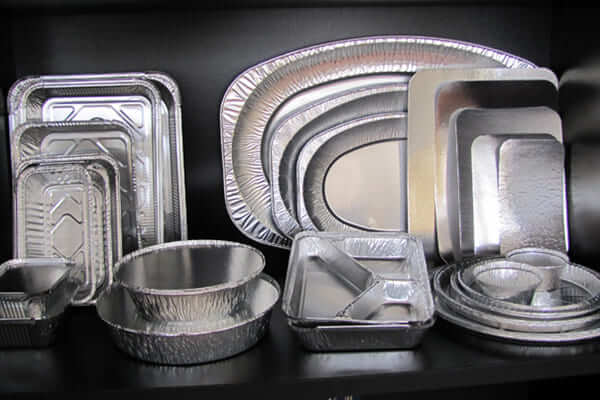
Its corrosion resistance assures long shelf life for acidic or salty foods.
(Manufacturers commonly use alloys like 1145 or 1100 for thinner general-purpose wraps, but they turn to 5052 when extra strength or heat resistance is required.)
7.2 Heat Exchangers and HVAC:
5052 foil is widely used as fin stock
and foil for radiators, condensers, and evaporators in air conditioning and refrigeration.
Its outstanding thermal conductivity and formability allow thin, intricate fin patterns.
The lightweight alloy also helps reduce system weight.
Automotive heat exchangers often use 5052 fins.
Electronics manufacturers also use 5052 foil in electrical heat sinks and thermal insulation panels, leveraging its conductivity and reflective surface. Mirror-finish 5052 foil often serves in lighting reflectors and insulation.
7.3 Electronics and Electrical:
In electronics, 5052 foil is used for housing and shielding
where rigidity and EMI shielding are needed.
Manufacturers commonly use it in capacitors (as electrode foil), cable shielding laminates, and printed circuit board foil (for heavy copper PCBs, although they typically use clad copper).
Its inert surface and solderability make it useful for transformer laminations and electronic foils.
Thomasnet lists electronic enclosures and chassis as applications, citing the alloy’s environmental resistance and light weight.
Flexible printed foil circuits (FPC) sometimes use Al foil as a conductive layer.
7.4 Automotive:
5052 foil appears in automotive components such as fuel tank liners, heat exchangers, and decorative trim.
Its corrosion resistance makes it ideal for components exposed to road salts or engine coolant.
The Chalco datasheet highlights 5052’s strength and toughness for automotive heat exchanger fins.
The lightweight nature of aluminum also aids in vehicle weight reduction.
In motorsports or aviation, 5052 sheet/foil is used for panels and parts.
7.5 Aerospace used 5052 Aluminum Foil
While high-strength alloys (e.g., 2024, 7075) dominate structural parts, manufacturers use 5052 foil in aircraft interiors and non-critical structural components.
Some suppliers highlight its corrosion resistance when recommending it for use as the outer skin of aircraft or spacecraft.
Applications include casing covers, clips, and insulation wraps.
Spacecraft and satellites use 5052 foil for thermal blankets, reflector substrates, and wiring ribbon.
7.6 Marine and Chemical:
5052’s superior saltwater resistance makes it a foil of choice in marine hardware and chemical equipment.
It is used for boat trim, venting ducts, and pump housings.
In chemistry, it serves as a liner for reaction vessels and as hardware in environments where acids or bases are present.
7.7 Household and Miscellaneous:
Beyond packaging, 5052 foil is found in cookware, labeling foil, and crafts.
ChangSong’s data shows uses in medical foil (sterile packaging), cigarette foil, hair-dye foil, and decorative foil.
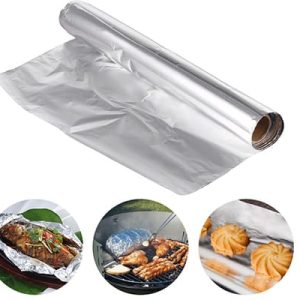
Heavy-duty household foil (for grilling or insulation) is often 5052 because of its strength.
Manufacturers also use it for adhesive tapes and barriers in the construction industry (e.g., a vapor barrier in wall insulation).
8. Adhering to Specifications: Industry Standards
Quality and consistency in 5052 aluminum foil are ensured by adherence to industry standards.
The most prominent standard governing aluminum sheet, plate, and foil in North America is:
ASTM B209 / B209M:
Standard Specification for Aluminum and Aluminum-Alloy Sheet and Plate. This comprehensive standard covers:
- Alloy designations (including 5052).
- Temper designations (O, H32, H34, etc.).
- Chemical composition limits.
- Mechanical property requirements (tensile strength, yield strength, elongation) for various alloy/temper combinations.
- Dimensional tolerances (thickness, width, length).
- Quality requirements (surface finish, flatness).
Other relevant international standards may include:
- EN 485: European standard for aluminum alloy sheet, strip, and plate.
- ISO 6361: International standard covering wrought aluminum and aluminum alloy sheets, strips, and plates.
- JIS H 4000: Japanese Industrial Standard for aluminum and aluminum alloys sheets, plates, strips, and coiled sheets.
When specifying or purchasing 5052 aluminum foil, referring to the appropriate standard (e.g., “5052-H32 Aluminum Foil per ASTM B209”) ensures the material meets expected chemical, mechanical, and dimensional requirements.
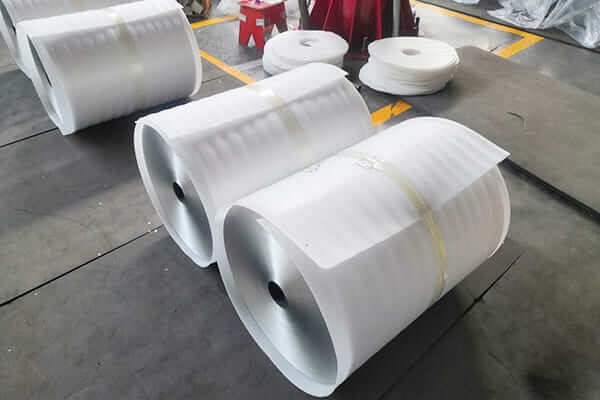
9. Handling and Storage Considerations
While durable, aluminum foil is thin and requires careful handling:
- Prevent Mechanical Damage: Avoid scratching, denting, or puncturing the foil. Use appropriate handling equipment.
- Keep Dry: Although corrosion resistant, prolonged contact with moisture (especially trapped water between layers in a coil) can lead to water staining or superficial corrosion. Store in a dry environment.
- Interleaving: Use paper or plastic interleaving between sheets or wraps for coils to prevent abrasion and moisture trapping.
- Stable Storage: Store coils on their core axis or flat sheets on level surfaces to prevent distortion.
10. Choosing a Reliable 5052 Aluminum Foil Supplier
Selecting a reputable supplier is crucial for obtaining high-quality 5052 aluminum foil:
- Quality Certifications: Look for suppliers certified to ISO 9001 or other relevant quality standards.
- Material Traceability: Ensure the supplier can provide Mill Test Reports (MTRs) or Certificates of Conformance verifying the alloy composition, temper, and compliance with standards (e.g., ASTM B209).
- Capabilities: Verify the supplier can provide the specific temper, thickness, width, and coil/sheet size required. Check their slitting and finishing capabilities.
- Experience & Reputation: Choose suppliers with experience in providing high-quality aluminum foil and a good industry reputation.
- Technical Support: A good supplier can offer technical advice on temper selection and application suitability.
11. Sustainability and Recycling
Aluminum is highly sustainable:
- Infinitely Recyclable: Aluminum can be recycled repeatedly without losing its inherent properties.
- Energy Savings: Recycling aluminum requires only about 5% of the energy needed to produce primary aluminum from bauxite ore.
- Value: Recycled aluminum retains significant economic value, driving high recycling rates.
Using 5052 aluminum foil contributes to lightweighting in transportation (improving fuel efficiency) and offers long service life due to its durability, further enhancing its environmental profile compared to materials requiring frequent replacement or heavier alternatives.
12. Conclusion: The High-Performance Foil Choice
5052 aluminum foil stands apart from common aluminum foils as a high-performance material offering a compelling combination of outstanding corrosion resistance (especially marine grade), good moderate strength (significantly higher than 1xxx/3xxx series), excellent formability (in appropriate tempers like O or H32), and good weldability.
Its non-heat-treatable nature means that strain hardening and annealing control its properties, making temper selection (e.g., O, H32, H34) a critical design parameter.
From enduring the harsh conditions of marine environments and chemical plants to providing durable solutions in transportation heat shields, high-quality cookware, and specialized industrial equipment, 5052 aluminum foil delivers reliability where standard foils cannot.
While its initial cost is higher than commodity foils like 3003 or 1100, its extended lifespan, reduced maintenance needs, and superior performance in demanding conditions often provide significant long-term value.
Related products
-

 Aluminum Foil
3004 Aluminum Foil
¥4,880.00Discover the unique advantages of 3004 aluminum foil. Learn about its enhanced strength, superior formability, corrosion resistance, and its key role in food packaging, cookware, and automotive industries. Get the…
-

 Aluminum Foil
1070 Aluminum Foil
¥5,360.00Discover why 1070 aluminum foil isn’t standard foil. Learn how its 99.7% purity drives superior conductivity, corrosion resistance & formability (O Temper) for specialized electrical, thermal, and industrial applications.
-

 Aluminum Foil
1050 Aluminum Foil
¥3,800.00Unlock the potential of 1050 Aluminum Foil. Discover how its >99.5% purity drives superior conductivity, formability & corrosion resistance. In-depth specs, applications & expert insights.
-

 Aluminum Foil
3003 Aluminum Foil
¥4,800.00Need aluminum foil stronger than pure grades yet highly formable? Discover 3003 Aluminum Foil – the optimal Mn-alloy solution for containers, HVAC & beyond.
-

 Aluminum Foil
1060 Aluminum Foil
¥4,680.00Deep dive into 1060 Aluminum Foil: Composition (≥99.60% Al), mechanical/physical properties, tempers, manufacturing insights, and key industry applications.
-

 Aluminum Foil
8006 Aluminum Foil
¥4,550.00Discover everything about 8006 aluminum foil, a high-performance Al-Fe-Si-Mn alloy ideal for food packaging, electronics, and automotive industries. Explore its chemical composition, mechanical properties, and advanced manufacturing processes.
-

 Aluminum Foil
1235 Aluminum Foil
¥4,250.001235 aluminum foil is high-purity aluminum material renowned for its excellent barrier properties and conductivity. Learn about its chemical composition, physical properties, and production processes. Discover the diverse applications of…
-

 Aluminum Foil
8079 Aluminum Foil
¥3,400.00A detailed guide to 8079 aluminum foil, covering composition, properties, production, and applications in packaging, electronics, and new energy. Highlights include high strength, corrosion resistance, sustainability, and industry standards
-

 Aluminum Foil
8021 Aluminum Foil
¥6,080.00Explore the exceptional properties and versatile applications of 8021 aluminum foil. Discover how its superior barrier protection, durability, and recyclability make it the top choice for pharmaceutical, food, and industrial…
-

 Aluminum Foil
8011 Aluminum Foil
¥4,880.008011 aluminum foil is a vital material across multiple industries. Its excellent chemical and physical properties make it widely used in food packaging and pharmaceutical packaging.