





Mga Nilalaman
Ipakita
1. Introduction to A380 Aluminum: The Die Casting Standard
Defining A380 Aluminum
A380 aluminum is a prominent aluminum-silicon-copper casting alloy, renowned for its excellent casting characteristics and mechanical properties.
Ang Asosasyon ng Aluminyo (AA) designates this alloy as A380.0, where the “.0” indicates it is specifically for castings.
This alloy is often referred to as “Aluminum 380” in various industries, underscoring its widespread recognition and usage.
Historical Significance and Market Dominance in Die Casting
A380 aluminum has become one of the most widely specified aluminum die casting alloys globally due to its unique properties.
It enables the mass production of complex, lightweight components, making it essential in industries such as automotive and electronics.
Its adaptability and performance have solidified its position as a standard in die casting applications.
2. Alloy Designation and Background
History of A380 Aluminum
Metallurgists developed A380 to bridge the gap between low-strength, highly fluid alloys (hal., A383) and stronger but less castable grades (hal., A390).
Through iterative refinements—especially in silicon (Si) and copper (Cu) levels—they tuned A380 to deliver both excellent castability at robust mechanical performance.
Alloy Numbering System
The four-digit AA system works as follows:
- First digit (3): Denotes the Al-Si alloy family.
- Second digit (8): Specifies the subgroup optimized for high-pressure die casting.
- “.0” suffix: Indicates a casting alloy only (no wrought counterpart).
Comparison with Other Aluminum Casting Alloys
While A380 holds the title “general-purpose die-casting alloy,” engineers sometimes specify alternatives when particular properties outweigh A380’s balanced profile:
| Haluang metal | Key Strengths | Trade-Offs vs. A380 |
|---|---|---|
| A356 | Heat-treatable to 250–300 MPa tensile | Lower fluidity; requires slower fill |
| A413 | High elevated-temperature strength | Prone to hot tearing; thicker walls |
| A383 | Excellent hot-tear resistance | Reduced mechanical strength (200–250 MPa tensile) |
| A390 | Exceptional wear resistance (❭400 MPa) | Very low melt fluidity; high porosity risk |
3. Composition and Metallurgical Fundamentals
Chemical Composition and Functional Roles (wt %)
The precise balance of alloying elements in A380 dictates its castability, lakas, and durability.
The table below summarizes the typical composition ranges alongside each element’s primary metallurgical role:
| Elemento | Tipikal na saklaw (wt %) | Primary Function in A380 Alloy |
|---|---|---|
| Si | 8.0 – 12.0 | Enhances fluidity and reduces solidification shrinkage; forms a low-temperature eutectic that fills thin-wall sections. |
| Cu | 3.5 – 5.0 | Increases tensile and yield strength via age-hardening; promotes fine intermetallics (Al₂Cu) that boost hardness. |
| Mg | 0.1 – 0.5 | Improves resistance to hot tearing by reducing freezing range; offers limited age-hardening potential. |
| Fe | ≤ 1.3 | Acts as an unavoidable impurity; controlled to prevent formation of brittle β-Fe phases and minimize hot-cracking. |
| Mn | 0.2 – 0.5 | Scavenges iron to form harmless intermetallics (Al₆Mn); refines grain structure and reduces porosity. |
| Zn | 0.5 – 1.5 | Provides minor solid-solution strengthening; improves hardness and contributes to controlled eutectic behavior. |
| Ti | 0.04 – 0.20 | Serves as a grain refiner (TiB₂ nuclei) to produce a fine, equiaxed structure and enhance mechanical consistency. |
| Sr* | ~ 0.01 (modifier) | Modifies eutectic silicon morphology from plate-like to fibrous, increasing ductility and reducing shrinkage porosity. |
| Al | Balanse | Matrix metal that binds all phases; its lightweight, high-conductivity nature underpins A380’s broad utility. |
Solidification Behavior and Microstructure
During the rapid solidification typical of high-pressure die casting, A380 forms a microstructure consisting of:
- Alpha-Aluminum (α-Al) Dendrites: The primary aluminum-rich phase.
- Al-Si Eutectic: A fine mixture of aluminum and silicon phases that solidifies at the eutectic temperature, contributing to fluidity.
- Intermetallic Compounds: Various intermetallic phases form, such as Al₂Cu (strengthening), Al₅FeSi, and others involving Mn, Mg, atbp.
The size, morphology, and distribution of these phases, heavily influenced by cooling rate, significantly impact the alloy’s properties.
Rapid cooling in die casting leads to a relatively fine grain structure and fine distribution of eutectic silicon and intermetallic phases, which is generally beneficial for strength.
Gayunpaman, it can also lead to entrapped gas and shrinkage porosity if not properly managed.
4. A380 Aluminum Alloy Equivalents
A380 (ASTM B26/B85) is broadly adopted in die-casting and corresponds to several regional and international designations:
- JIS (Japan): ADC10
- JIS/ISO: Al-Si8Cu3Fe
- EN (Europa): EN AC-46000 (formerly EN AC-Al Si9Cu3(Fe))
- GB (Tsina): YLDc12 (sometimes referred to as AlSi9Cu3)
- GD (Germany): GD-AlSi9Cu3
5. Key Properties of A380 Aluminum Alloy
Mga Katangian ng Mekanikal
| Pag-aari | As-Cast Range | T5-Tempered Range | Mga Tala |
|---|---|---|---|
| Lakas ng Paghatak | 250–300 MPa | 300–350 MPa | T5 aging (155–175 °C/4–8 h) boosts strength ~15 % |
| Lakas ng Ani | 150–200 MPa | 200–250 MPa | Elevated Cu and Mg content underpin hardness |
| Pagpapahaba | 2–5 % | 4–7 % | Sr modification refines Si, improving ductility |
| Ang katigasan ng ulo (HB) | 75–95 HB | 95–110 HB | Corresponds to improved wear resistance in T5 |
Transitional Insight: By applying a controlled T5 aging treatment, foundries raise both strength and hardness without sacrificing dimensional accuracy.
Mga Katangian ng Pisikal
- Densidad ng katawan: ~2.71 g/cm³ (0.098 lb/in³)
- Saklaw ng Pagtunaw (Solidus – Liquidus): ~516 – 593 ° C (960 – 1100 ° F)
- Thermal kondaktibiti (sa 25 ° C): ~96 – 113 W / m · K (good for heat dissipation)
- Kondaktibiti ng Elektrikal (sa 20 ° C): ~23 – 29 % IACS
- koepisyent ng thermal expansion (20-100° C): ~21.8 µm/m·°C (12.1 µin/in·°F)
- Modulus ng Elasticity: ~71 GPa (10.3 Msi)
Castability and Die-Casting Characteristics
- High Fluidity: Flow-spiral tests exceed 400 mm, enabling walls as thin as 1.0 mm with minimal cold-shut risks.
- Fast Solidification: Typical cycle times fall below 10 s, driving down per-part cost in high-volume runs.
- Low Hot-Tearing Sensitivity: Mg additions and a narrow freezing range prevent surface cracks, even in complex geometries.

Kakayahang machining
- Tool Life: Carbide tools last 30–40 % longer than when machining high-Cu alloys such as A390.
- Pagtatapos ng Ibabaw: Achieves Ra ≤1.6 µm with standard feeds and speeds.
- Chip Control: Moderate hardness and fine grain structure produce consistent, short chips that simplify chip evacuation.
Paglaban sa kaagnasan
- General Environments: Naturally forms a protective oxide, resisting oxidation in most atmospheres.
- Chloride Exposure: Uncoated A380 begins pitting after ~500 h in salt-spray (ASTM B117), but chromate conversion or anodizing extends service of marine-exposed parts by over 50 %.
Kakayahang maghinang
- Repair Welding: MIG or TIG can restore small defects, yet the heat-affected zone may trap hydrogen, causing porosity.
- Preferred Joining: Laser or induction brazing achieves leak-free joints without excessive base-metal heating.
Pressure Tightness
- Leak-Free Integrity: A380 castings routinely hold 15–20 MPa hydraulic pressure without external sealing.
- Vacuum Casting Options: Employing vacuum HPDC further reduces gas entrapment, boosting fatigue life by up to 20 %.
6. Common Casting Methods for A380 Aluminum
A380 aluminum alloy is one of the most commonly used die casting alloys due to its excellent fluidity, pressure tightness, paglaban sa kaagnasan, and dimensional stability.
It is widely used in the automotive, elektronika, and appliance industries.
1. High-Pressure Die Casting (HPDC) – Most Common
- Proseso: Molten A380 is injected into a steel mold at pressures up to 20,000 psi.
- Mga benepisyo: Excellent dimensional accuracy (±0.1 mm), fine surface finish, and high productivity—ideal for thin-walled, complex automotive and consumer-electronics housings.
2. Low-Pressure Die Casting (LPDC)
- Proseso: Molten metal is forced into the mold from below by a low gas pressure (~0.5–1 bar).
- Mga benepisyo: Reduced gas porosity and shrinkage defects yield higher mechanical strength and pressure-tight parts (hal., hydraulic housings, wheel rims).
3. Gravity Die Casting (Permanent Mold Casting)
- Proseso: Gravity pours molten A380 into a reusable metal mold.
- Mga benepisyo: Good surface quality and mechanical properties with medium tooling cost—suitable for mid-volume runs of brackets, pulleys, at mga pabahay ng bomba.
4. Sand Casting (Less Common for A380)
- Proseso: A sand mold is formed around a pattern, molten metal is poured in, and the casting is shake-out after solidification.
- Mga benepisyo: Flexible and low-cost tooling for prototypes and large, simple geometries—though with lower precision and surface finish versus permanent-mold or die casting.
5. Vacuum Die Casting (Advanced HPDC variant)
- Proseso: A vacuum is drawn in the mold cavity before or during injection to evacuate air and gases.
- Mga benepisyo: Virtually porosity-free castings with superior fatigue strength—used for critical safety components in automotive and aerospace applications.
Summary Table:
| Casting Method | Volume Suitability | Dimensional Accuracy | Porosity Control | Gastos |
|---|---|---|---|---|
| High-Pressure Die Cast | Mataas | Napakahusay | Katamtaman | Medium–High |
| Low-Pressure Die Cast | Medium–High | Napakahusay | Mabuti | Katamtaman |
| Gravity Die Cast | Katamtaman | Mabuti | Makatarungan | Katamtaman |
| Sand Cast | Mababa | Makatarungan | Makatarungan | Mababa |
| Vacuum Die Cast | Mataas | Napakahusay | Napakahusay | Mataas |
7. Heat Treatment of A380 Aluminum (Typically Limited)
A380 aluminum is most often used in the as-cast (F) condition because its composition is designed to provide good mechanical properties without extensive heat treatment, which adds cost.
- T5 Temper (Artificially Aged Only / Stress Relief / Pagpapatatag): This is the most common, albeit limited, thermal treatment applied to A380 die castings. It involves cooling from the casting temperature (or a separate moderate heating) and then artificially aging at a relatively low temperature (hal., 8-12 hours at 175-200°C / 350-400° F). The primary purposes are:
- Dimensional Stabilization: To minimize dimensional changes during subsequent machining or service life.
- Stress Relief: To reduce internal stresses induced during casting and cooling.
- Slight Increase in Hardness and Strength: Minor precipitation of phases like Al₂Cu can occur, leading to a modest property improvement (hal., yield strength might increase by 10-15 MPa).
- Full Solution Heat Treatment and Aging (hal., T6, T7): These treatments are rarely applied to A380 high-pressure die castings. The primary reason is the high likelihood of blistering, warping, or distortion during the high-temperature solution treatment phase (typically >480° C / 900° F). This is due to the expansion of entrapped gases (hydrogen, air) within the internal porosity common in HPDC parts. Alloys like A356 casting aluminum are designed for such full heat treatments and are typically cast using processes that minimize gas entrapment (hal., sand, permanent mold, low-pressure die casting).
8. Finishing and Surface Treatments for A380 Aluminum Castings
Trimming and Deburring
This is a standard initial step to remove flash (excess material squeezed out at die partings), runners, and overflows from the raw casting.
It can be done manually, with trim dies, or via robotic cells.
Machining
Although die casting produces near-net-shape parts, secondary machining operations like drilling, tapping, milling, or turning are often required to achieve very tight tolerances, create specific features (hal., threaded holes, O-ring grooves), or improve surface finish on critical areas. A380’s good machinability is an advantage here.
Surface Cleaning and Preparation
Before any coating or chemical treatment, surfaces must be thoroughly cleaned to remove die lubricants, oils, and other contaminants. Common methods include:
- Alkaline or acidic cleaning.
- Solvent degreasing.
- Mechanical cleaning (hal., shot blasting, vibratory finishing/tumbling) can also remove minor burrs and provide a uniform matte finish.
Pagpapahid ng langis
A380 can be anodized, but the results differ from wrought alloys or low-silicon casting alloys.
- Type II (Decorative/Protective): Due to the high silicon content (which does not anodize and remains as dark particles) and copper, the anodic coating on A380 is typically grayish to dark gray and may not be as uniform or clear as on other alloys. It still provides improved corrosion and wear resistance.
- Type III (Hardcoat): Can be applied for enhanced wear resistance, resulting in a very hard but usually dark gray or black surface.
Specialized anodizing chemistries and processes are sometimes used to achieve better aesthetic results on high-Si alloys.
Chromate Conversion Coatings (or Chrome-Free Alternatives)
These chemical treatments produce a thin, adherent film that:
- Significantly improves corrosion resistance.
- Provides an excellent primer base for paints and powder coatings.
Chrome-free alternatives based on zirconium or titanium are increasingly used due to environmental regulations.
Patong ng pulbos
A very popular finishing option for A380 die castings. A dry powder is electrostatically applied and then cured under heat to form a durable, uniporme, and attractive coating.
It offers good corrosion protection and a wide range of colors and textures. Proper pretreatment (hal., conversion coating) is crucial for adhesion.
Liquid Painting (Wet Coating)
Also widely used, offering versatility in color, finish (hal., gloss, matte, metallic), and coating type (hal., acrylic, epoxy, polyurethane). Again, proper surface preparation is key.
Plating
A380 can be plated with metals like nickel, chrome, tin, or copper for decorative purposes, magsuot ng resistensya, or enhanced electrical conductivity.
This requires specialized pretreatment steps (hal., zincate process) to ensure good adhesion on aluminum.
Impregnation
For applications requiring high levels of pressure tightness (hal., hydraulic components, gas fittings), A380 die castings may undergo vacuum impregnation.
This process forces a sealant (typically an anaerobic resin) into any microporosity within the casting, effectively sealing potential leak paths.
9. Applications of A380 Aluminum Alloy: Where It Excels
Automotive Components
This is a major sector for A380. Examples include:
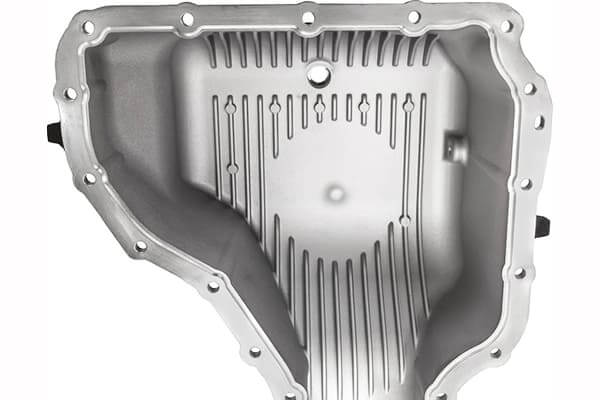
- Engine Components: Housings for alternators and starters, oil pans, valve covers, small engine blocks or crankcases.
- Transmission Components: Transmission housings, clutch housings, torque converter components.
- Chassis and Body Components: Brackets, supports, power steering housings.
- Pamamahala ng Thermal: Components for cooling systems.
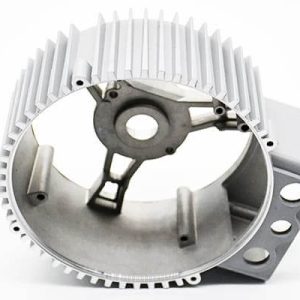
Halimbawa, an alternator housing made from A380 benefits from its good thermal conductivity to dissipate heat, its castability for complex shapes, and its strength to withstand vibrations.
Electronics and Telecommunications
- Housings and Enclosures: For computers (desktops, laptops), servers, mobile phones, routers, and other electronic devices, where A380 provides EMI/RFI shielding, structural support, and heat dissipation.
- Mga Heat Sink: The good thermal conductivity (sa paligid 100 W / m · K) and ability to cast intricate fin designs make A380 ideal for passive cooling of electronic components.
- Connectors and Chassis Components.
Appliances and Consumer Goods
- Power Tool Housings: Drills, grinders, saws.
- Kitchen Appliances: Housings and components for blenders, mixers, food processors.
- Washing Machine and Dryer Components.
- Furniture Components: Decorative and structural elements.
- Mga Kagamitan sa Pag-iilaw: Housings and heat dissipating elements for LED and other lighting.
Industrial Equipment and Machinery
- Pump and Motor Housings: Providing structural integrity and heat dissipation.
- Valve Bodies and Components.
- Pneumatic and Hydraulic Tool Components.
- Brackets, Mounts, and General Machinery Parts.
Outdoor and Recreational Equipment
- Lawnmower and Garden Equipment Housings.
- Barbecue Grill Components.
- Sporting Goods Components.
- Marine Components (with appropriate surface protection in saltwater environments).
Factors Driving A380’s Use in These Sectors
- High-Volume Producibility: Die casting with A380 is exceptionally fast and cost-effective for large production runs.
- Complex Geometries & Thin Walls: A380’s excellent fluidity allows for intricate designs that would be difficult or expensive to produce by other methods.
- Good Strength-to-Weight Ratio: Provides strong yet lightweight components.
- Thermal kondaktibiti: Beneficial for heat dissipation.
- Dimensional Stability: Good for parts requiring consistent dimensions.
- Overall Cost-Effectiveness: Favorable raw material cost combined with efficient mass production.
10. Comparison of A380 Aluminum with Other Alloys
A380’s position becomes clearer when compared to other common aluminum casting alloys:
| Feature/Alloy | A380 (HPDC) | A360 (HPDC) | A383/A384 (HPDC) | A390 (HPDC) | A356 (Sand/Perm. Mold) | ADC12 (JIS, HPDC) |
|---|---|---|---|---|---|---|
| Primary Strength | Excellent Castability, Good General Properties | Better Corrosion Resistance, Good Fluidity | Best Die Filling for Thin Walls | Excellent Wear Resistance | Magandang Lakas & Ductility (Heat-Treatable) | Very Similar to A380 |
| Typical Tensile Strength | ~320 MPa (47 ksi) | ~300 MPa (44 ksi) | ~310 MPa (45 ksi) | ~250 MPa (36 ksi) (but very hard) | ~230-330 MPa (33-48 ksi) (T6) | ~310 MPa (45 ksi) |
| Typical Yield Strength | ~160 MPa (23 ksi) | ~150 MPa (22 ksi) | ~150 MPa (22 ksi) | ~220 MPa (32 ksi) | ~165-275 MPa (24-40 ksi) (T6) | ~150 MPa (22 ksi) |
| Pagpapahaba (%) | ~3.5 | ~3.5 | ~3.5 | <1 (Brittle) | ~3-10 (T6) | ~3.5 |
| Paglaban sa kaagnasan | Mabuti | Better (lower Cu) | Mabuti | Makatarungan | Napakahusay | Mabuti |
| Kakayahang machining | Good to Excellent | Fair to Good | Good to Excellent | Difficult | Mabuti | Good to Excellent |
| Die Casting Suitability | Napakahusay | Napakahusay | Superior for very thin walls | Mabuti (requires careful control) | Not typical for HPDC | Napakahusay |
| Gastos | Pang-ekonomiya | Slightly Higher | Similar to A380 | Mas mataas | Mas mataas (process dependent) | Similar to A380 |
This comparison shows A380 occupies a sweet spot for high-volume die casting where a balance of good castability, reasonable strength, and cost is paramount.
11. Quality Control and Testing for A380 Aluminum Castings
Ensuring that A380 castings meet strict performance and safety requirements demands a robust quality-control regimen.
Foundries and end-users deploy a combination of chemical, mekanikal, non-destructive, and dimensional tests to verify that every batch conforms to specification.
Sa ibaba, we outline key inspection steps and typical acceptance criteria.
Chemical Verification
- Optical Emission Spectrometry (OES): Analysts sample molten or solidified coupons and run OES to confirm alloy chemistry within ±0.05 wt % of spec. A380’s critical ranges—8–12 % Si, 3.5–5 % Cu, 0.1–0.5 % Mg—must hold to guarantee castability and strength.
- Gas Analysis: Hydrogen and oxygen contents in the melt influence porosity. Melt-quality meters measure dissolved H₂; values below 0.15 mL/100 g Al help minimize gas pores.
Pagsubok sa Mekanikal
- Tensile Testing: Foundries prepare standard dog-bone specimens (ASTM B209) from cast blocks or cores. They record ultimate tensile strength (UTS) and yield strength (YS), comparing as-cast (250–300 MPa UTS) versus T5-aged (300–350 MPa UTS) values. Acceptance typically requires both UTS and YS to exceed 95 % of the minimum spec.
- Hardness Testing: Brinell hardness (HBW 10/3000) readings on cast surfaces should fall within 75–95 HB as-cast and 95–110 HB after T5. Technicians check at five or more locations per casting to verify uniformity within ±5 HB.
- Elongation Measurement: Elongation at break (2–5 % as-cast; 4–7 % T5) provides insight into ductility. Values below spec trigger microstructure analysis to check for excessive porosity or coarse silicon.
Non-Destructive Testing (NDT)
- Radiographic Inspection (X-ray): High-energy X-rays penetrate walls to reveal internal defects—gas pores, cold shuts, or inclusions. Acceptable porosity typically falls below 1 % by area per ASTM E driven acceptance charts.
- Ultrasonic Testing (UT): In thick or complex sections, UT detects planar defects and subsurface cracks. Pulse‐echo scans identify any reflectors greater than 1 mm in length.
- Dye-Penetrant and Magnetic Particle: Although A380 is non-ferrous, dye‐penetrant testing highlights surface‐breaking porosity or cracks on machined faces to a sensitivity of 0.05 mm.
- Pressure-Leak Testing: Assemblies such as manifolds undergo hydraulic or pneumatic pressure tests up to 20 MPa. Leak‐rate tolerances typically sit below 1 × 10⁻³ mL/min for helium or nitrogen, ensuring absolute tightness in service.
Microstructural Analysis
- Metallography: Technicians section and polish samples to examine grain size, silicon morphology, and intermetallic distribution under optical microscopy. They verify that Sr-modified eutectic silicon appears fibrous rather than acicular, indicating proper modifier addition.
- Scanning Electron Microscopy (SEM): In failure or root-cause investigations, SEM images reveal fine porosity, oxide films, or shrink-related voids. Energy-dispersive X-ray spectroscopy (EDS) can confirm local chemistry of intermetallic phases.
Dimensional and Surface Inspection
- Coordinate-Measuring Machine (CMM): Foundries program CMMs to check critical dimensions and tolerances (often ±0.05–0.1 mm). High-volume lines may use multi-axis vision systems for rapid, automated inspection.
- Surface Roughness: Gauges measure Ra values on sealing surfaces and aesthetic faces. Castings must achieve Ra ≤ 1.6 µm as-molded or ≤ 0.8 µm after final machining.
- Visual and Optical Scanning: Automated cameras inspect for surface defects—blowholes, palikpik, or cold shuts—rejecting any anomaly deeper than 0.1 mm.
Functional and Environmental Testing
- Salt-Spray Exposure: Coated and uncoated samples undergo ASTM B117 testing for 500–1,000 hours to gauge corrosion resistance. Acceptance requires no pitting beyond 1 mm² per 100 mm² of surface area.
- Thermal Cycling: For assemblies used in engines or electronics, parts cycle between –40 °C and +125 °C for 100–500 cycles, monitoring for cracking, distortion, or adhesion failure in coatings.
- Fatigue Testing: Hydraulic components or cycling pressure vessels see S-N curve characterization. Designers ensure that castings withstand at least 10⁶ cycles at 50 % design stress with no crack initiation.
11. Konklusyon
A380 aluminum stands as the benchmark die-casting alloy, delivering an unmatched combination of castability, mechanical strength, and cost efficiency.
Thanks to its finely tuned silicon-copper-magnesium balance, foundries achieve thin-wall, pressure-tight castings with excellent dimensional control.
While other alloys such as A356 or A390 excel in niche areas—heat treatability or high-temperature strength—A380 remains the preferred choice for high-volume, complex components across automotive, elektronika, and consumer markets.
Mga Madalas Itanong
Q1: How to solutionize aluminum A380?
A: Aluminum A380 is a high-silicon die-casting alloy and is not typically solution heat treated due to its high silicon and iron content, which limits the response to heat treatment.
Q2: Is A380 alloy the same as ADC12 for aluminum?
A: A380 (U.S. designation) and ADC12 (Japanese designation) ay functionally equivalent die-casting alloys, ngunit not identical.
Both are Al-Si-Cu alloys with similar casting properties, but there are slight differences
Q3: What minimum wall thickness does A380 support?
Foundries routinely cast walls down to 1.0 mm with consistent quality.
Q2: Which surface finish best protects A380 in marine environments?
Chromate conversion followed by powder coating offers superior corrosion protection and aesthetic durability.
Q2: What is A380 aluminum primarily used for?
A: A380 aluminum is primarily used for high-pressure die castings requiring a good combination of castability, mechanical strength, and thermal conductivity.
Common applications include automotive components (housings, brackets), electronic enclosures, Mga Heat Sink, appliance parts, and industrial equipment housings.
Mga Kaugnay na Produkto
-
 Customized na paghahagis ng aluminyo
Mastering ADC12 Aluminum Alloy: The Ultimate Die-Casting Handbook
¥4,200.00Unlock the full potential of ADC12 aluminum alloy—learn its chemical makeup, HPDC best practices, heat-treatment strategies, and top applications from automotive to electronics.
-
 Customized na paghahagis ng aluminyo
Langhe Customized A356 Casting Aluminum Parts
¥4,220.00Explore how Customized A356 casting aluminum parts deliver exceptional strength‑to‑weight ratios, fine geometric detail, and superior fatigue resistance—ideal for automotive, aerospace, at pang-industriya na aplikasyon.
