



Contents
show
1. Introduction
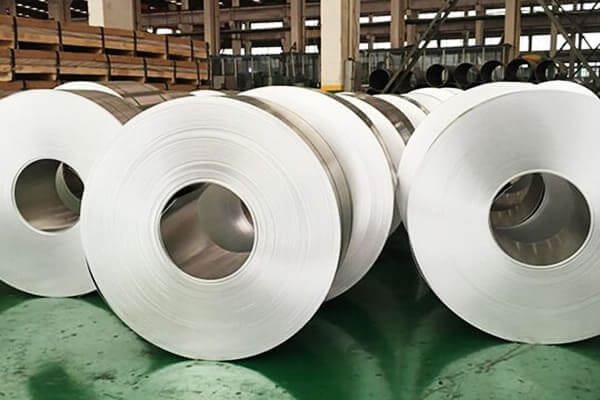
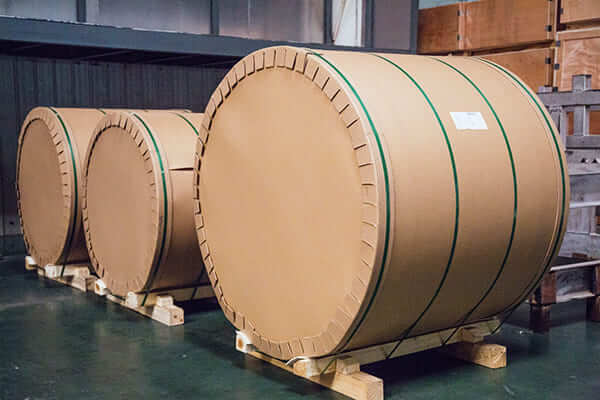
Aluminum coils underpin countless industrial applications—ranging from food packaging and heat exchangers to automotive components and architectural panels.
Within this realm, Alloy 3003 emerges as a versatile, budget‑friendly “workhorse” alloy.
Thanks to its balanced mix of strength, ductility, and corrosion resistance, 3003 aluminum coil finds favor when manufacturers require dependable performance without the expense of higher‑end alloys.
In this article, we dive deep into 3003’s composition, properties, processing, and real‑world applications, equipping you with the insight to specify it effectively.
2. Alloy Composition & Metallurgy
Alloy 3003’s enduring popularity stems from a finely tuned chemistry and resulting microstructure that balance strength, formability, and corrosion resistance.
In this section, we explore its exact composition, describe its grain‑level characteristics, and explain how manganese delivers solid solution strengthening without sacrificing ductility.
Chemical Makeup (Al–Mn System, ~1.0–1.5% Mn)
3003 aluminum belongs to the aluminum‑manganese family. Its typical analysis reads as follows:
- Aluminum (Al): ≥ 97.7 %
- Manganese (Mn): 1.0–1.5 %
- Iron (Fe): ≤ 0.7 %
- Silicon (Si): ≤ 0.6 %
- Copper (Cu): ≤ 0.10 %
- Zinc (Zn), Titanium (Ti), Chromium (Cr): each ≤ 0.05 %
This composition deliberately limits iron and silicon—elements that can form brittle intermetallics—while introducing enough manganese to strengthen the alloy.
As a result, 3003 achieves a 30 MPa boost in yield strength over pure aluminum (from ~65 MPa for 1100 alloy to 95–125 MPa in 3003‑O temper) at minimal cost.
Microstructure Characteristics (Equiaxed Grains, Solid Solution Strengthening)
During casting and rolling, 3003 develops a uniform, equiaxed grain structure with an average grain diameter of approximately 20–30 µm.
This fine grain size contributes to its isotropic mechanical behavior: tension, compression, and bending properties remain consistent regardless of orientation.
Moreover, manganese atoms dissolve into the aluminum matrix rather than forming coarse second‑phase particles.
Each Mn atom distorts the crystal lattice, impeding dislocation motion and thus providing solid solution strengthening.
In metallurgical terms, this increases the alloy’s critical resolved shear stress by about 15–20 MPa, translating directly into higher yield strength.
How Mn Content Balances Strength and Ductility
Striking the right manganese level proves crucial. At 1.0–1.5 %, manganese maximizes strength gains while preserving ductility above 20 % elongation in the O temper.
Should Mn exceed 1.6 %, you risk precipitating coarse Al₆Mn phases, which reduce deep‑drawing performance and promote crack initiation.
Consequently, 3003 designers adhere closely to this Mn window to ensure:
- Enhanced Yield Strength: Solid solution effects raise yield to 95–125 MPa.
- High Ductility: Uniform grains and limited intermetallics deliver ≥ 20 % elongation for complex forming.
- Corrosion Protection: A clean, continuous oxide layer forms on the homogeneous matrix—shielding the base metal from environmental attack.
3. Mechanical & Physical Properties
Key Strength Metrics
| Temper | Yield Strength (MPa) | Tensile Strength (MPa) | Elongation (%) |
|---|---|---|---|
| O | 95–125 | 140–180 | ≥ 20 |
| H14 | 125–145 | 160–200 | ≥ 10 |
| H16 | 135–155 | 170–210 | ≥ 8 |
In practice, a 0.5 mm O‑temper coil bends effortlessly around a 0.75 mm mandrel, whereas an H14 coil (cold‑worked for strength) still achieves a 1.2 mm bend radius without cracking.
Thermal and Physical Constants
- Density: 2.73 g/cm³
- Thermal Conductivity: 157 W/m·K (room temperature)
- Specific Heat: 0.91 J/g·K
- Coefficient of Thermal Expansion: 23.6 µm/m·K
These figures render 3003 aluminum coil ideal for heat‑exchange fins and cooking utensils: its high conductivity speeds heat transfer, while moderate expansion prevents warping under temperature swings.
Comparison with 1100 and 3004
- 1100 Alloy: Offers elongation ≥ 35% but yields only ~55 MPa; designers choose it for extreme formability but reject it where strength matters.
- 3004 Alloy: Adds ~1% Mg for yield ~110 MPa, but at 7% higher material cost and slightly reduced ductility—so 3003 remains the cost leader for general‑purpose coils.
4. Corrosion Resistance & Surface Behavior
3003 aluminum coil resists both general and localized corrosion, making it a dependable choice for environments ranging from mild outdoor exposure to food‑processing conditions.
In the following subsections, we examine its performance under real‑world corrosive stresses, its suitability for direct contact with consumables and chemicals, and the finishing options that enhance both durability and aesthetics.
General Atmospheric and Mild Corrosion
In outdoor and mildly aggressive environments—think urban pollution or light coastal exposure—3003 forms a dense, self‑healing oxide film within minutes of being scratched.
Accelerated salt‑spray tests (ASTM B117) demonstrate that unclad 3003 panels endure over 1,000 hours without visible pitting or red‑rust staining, whereas pure aluminum (1100 alloy) typically shows first signs of corrosion after just 400 hours.
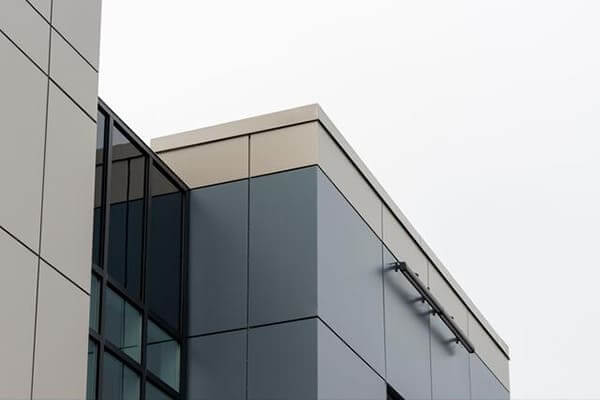
Consequently, architects and fabricators specify 3003 for roofing, siding, and façade applications where periodic rainfall and humidity challenge less robust metals.
Food and Chemical Contact
Beyond atmospheric use, 3003 meets FDA and EU food‑contact regulations.
Manufacturers deploy it for baking trays, food‑storage tanks, and even candy‑wrap foil.
In controlled migration tests at 200 °C, 3003 exhibits aluminum release well below the regulatory limit of 5 mg/kg, ensuring consumer safety.
In chemical‑processing settings—where mild acids or alkalis appear—3003 aluminum coil maintains integrity provided concentrations remain below 10% and temperatures under 80 °C.
For stronger chemicals or higher temperatures, engineers typically select more specialized alloys.
Surface Finishing Options
- Anodizing
- Type II (Decorative): Creates a 10–15 µm thick barrier, improving scratch resistance by 30%.
- Type III (Hard): Builds up to 25 µm, doubling wear life—a boon for high‑traffic architectural panels.
- Painting & Laminating
- PVDF Coatings: Deliver UV fade resistance (ΔE < 5 after 2,000 hours QUV testing), and bond strengths exceed 8 MPa on pre‑treated 3003 surfaces.
- Laminated Films: Apply flexible PVC or PET films that resist graffiti, abrasion, and chemical splashes.
- Mechanical Finishes
- Brushing / Bead‑Blasting: Achieves surface roughness Ra ≤ 1.6 µm, which enhances primer adhesion and yields consistent gloss in painted or laminated systems.
5. Forming & Fabrication
Cold‑Working and Tempering
Manufacturers cold‑roll 3003 to H14 by applying a 10–15% thickness reduction.
That step boosts yield by 25–30 MPa. If deeper drawing awaits, they intermediate‑anneal at 350 °C to restore full elongation before final forming.
Bending, Deep Drawing, Roll Forming
- Bending: O‑temper coils bend around dies with internal radii 1.5× thickness; H14 coils bend at ≥ 2× thickness.
- Deep Drawing: H14 permits seamless cups with depth‑to‑diameter ratios up to 0.8:1.
- Roll Forming: Continuous profile forming achieves lengths in excess of 200 m without temperature control issues.
Welding and Joining
MIG and TIG welding produce sound seams in 3003. In thin gauges (< 1 mm), designers sometimes choose brazing (using aluminum‑silicon filler) to prevent burn‑through and distortion.
6. Manufacturing Processes
Ingot Casting and Homogenization
Foundries cast 3003 ingots via direct‑chill or continuous casting.
They homogenize at 450 °C for 8 hours, dissolving Mn uniformly and minimizing center‑line segregation.
Hot and Cold Rolling to Coil Gauges
- Hot Rolling: Reduces ingot thickness to 8–12 mm at 400–450 °C in four passes, refining grain size.
- Cold Rolling: Further reduces to final gauges (0.2–3 mm), with thickness control within ± 0.02 mm.

Annealing and Stretch Leveling
To eliminate coil set and residual stress, mills anneal at 350 °C and apply a 1–2% tensile stretch.
That process flattens coils to within 0.5 mm/m, ensuring trouble‑free downstream processing.
7. Applications of 3003 Aluminum Coil
Alloy 3003 aluminum coil’s blend of strength, formability, and corrosion resistance unlocks value across diverse sectors.
Below, we examine three high‑impact applications—automotive, construction, and electrical—highlighting specific benefits and real‑world performance metrics.
Automotive Industry
Manufacturers leverage 3003 aluminum coil to reduce vehicle weight and improve thermal management:
- Heat Shields & Under‑Hood Components: At just 2.73 g/cm³, 3003 trims mass by up to 15 kg per vehicle versus steel equivalents. That reduction translates into a 0.2 L/100 km fuel‑economy gain—equating to $120 in annual fuel savings per car at average U.S. mileage.
- Decorative Trim & Interior Panels: Its H14 temper provides yield strengths of 125–145 MPa while allowing tight bend radii (≥ 2× thickness). OEMs use 3003 to form seamless door sills and dashboard accents without costly tooling changes.
Construction Industry
In building envelopes and structural elements, 3003 aluminum coil delivers durability and aesthetic flexibility:
- Roofing & Siding Panels: Coil‑coated 3003 withstands hail impact up to 25 mm at 23 m/s without cracking. Corrugated panels in 0.8 mm gauges achieve water‑shedding slopes as low as 3°, reducing leak risk on low‑pitch roofs.
- Rainware & Architectural Cladding: Brushed or PVDF‑coated 3003 offers color retention for 20+ years in UV‑intense climates. Architects specify coil widths up to 1.2 m to minimize seams and accelerate installation.
Electrical & HVAC Applications
3003’s thermal and electrical performance makes it indispensable in heat‑exchange and conductor systems:
- Heat Exchanger Fins: With thermal conductivity of 157 W/m·K, 3003 fins boost HVAC system efficiency by up to 8%, lowering energy consumption and operating costs by $50–$75 per unit annually.
- Bus Bars & Conductor Strips: In low‑current bus applications, its conductivity (31 MS/m) meets requirements while providing superior formability for compact profiles. Coil thicknesses from 0.5–2 mm allow precise impedance control in electrical panels.
8. Comparative Analysis: Positioning 3003 with Data
To fully appreciate the unique role of 3003 aluminum coil, it is essential to compare its performance against other common alloys using concrete data.
This analysis highlights the specific trade-offs in strength, formability, and cost that make 3003 the optimal choice for so many applications.
For consistency, properties are compared in a common “half-hard” temper (H14/H32/H34).
3003 vs. 1100: The Step-Up in Strength
Alloy 1100 is commercially pure aluminum, offering the highest ductility and thermal conductivity. 3003 is often chosen as a direct upgrade.
- Strength:
3003-H14 delivers a typical tensile strength of 150 MPa, a significant 20% increase over the 125 MPa of 1100-H14.
This added strength is crucial for providing durability without adding weight. - Workability:
This strength comes with a minor trade-off in ductility. 1100-H14 has a typical elongation of ~10%, while 3003-H14 is slightly lower at ~8%.
For most forming operations, this difference is negligible, making 3003 the preferred choice unless extreme formability is the sole priority. - Thermal Conductivity:
As a purer metal, 1100 has a slight edge in thermal conductivity (~222 W/m·K) compared to 3003 (~193 W/m·K).
3003 vs. 3105/3004: Higher Strength for More Demanding Roles
Alloys like 3004 and 3105 contain higher levels of both manganese and magnesium, positioning them for more structurally demanding applications.
- Strength:
3004-H34, commonly used for beverage can bodies, boasts a tensile strength of approximately 240 MPa—over 50% stronger than 3003-H14.
This higher strength is necessary for pressurized containers and structural building panels. - Formability:
The increased strength of 3004 comes at the cost of formability.
While still good, it cannot match the deep drawing capabilities and tight bend radii achievable with 3003, which is why 3003 remains the choice for cookware and complex stampings.
3003 vs. Higher-Strength Alloys (5xxx Series)
The 5xxx series, like 5052, are alloyed primarily with magnesium for high strength and excellent marine corrosion resistance.
- Performance:
5052-H32 provides a tensile strength of ~230 MPa and superior performance in saltwater environments.
It is the go-to choice for marine applications, fuel tanks, and high-strength sheet metal work. - Cost and Specialization:
This performance comes at a premium. 5052 is significantly more expensive than 3003 due to its higher alloy content and processing requirements.
For general-purpose applications where extreme strength or marine resistance is not needed, specifying 5052 would be an unnecessary expense.
3003 offers more than adequate performance for a much lower cost.
Summary Table of Comparative Data (Typical Values for Half-Hard Tempers)
| Property | 3003-H14 | 1100-H14 | 3004-H34 | 5052-H32 |
|---|---|---|---|---|
| Tensile Strength (MPa) | ~150 | ~125 | ~240 | ~230 |
| Yield Strength (MPa) | ~145 | ~115 | ~200 | ~195 |
| Elongation (%) | ~8 | ~10 | ~8 | ~12 |
| Thermal Conductivity (W/m·K) | ~193 | ~222 | ~176 | ~138 |
| General Corrosion Resistance | Excellent | Excellent | Excellent | Excellent |
| Marine Corrosion Resistance | Good | Fair | Good | Excellent |
| Formability | Excellent | Excellent | Good | Good |
| Relative Cost Index | 1.0x (Base) | ~0.95x | ~1.2x | ~1.4x |
10. Quality Standards & Certification
Meeting rigorous quality standards and maintaining full traceability proves essential for 3003 aluminum coil—especially in safety‑critical and regulated industries.
This section outlines the key specifications, dimensional and surface criteria, and certification practices that ensure every coil performs to expectation.
Key Industry Specifications
3003 aluminum coil typically conforms to three principal standards:
- ASTM B209 (USA):
Specifies chemical composition, mechanical properties, and permissible variations for aluminum sheet and plate.
For 3003 O, B209 mandates a minimum tensile strength of 140 MPa and yield strength of 95 MPa. - EN 485‑2 (Europe):
Covers delivery conditions for sheet, strip, and plate.
It sets alloy‑specific tolerances on thickness (± 0.02 mm for gauges ≤ 1 mm) and width (± 0.5 mm). - JIS H4100 (Japan):
Defines chemical and mechanical criteria for aluminum and its alloys.
In addition to tensile and yield requirements, H4100 imposes strict limits on inclusion content—no more than 0.5 mm of non‑metallic inclusions per 100 cm².
Moreover, manufacturers pursuing automotive, architectural, or food‑contact applications often obtain ISO 9001 certification to demonstrate a robust quality‑management system.
Dimensional Tolerances & Surface Classes
Coil dimensions and surface finishes directly impact downstream processing and aesthetic quality:
- Thickness Tolerance:
- ≤ 1.0 mm gauge: ± 0.02 mm
- 1.0–3.0 mm gauge: ± 0.03 mm
- Width Tolerance: ± 0.5 mm on coils up to 1,220 mm wide
- Flatness (Stretch‑Leveling): ≤ 0.5 mm per meter
11. Langhe 3003 Aluminum Coil Specification
| Property | Specification |
|---|---|
| Alloy | 3003 O, H14, H16 |
| Gauge Range | 0.2–3.0 mm |
| Width Range | 200–1,220 mm |
| Temper | O, H14, H16 |
| Yield Strength | 95–155 MPa |
| Elongation | 8–20 % |
| Thermal Conductivity | 157 W/m·K |
| Coil Weight | 2–12 ton |
| Certifications | ASTM B209, EN 485, JIS H4100 |
12. Conclusion
Alloy 3003 aluminum coil provides a rare blend of strength, ductility, corrosion resistance, and cost efficiency.
Its adaptable temper range and straightforward processing make it ideal for applications as diverse as roofing panels, heat‑exchanger fins, and automotive trims.
By understanding its metallurgy, mechanical profile, and economic drivers, engineers and purchasers can leverage 3003 aluminum coils to meet both performance targets and budget constraints.
13. FAQs
Q1: Is 3003 aluminum food safe?
A: Yes, 3003 aluminum is non-toxic and widely used for cookware, food containers, and packaging due to its excellent stability and corrosion resistance when in contact with most foodstuffs.
Q2: What is the main difference between 3003-H14 and 3003-O?
A: 3003-O is fully soft (annealed) and offers maximum ductility for severe forming operations.
3003-H14 is half-hard (strain-hardened) and is significantly stronger, but less formable.
H14 is the most common temper as it provides a good balance of strength and workability.
Q3: Can you anodize 3003 aluminum?
A: Yes, 3003 aluminum can be anodized. The process creates a protective oxide layer that enhances its corrosion and wear resistance.
While it may not produce the same bright, decorative finish as 6xxx series alloys, it is very effective for protective coatings.
Q4: How does 3003 compare to stainless steel for cookware?
A: 3003 aluminum is much lighter and has far superior thermal conductivity, meaning it heats up faster and more evenly.
Stainless steel is stronger, more scratch-resistant, and less reactive to acidic foods, but it is heavier and a poorer conductor of heat.
Related products
-
 Aluminum Coil, Products
5052 aluminum coil
Name
5052 Aluminum CoilThickness
0.1-500mmWidth
100mm – 2600mm,CustomizeSurface
Bright, polished, hair line, brush, sand blast, checkered, embossed, etching, etc.Technical
Hot rolled ( DC )、Cold rolling ( CC )、Annealed -

 Aluminum Coil, Products
3105 Aluminum Coil
Name
3105 Aluminum CoilThickness
0.2-3.0mmWidth
1000mm – 2600mm,CustomizeSurface
Bright、matte、hairline、brush、sand blast、checkered、embossed、etching、etc.Technical
Cold rolled (CC)、Hot rolled (DC)、Annealed (O) -

 Aluminum Coil
1050 Pure Aluminum Coil: Properties, Applications, and Fabrication
¥3,200.00Explore the definitive guide to 1050 pure aluminum coil. Uncover its detailed properties, technical specifications, key applications in electronics and cookware, and how it compares to alloys like 3003 and…