


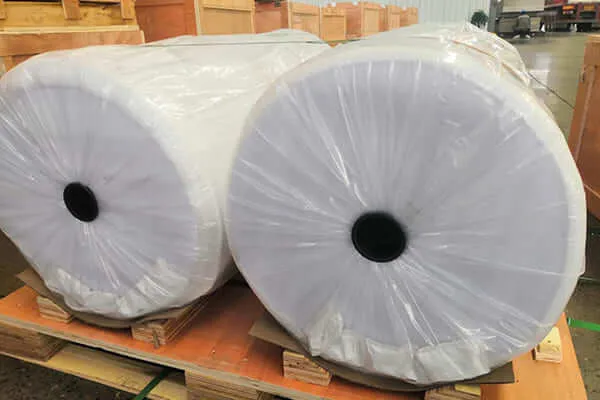


3004 aluminum foil stands out as a versatile and robust material, prized for its excellent formability, good strength, and notable corrosion resistance.
It carves a unique niche, particularly in applications demanding more durability than standard household foils while offering superior performance for specialized packaging and industrial uses.
Understanding the nuances of 3004 aluminum foil – its chemical composition, mechanical properties, manufacturing intricacies, and diverse applications – is crucial for engineers, packaging designers, manufacturers, and anyone seeking high-performance foil solutions.
This comprehensive guide delves deep into the world of 3004 aluminum alloy foil.
We will explore its fundamental characteristics, compare it with other common aluminum alloys, dissect its manufacturing process, highlight its key advantages, and survey its wide-ranging applications, from food containers and cookware to building materials and heat exchangers.
Our goal is to provide an authoritative and in-depth understanding, empowering you to leverage the full potential of 3004 aluminum foil for your specific needs.
Contents
show
Understanding 3004 Aluminum Alloy
To appreciate 3004 aluminum foil, we must first understand the alloy itself and its place within the broader aluminum family.
Composition and Alloying Elements
3004 aluminum alloy belongs to the 3xxx series of wrought aluminum alloys, which are characterized by manganese (Mn) as their principal alloying element. According to the Aluminum Association’s designation system, the chemical composition of 3004 aluminum typically includes:
- Aluminum (Al): Balance (the primary constituent)
- Manganese (Mn): 1.0% – 1.5%
- Magnesium (Mg): 0.8% – 1.3%
- Silicon (Si): Max 0.30%
- Iron (Fe): Max 0.7%
- Copper (Cu): Max 0.25%
- Zinc (Zn): Max 0.25%
- Titanium (Ti): Max 0.10%
- Other, each: Max 0.05%
- Other, total: Max 0.15%
The key alloying elements, manganese and magnesium, are crucial for imparting its desirable properties.
Manganese primarily enhances strength and workability, while magnesium contributes significantly to its strength, especially after work hardening, and improves corrosion resistance.
The careful control of these and other minor elements ensures consistent material performance.
3004 aluminum is a non-heat-treatable alloy, meaning its strength is primarily achieved through cold working (strain hardening) and annealing.
Key Characteristics and Series Classification
The 3xxx series, including 3004 aluminum, is known for its moderate strength, excellent formability, good weldability, and very good corrosion resistance.
Specifically for 3004:
- Moderate Strength: Stronger than 1xxx series (pure aluminum) and 3003 alloy, primarily due to the higher magnesium content.
- Excellent Formability: It can be readily bent, drawn, and shaped without cracking, making it ideal for producing complex container shapes.
- Good Corrosion Resistance: Exhibits good resistance to atmospheric and chemical corrosion, making it suitable for food contact and outdoor applications.
- Non-Heat Treatable: Its strength is increased through strain hardening (cold work) rather than heat treatment processes like solution heat treating and aging.
Compared to its close relative, 3003 aluminum (which has manganese but minimal or no magnesium), 3004 aluminum offers approximately 20% greater strength, making it a preferred choice when higher structural integrity or dent resistance is required.
Properties of 3004 Aluminum Foil
The unique combination of alloying elements and processing gives 3004 aluminum foil a set of desirable properties.
Mechanical Properties
Tensile Strength and Elongation
The mechanical strength of 3004 aluminum foil varies significantly with its temper.
- Tensile Strength: Typically ranges from around 150 MPa (22 ksi) for O temper up to approximately 285 MPa (41 ksi) for full hard tempers like H18 or H38. This moderate strength is higher than that of 1100 or 3003 alloys, making it suitable for applications requiring more robustness.
- Yield Strength: Follows a similar trend, ranging from about 60 MPa (9 ksi) in O temper to over 250 MPa (36 ksi) in full hard tempers.
- Elongation: A measure of ductility, elongation is highest in the O temper (around 20-25%) allowing for significant deformation. It decreases as the material is work-hardened, dropping to around 1-5% for full hard tempers. This balance is critical; for container manufacturing, a temper like H34 provides good strength while retaining enough ductility for forming operations.
These properties ensure that 3004 aluminum foil can be formed into complex shapes and can withstand the stresses of manufacturing, handling, and use.
Formability and Workability
3004 aluminum foil exhibits excellent formability, particularly in the softer tempers (O, H32, H34).
This characteristic allows it to be:
- Deep Drawn: Ideal for producing containers with significant depth, such as food trays, beverage cans (bodies and ends), and cookware.
- Bent and Folded: Can be easily shaped into various profiles without cracking.
- Stamped and Embossed: Allows for the creation of intricate patterns and features.
Its good workability means it responds well to cold working processes, which not only shape the material but also increase its strength.
This property makes 3004 aluminum foil a prime candidate for high-volume manufacturing of formed products.
Hardness and Dent Resistance
The hardness of 3004 aluminum foil, typically measured in Brinell (HB) or Rockwell, also increases with cold working.
A common temper like H34 might have a Brinell hardness around 55-65 HB.
This moderate hardness, coupled with its strength, gives products made from 3004 aluminum foil good dent resistance, an important attribute for food containers and cookware that may be subjected to handling impacts.
This is a notable improvement over softer alloys like 1100 or 3003.
Physical Properties
Density and Weight Advantage
Like all aluminum alloys, 3004 aluminum has a low density, approximately 2.72 g/cm³ (0.098 lb/in³).
This lightweight nature is a significant advantage for:
- Packaging: Reduces the overall weight of packaged goods, leading to lower transportation costs and easier handling for consumers.
- Cookware: Makes pots and pans lighter and easier to manage.
- Portable Applications: Any application where weight saving is beneficial.
Even in thin foil gauges, this low density contributes to material efficiency.
Thermal Conductivity
Aluminum, in general, is an excellent conductor of heat.
3004 aluminum foil possesses good thermal conductivity, typically around 150-190 W/m·K depending on temper.
This property is highly beneficial for:
- Cookware and Bakeware: Allows for rapid and even heat distribution, leading to consistent cooking and baking results. Foil containers heat up quickly in ovens.
- Heat Exchangers: Efficiently transfers heat between fluids.
- Heat Sinks (in thicker forms): Can dissipate heat from electronic components.
This efficient heat transfer makes 3004 aluminum foil ideal for applications involving heating or cooling.
Electrical Conductivity
While not as conductive as pure aluminum (1xxx series) or copper, 3004 aluminum foil still has good electrical conductivity, around 30-40% IACS (International Annealed Copper Standard).
This makes it suitable for certain electrical applications where moderate conductivity is acceptable alongside its other beneficial properties like corrosion resistance or formability, such as:
- Capacitor foils (less common than higher purity alloys)
- Cable wrapping or shielding (in specific contexts)
However, for applications demanding very high electrical conductivity, higher purity aluminum alloys are typically preferred.
Corrosion Resistance
General Atmospheric Corrosion
3004 aluminum foil exhibits very good resistance to general atmospheric corrosion.
The natural formation of a thin, adherent, and self-healing aluminum oxide layer on its surface protects the underlying metal from further oxidation and attack by common atmospheric elements like moisture and oxygen.
This makes it suitable for:
- Outdoor applications (when properly designed/coated for specific conditions)
- Food packaging where condensation might occur
The presence of magnesium in the alloy further enhances this corrosion resistance compared to 3003 aluminum.
Resistance to Foodstuffs and Chemicals
A key advantage of 3004 aluminum foil is its excellent resistance to a wide variety of foodstuffs and many common chemicals.
It is generally considered:
- Non-toxic and food-safe: Does not react with most foods, preserving their flavor and quality. This makes it a primary material for food containers, trays, and packaging.
- Resistant to many organic acids and weak inorganic acids.
- Good resistance to neutral or mildly alkaline solutions.
However, 3004 aluminum foil can be attacked by strong acids (like hydrochloric or sulfuric acid) and strong alkaline solutions (like sodium hydroxide).
For highly acidic or alkaline products, coatings or liners are often applied to the foil.
Manufacturing of 3004 Aluminum Foil
The production of high-quality 3004 aluminum foil is a sophisticated multi-step process.
From Billet to Slab: Hot Rolling
Melting and Casting
The process begins with melting high-purity aluminum ingots and precisely measured alloying elements (manganese, magnesium, etc.) in large reverberatory or induction furnaces.
The molten 3004 aluminum alloy is then:
- Treated: Fluxed and degassed to remove impurities and dissolved hydrogen, which can cause defects.
- Analyzed: Chemical composition is verified using spectrometry to ensure it meets the 3004 alloy specification.
- Cast: Typically cast into large rectangular ingots (rolling slabs) using Direct Chill (DC) casting. These slabs can weigh several tons.
Homogenization and Scalping
The cast slabs undergo:
- Homogenization: A high-temperature heat treatment (soaking) to dissolve coarse intermetallic compounds formed during casting and to even out the distribution of alloying elements. This improves workability and final properties.
- Scalping: The surfaces of the homogenized slab are machined (scalped) to remove any surface imperfections, oxides, or segregated layers formed during casting and homogenization, ensuring a clean surface for subsequent rolling.
Hot Rolling Process
The prepared slab is then hot rolled:
- Reheating: The slab is reheated to a suitable hot working temperature (typically 400-500°C).
- Rolling: It passes repeatedly through large, powerful rolling mills (breakdown mills and finishing mills). Each pass reduces the thickness of the slab, elongating it into a long strip. Lubricants and coolants are used to control temperature and reduce friction.
- Coiling: The hot-rolled strip, now significantly thinner (typically a few millimeters), is coiled.
This hot-rolled coil is the starting material for the cold rolling process that produces foil.
Achieving Foil Gauges: Cold Rolling
Principles of Cold Rolling
Cold rolling is performed at or near room temperature.
It further reduces the thickness of the aluminum strip while also imparting strength through work hardening.
For 3004 aluminum foil, this involves:
- Intermediate Rolling: The hot-rolled coil is passed through a series of cold rolling mills (e.g., 4-high or 6-high mills) to progressively reduce its thickness. Multiple passes are usually required.
- Annealing (Intermediate): If the material becomes too hard from cold working and further reduction is needed, an intermediate annealing step may be performed to soften it and restore ductility.
- Foil Rolling: The final stages of thickness reduction to foil gauges are typically done on specialized foil rolling mills. These mills are designed for high precision and can handle very thin material. Often, for very thin foils, “pack rolling” is used where two layers of foil are rolled together, then separated. This gives one side of the foil a matte finish and the other a bright finish.
Lubrication and Tension Control
During cold rolling of 3004 aluminum foil:
- Lubrication: Specialized rolling oils are essential to reduce friction between the rolls and the foil, control heat generation, prevent foil sticking to the rolls, and ensure a good surface finish.
- Tension Control: Precise control of tension on the foil strip as it enters and exits the rolls is critical to maintain flatness, prevent tearing, and achieve uniform thickness.
The accuracy of the cold rolling process dictates the final thickness tolerance and surface quality of the 3004 aluminum foil.
Finishing Operations
Annealing for Temper
After cold rolling to the desired final gauge, 3004 aluminum foil often undergoes a final annealing process to achieve the specified temper (e.g., O temper for maximum softness, or partial anneals for H2x tempers).
- Process: The foil coils are heated in large annealing furnaces to a specific temperature for a set duration, followed by controlled cooling.
- Purpose: Relieves internal stresses, recrystallizes the grain structure, and adjusts the mechanical properties (strength, ductility) to meet the temper requirements. For H3x tempers (stabilized), a specific low-temperature thermal treatment follows strain hardening to ensure stability of properties.
Slitting and Cutting
The wide rolls of annealed 3004 aluminum foil are then processed further:
- Slitting: The master coils are slit into narrower coils of the widths required by customers using high-precision slitting machines.
- Cutting to Length: For sheet applications, the foil can be cut into specific lengths.
Surface Treatments and Coatings (Optional)
Depending on the end-use, 3004 aluminum foil may undergo additional surface treatments:
- Cleaning and Degreasing: To remove residual rolling oils and ensure a clean surface for subsequent operations like printing or coating.
- Chemical or Electrochemical Treatments: Such as conversion coatings to improve paint adhesion or corrosion resistance.
- Lacquering/Coating: Applying organic coatings (e.g., epoxy, vinyl, polyester) for various purposes:
- Heat-sealability (for lidding or flexible packaging).
- Enhanced corrosion protection (for aggressive contents).
- Decorative finishes or primers for printing.
- Non-stick properties (for cookware).
- Laminating: Bonding the 3004 aluminum foil to other materials like paper or plastic films to create composite packaging materials with combined properties (e.g., barrier, strength, sealability).
- Printing: High-quality graphics can be printed directly onto the foil or its coating.
These finishing steps transform the bulk foil into a product ready for specific applications.
Advantages of Using 3004 Aluminum Foil
3004 aluminum foil offers a compelling set of advantages that make it a preferred choice in many applications.
Enhanced Strength and Durability
Compared to Pure Aluminum (1xxx series)
3004 aluminum foil is significantly stronger and harder than foils made from 1xxx series alloys (like 1100 or 1235), which are essentially commercially pure aluminum.
The addition of manganese and, critically, magnesium in 3004 provides solid solution strengthening and greater work hardening capability.
This results in:
- Better structural integrity: Containers and products made from 3004 aluminum foil are more robust and less prone to deformation.
- Improved dent resistance: Important for packaging and cookware that endures handling.
- Ability to use thinner gauges for the same strength: Potentially leading to material savings compared to using a weaker alloy.
Compared to 3003 Aluminum Foil
While 3003 aluminum foil (Mn as primary alloy) is also a common choice for formability, 3004 aluminum foil offers a distinct strength advantage, typically around 20% stronger.
This is primarily due to the magnesium content in 3004.
This increased strength makes 3004 aluminum foil better suited for:
- More demanding container applications.
- Applications requiring better rigidity at similar thicknesses.
- Drawn and Ironed (D&I) can bodies (though other alloys like 3104 are more common for can bodies, 3004 finds use in ends and some rigid containers).
This strength advantage, combined with its excellent formability, gives 3004 aluminum foil a superior performance profile for many formed products.
Excellent Formability for Complex Shapes
Deep Drawing Capabilities
One of the standout features of 3004 aluminum foil, especially in softer tempers like O or H3x (e.g., H32, H34), is its excellent deep drawing capability.
This means it can be stretched and formed into deep, seamless containers without excessive thinning or tearing.
This makes it ideal for:
- Food trays and containers of various depths and shapes.
- Seamless cookware (pots, pans).
- Housings or components with drawn features.
The alloy’s fine grain structure and good ductility contribute to this superior performance in deep drawing operations.
Suitability for Stamping and Embossing
3004 aluminum foil also performs well in stamping and embossing processes.
- Stamping: Allows for precise cutting and forming of features.
- Embossing: Creates raised or recessed designs on the foil surface, which can enhance aesthetics, improve rigidity, or create functional patterns (e.g., for better heat distribution in cookware).
This versatility in forming operations allows for a wide range of product designs and functionalities using 3004 aluminum foil.
Superior Barrier Properties
Impermeability to Light, Moisture, and Gases
Like all aluminum foils, 3004 aluminum foil provides an absolute barrier to:
- Light: Protects light-sensitive products (foods, pharmaceuticals) from degradation.
- Moisture: Prevents moisture ingress or egress, maintaining product freshness and preventing spoilage.
- Oxygen and Other Gases: Protects against oxidation and aroma loss/gain.
- Microorganisms and Contaminants: Provides a hygienic barrier.
This impermeability is a key reason for its widespread use in food and pharmaceutical packaging.
Even the thinnest 3004 aluminum foil (if pinhole-free) offers these complete barrier properties.
Preservation of Flavor and Aroma
By preventing the exchange of gases and moisture and protecting against light, 3004 aluminum foil plays a crucial role in preserving the original flavor, aroma, and nutritional value of packaged foods and beverages.
It does not impart any taste or odor to the contents, ensuring product integrity.
Thermal Performance
Efficient Heat Conduction
As discussed earlier, the good thermal conductivity of 3004 aluminum foil allows for rapid and uniform heat transfer.
This is highly advantageous for:
- Cooking and Baking: Food in 3004 aluminum foil containers cooks evenly and efficiently in ovens.
- Reheating: Allows for quick reheating of pre-packaged meals.
- Chilling and Freezing: Facilitates rapid cooling and freezing of products.
This property enhances convenience and performance in food-related applications.
Performance in High and Low Temperatures
3004 aluminum foil maintains its properties well across a wide range of temperatures:
- High Temperatures: It can withstand typical oven cooking temperatures without melting, warping, or releasing harmful substances. This makes it ideal for ovenable trays and cookware.
- Low Temperatures: It remains ductile and does not become brittle at freezer temperatures, ensuring package integrity for frozen foods.
This thermal stability makes 3004 aluminum foil a versatile choice for products that will experience diverse temperature exposures from freezer to oven.
Applications of 3004 Aluminum Foil
The favorable properties of 3004 aluminum foil lead to its use in a diverse array of applications.
Food and Beverage Packaging
Rigid and Semi-Rigid Containers
This is a primary application area for 3004 aluminum foil, typically in tempers like H32, H34, or H38.
- Food Trays: For frozen meals, take-away foods, airline catering, and institutional food service. The strength of 3004 allows for sturdy trays that can hold substantial food portions.
- Bakeware: Disposable or reusable baking pans, pie plates, and muffin tins benefit from its formability and heat conductivity.
- Compartmental Trays: Multi-compartment trays for separating different food items.
- Container Lids: While thinner foils or laminates are often used for flexible lids, rigid formed lids can also be made from 3004 aluminum foil.
The combination of formability, strength, barrier properties, and heat resistance makes 3004 aluminum foil ideal for these demanding packaging solutions.

Beverage Can Ends and Tabs
While aluminum alloy 5182 is dominant for beverage can bodies (due to its higher strength and suitability for the D&I process), 3004 aluminum alloy is often used for:
- Beverage Can Ends (Lids): The top part of the can that incorporates the opening mechanism. 3004-H19 or similar tempers offer the necessary strength for the score lines and rivet attachment for the tab.
- Stay-on-Tabs (SOTs): The pull tabs themselves.
The alloy provides good formability for the complex shaping of the end and tab, along with sufficient strength to withstand internal can pressure and the forces of opening.
Cookware and Bakeware
Pots, Pans, and Baking Sheets
The excellent thermal conductivity, good formability, and reasonable strength of 3004 aluminum foil (often in thicker gauges that might technically be “sheet” but share the alloy’s benefits) make it suitable for manufacturing:
- Seamless Pots and Pans: Deep drawing allows for one-piece construction.
- Baking Sheets and Trays: For both consumer and commercial baking.
- Specialty Cookware: Such as pressure cooker components or rice cooker bowls.
Often, these products are anodized or coated with non-stick surfaces for enhanced performance and durability.
The base 3004 aluminum provides the core heat transfer capability.
Industrial and Technical Applications
Heat Exchangers and Fin Stock
The good thermal conductivity and corrosion resistance of 3004 aluminum foil make it a candidate for:
- Fin Stock: Thin, corrugated fins used in heat exchangers (e.g., automotive radiators, air conditioning evaporators and condensers, industrial heat exchangers). The foil maximizes surface area for efficient heat transfer. While other alloys like 3003 or specialized brazing alloys are also common, 3004 can be used where its specific strength/corrosion profile is beneficial.
- Tubes and Components: For certain types of heat exchangers.
Its ability to be formed into complex fin shapes is also an advantage here.
Building and Construction
While less common than other alloys specifically designed for building (like 5xxx series for marine or architectural applications), 3004 aluminum foil can find niche uses:
- Insulation Facing: As a reflective barrier layer laminated to insulation materials to reflect radiant heat.
- Specialty Roofing or Cladding Components: Where its formability and moderate strength might be advantageous for specific profiles, often coated for aesthetics and enhanced durability.
- Gutters and Downspouts: Its formability and corrosion resistance can be beneficial.
Automotive Components
Beyond heat exchanger fins, 3004 aluminum (often in sheet or plate form, but leveraging similar alloy properties) can be used for:
- Heat Shields: To protect sensitive components from exhaust heat.
- Certain Formed Components: Where its balance of strength and formability is suitable.

Other Niche Applications
Lighting Reflectors
The ability of 3004 aluminum foil to be formed into precise shapes and its potential for a bright surface finish (or to be coated for specific reflectivity) makes it suitable for some lighting reflector applications.
Chemical Equipment Components
For certain chemical processing equipment, where the corrosion resistance of 3004 aluminum to specific chemicals is adequate, it might be used for formed components, tank linings (as foil/sheet), or heat transfer elements.
Comparing 3004 Aluminum Foil with Other Common Foils
Understanding how 3004 aluminum foil stacks up against other widely used foil alloys helps in making informed material selection decisions.
Summary Table: Key Property Comparison
| Property | 3004 Foil | 1100/1235 Foil | 3003 Foil | 8011 Foil |
|---|---|---|---|---|
| Strength | Moderate-High | Low | Moderate | Moderate |
| Formability | Excellent | Excellent+ | Excellent | Very Good |
| Corrosion Res. | Very Good | Good | Good | Good |
| Dent Resistance | Good | Poor | Fair | Fair-Good |
| Primary Advantage | Strength & Formability Balance | Max Formability, Cost | Good Formability | Versatile Packaging, Cost |
| Typical Use | Rigid Containers, Cookware, Can Ends | Flexible Packaging, Fin Stock | General Forming, Heat Exchangers | Pharma Packaging, Household Foil, Lids |
Quality Control and Standards for 3004 Aluminum Foil
Ensuring consistent quality is paramount in the production of 3004 aluminum foil.
Relevant ASTM and ISO Standards
Manufacturers of 3004 aluminum foil typically adhere to international standards to guarantee material properties, dimensions, and tolerances. Key standards include:
- ASTM B209: Standard Specification for Aluminum and Aluminum-Alloy Sheet and Plate. (While foil is thinner, B209 often covers the parent alloy specifications).
- ASTM B479: Standard Specification for Annealed Aluminum and Aluminum-Alloy Foil for Flexible Barrier, Food Contact, and Other Applications. This is highly relevant for 3004 aluminum foil used in packaging. It specifies requirements for chemical composition, tensile properties, dimensional tolerances, surface conditions, and pinhole counts.
- ISO 7599: Aluminium and aluminium alloys — Castings — Specifications (though more relevant for casting, related alloy specs are important). More specific foil standards from ISO would also apply.
- EN Standards (European Norms): Such as EN 485 (Aluminum and aluminum alloys – Sheet, strip and plate) and EN 546 (Aluminum and aluminum alloys – Foil – Specifications).
These standards provide a framework for producers and consumers, ensuring that 3004 aluminum meets agreed-upon quality benchmarks.
Key Quality Control Parameters
During and after manufacturing, several parameters are monitored for 3004 aluminum foil:
- Chemical Composition: Verified at the melting stage using spectrometry.
- Dimensional Tolerances:
- Thickness: Measured continuously during rolling using non-contact gauges (e.g., X-ray or isotope gauges). Critical for consistent performance and material yield.
- Width: Checked after slitting.
- Length (for sheets): Verified during cutting.
- Mechanical Properties: Tensile strength, yield strength, and elongation are tested on samples from coils according to specified tempers and standards. Hardness tests may also be performed.
- Surface Quality: Inspected for defects such as scratches, roll marks, stains, corrosion, or inconsistencies in finish (bright vs. matte).
- Pinhole Count (for thin foils): For barrier applications, the number and size of pinholes per unit area are strictly controlled and tested (e.g., using light table inspection). This is critical for foils below certain thicknesses (e.g., < 0.025 mm).
- Wettability/Surface Cleanliness: Important for foils intended for coating, printing, or laminating. Assessed using tests like the water break test.
- Coil Quality: Ensuring proper winding, tension, and edge condition for trouble-free unwinding and processing by the customer.
Rigorous adherence to these quality control measures ensures that the 3004 aluminum foil delivered to customers performs as expected in its intended application.
Environmental and Sustainability Aspects of 3004 Aluminum Foil
Aluminum is a highly sustainable material, and 3004 aluminum foil shares these benefits.
Recyclability of Aluminum
- Infinitely Recyclable: Aluminum can be recycled repeatedly without any significant loss of quality. Recycling aluminum requires only about 5% of the energy needed to produce primary aluminum from bauxite ore.
- High Recycling Rates: Aluminum packaging, including foil containers, has relatively high recycling rates in many regions due to its economic value.
- Reduced Landfill Waste: Recycling 3004 foil products diverts valuable material from landfills.
This high recyclability makes 3004 aluminum foil an environmentally responsible choice compared to many alternative packaging materials.
Energy Considerations in Production
- Primary Production: Producing primary aluminum is energy-intensive.
- Recycling Benefit: The significant energy savings from using recycled aluminum in the production feedstock greatly reduces the overall environmental footprint. Manufacturers of 3004 aluminum foil increasingly incorporate high percentages of recycled content.
- Process Efficiency: Modern rolling mills and annealing furnaces are designed for improved energy efficiency.
Ongoing efforts in the aluminum industry focus on further reducing energy consumption and greenhouse gas emissions in both primary and secondary production.
Lightweighting Benefits
The low density of 3004 aluminium foil means that less material by weight is needed to achieve a specific packaging function compared to heavier materials like steel or glass. This “lightweighting” leads to:
- Reduced raw material consumption.
- Lower transportation fuel usage and emissions throughout the product lifecycle.
These factors contribute to the sustainability profile of products using 3004 aluminum foil.
Future Trends and Outlook for 3004 Aluminum Foil
The demand for 3004 aluminum foil is expected to remain robust, driven by several factors.
Growing Demand in Packaging
- Convenience Foods: The rise of ready-to-eat meals, frozen foods, and take-away options continues to drive demand for strong, formable, and ovenable foil containers, a key market for 3004 aluminum foil.
- Sustainability Focus: As consumers and brands increasingly prioritize sustainable packaging, the high recyclability of aluminum makes foil containers an attractive option.
- E-commerce: Growth in online food delivery services also supports demand for durable and thermally efficient foil packaging.
Innovations in Alloy Development and Processing
While 3004 is a well-established alloy, ongoing research aims to:
- Further enhance properties: Minor modifications in composition or processing to improve strength, formability, or specific performance characteristics.
- Optimize for new applications: Adapting 3004 foil or similar alloys for emerging uses.
- Improve manufacturing efficiency: Developing more energy-efficient rolling and annealing technologies.
Competition from Other Materials
3004 aluminum foil faces competition from:
- Other aluminum alloys: For specific niches (e.g., higher strength 5xxx series for some structural uses, or more economical 8xxx series for certain packaging).
- Plastics (CPET, APET): For ovenable trays, though concerns about plastic waste and recyclability are growing.
- Paperboard-based solutions: Often coated or laminated, offering different performance trade-offs.
The choice often depends on a complex interplay of performance requirements, cost, sustainability perceptions, and consumer preferences.
However, the unique balance of properties offered by 3004 aluminum foil ensures its continued relevance.
Conclusion: The Versatile Workhorse – 3004 Aluminum Foil
3004 aluminum foil stands as a testament to the versatility and adaptability of aluminum alloys.
Its carefully engineered composition, with manganese and magnesium as key strengtheners, provides a material that is significantly more robust than pure aluminum foils while retaining the excellent formability, corrosion resistance, barrier properties, and thermal conductivity inherent to aluminum.
This unique combination makes 3004 aluminum foil an ideal choice for a wide spectrum of applications, most notably in the demanding field of rigid and semi-rigid food containers, beverage can ends, and cookware, where durability and performance under thermal stress are critical.
From the intricacies of its multi-stage manufacturing process – encompassing precise alloying, hot and cold rolling, and controlled annealing – to its diverse end-uses, 3004 aluminum foil demonstrates a remarkable blend of science and engineering.
Its ability to be deep drawn into complex shapes, its resistance to foodstuffs, and its efficient heat transfer properties underscore its functional excellence.
Furthermore, its high recyclability aligns with growing global demands for sustainable materials.
While other aluminum alloys and alternative materials offer their own specific advantages, 3004 aluminum foil consistently proves its value as a versatile workhorse, delivering a compelling balance of strength, formability, and reliability.
As industries continue to innovate and consumer needs evolve, 3004 aluminum foil is well-positioned to remain a critical material solution, safeguarding products, enhancing convenience, and contributing to a more sustainable future.
Related products
-

 Aluminum Foil
1070 Aluminum Foil
¥5,360.00Discover why 1070 aluminum foil isn’t standard foil. Learn how its 99.7% purity drives superior conductivity, corrosion resistance & formability (O Temper) for specialized electrical, thermal, and industrial applications.
-

 Aluminum Foil
5052 Aluminum Foil
¥5,600.00Discover the key benefits of 5052 aluminum foil. Unpack its high strength, outstanding saltwater corrosion resistance, formability (H32/H34), and critical uses compared to 3003/1100 foil. Learn more.
-

 Aluminum Foil
1050 Aluminum Foil
¥3,800.00Unlock the potential of 1050 Aluminum Foil. Discover how its >99.5% purity drives superior conductivity, formability & corrosion resistance. In-depth specs, applications & expert insights.
-

 Aluminum Foil
3003 Aluminum Foil
¥4,800.00Need aluminum foil stronger than pure grades yet highly formable? Discover 3003 Aluminum Foil – the optimal Mn-alloy solution for containers, HVAC & beyond.
-

 Aluminum Foil
1100 Aluminum Foil
¥4,560.00Discover the definitive guide to 1100 Aluminum Foil. Understand its high purity, excellent conductivity & formability, tempers, specs & key applications from heat exchangers to packaging. Learn why it’s the…
-

 Aluminum Foil
8006 Aluminum Foil
¥4,550.00Discover everything about 8006 aluminum foil, a high-performance Al-Fe-Si-Mn alloy ideal for food packaging, electronics, and automotive industries. Explore its chemical composition, mechanical properties, and advanced manufacturing processes.
-

 Aluminum Foil
1235 Aluminum Foil
¥4,250.001235 aluminum foil is high-purity aluminum material renowned for its excellent barrier properties and conductivity. Learn about its chemical composition, physical properties, and production processes. Discover the diverse applications of…
-

 Aluminum Foil
8079 Aluminum Foil
¥3,400.00A detailed guide to 8079 aluminum foil, covering composition, properties, production, and applications in packaging, electronics, and new energy. Highlights include high strength, corrosion resistance, sustainability, and industry standards
-

 Aluminum Foil
8021 Aluminum Foil
¥6,080.00Explore the exceptional properties and versatile applications of 8021 aluminum foil. Discover how its superior barrier protection, durability, and recyclability make it the top choice for pharmaceutical, food, and industrial…
-

 Aluminum Foil
8011 Aluminum Foil
¥4,880.008011 aluminum foil is a vital material across multiple industries. Its excellent chemical and physical properties make it widely used in food packaging and pharmaceutical packaging.