




Contents
show
1. Introduction
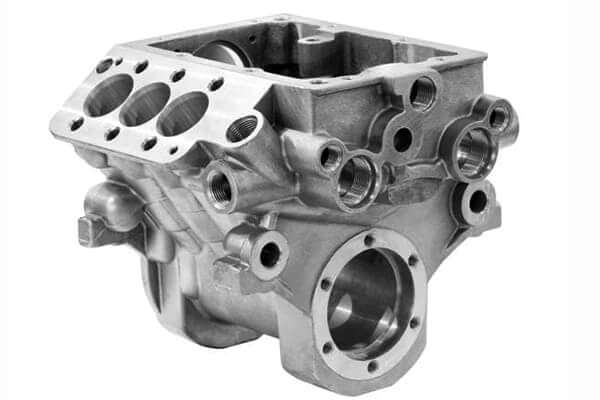
ADC12 Aluminum Alloy stands as Japan’s premier high-silicon die-casting alloy, standardized under JIS H5302.
Characterized by its balanced fluidity, mechanical strength, and corrosion resistance, ADC12 underpins millions of automotive, electronics, and industrial components worldwide.
Since its formal adoption in the 1970s, ADC12 has spread across Asia and Europe, offering foundries a reliable workhorse that bridges cost-efficiency with performance.
The development of Al-Si-Cu alloys for die casting began in the early to mid-20th century, driven by the need for materials that could be easily cast into complex shapes with good strength and dimensional stability.
ADC12 Aluminum Alloy, and its international counterparts, quickly gained prominence due to their exceptional die-filling capabilities and balanced property profile.
Today, ADC12 is one of the most widely used die casting alloys globally, particularly prevalent in Asia and increasingly recognized and utilized in North America and Europe, often under equivalent designations.
Its ubiquity stems from its ability to meet the demands of high-volume production for industries like automotive, electronics, and consumer goods.
2. ADC12 Aluminum Alloy Designation and Background
JIS Numbering System and Equivalence (ADC12 ≈ A383/A383.0)
The “ADC” in ADC12 stands for “Aluminum Die Casting” within the Japanese Industrial Standard (JIS) system.
The number “12” differentiates it from other aluminum die casting alloys based on its specific compositional ranges.
Internationally, ADC12 is very similar and often considered equivalent to ASTM B85 alloy A383 (or A383.0) in North America.
While minor variations in impurity limits or specific element ranges might exist between the standards, their fundamental characteristics and application suitability are largely interchangeable.
Evolution of Al-Si-Cu Casting Alloys in Japan
Japanese industry played a significant role in refining Al-Si-Cu die casting alloys for applications demanding precision and high productivity, particularly in the automotive and electronics sectors.
The standardization of alloys like ADC12 facilitated consistent quality and performance, contributing to the growth of Japan’s manufacturing prowess.
These alloys were developed to offer an optimal balance of fluidity, low die sticking, and adequate mechanical strength for mass-produced components.
ADC12 Aluminum Alloy Equivalents
- JIS H5302 “ADC12”: The Japanese standard for high-silicon Al–Si–Cu die-casting alloy.
- EN AC-AlSi12Cu: Europe’s equivalent, specified in EN 1706.
- ASTM A383.0: North American analogue, often called A383.0 or A383.1.
3. Composition and Alloying Philosophy
Nominal Chemical Composition
| Element | Range (wt %) | Primary Function |
|---|---|---|
| Si | 9.0 – 12.0 | Boosts fluidity, fills thin sections, minimizes shrinkage defects. |
| Cu | 1.5 – 3.5 | Strengthens via Al₂Cu intermetallics; supports post-cast age hardening. |
| Mg | 0.3 – 0.6 | Enables T5/T6 aging (Mg₂Si precipitates); enhances corrosion resistance. |
| Zn | 0.5 – 1.5 | Provides minor solid-solution strengthening and refines eutectic structure. |
| Fe | ≤ 1.3 | An unavoidable impurity; controlled to prevent coarse, brittle β-Fe phases. |
| Mn | 0.3 – 0.8 | Scavenges Fe to form fine dispersoids; refines grain size and reduces porosity. |
| Others | ≤ 0.05 each | Very low Cu, Ni, Ti, Sn, Pb—strict limits ensure consistent quality. |
Alloying Philosophy
- Maximize Castability:
ADC12 targets 9–12 % Si, placing it at the high end for die-casting alloys.
That eutectic silicon content gives you a fluid melt that reliably fills sub-millimeter walls in 5–10 s injection cycles. - Balance Strength and Ductility:
Copper levels (1.5–3.5 %) impart strength through fine Al₂Cu particles, yet remain low enough to avoid hot tears.
Magnesium additions (< 0.6 %) then allow artificial aging without reducing castability. - Control Impurities:
Tight caps on Fe, Ni, and Pb prevent brittle intermetallics and toxic inclusions.
Consistent raw-material certification and OES spectrometry checks ensure each melt starts within spec. - Support Post-Cast Treatments:
ADC12’s Mg and Cu enable both T5 (direct aging) and T6 (solution + aging) tempers.
Foundries choose T5 when you need minimal distortion; T6 when maximum hardness and creep resistance matter.
Resulting Microstructure
- Fine Eutectic Al–Si Network: Plate-like silicon transforms into a semi-fibrous morphology under trace Sr or Na modifiers, boosting ductility by 15–20 %.
- Dispersed Intermetallics: Al₂Cu and Mg₂Si precipitates distribute uniformly, providing strength without large brittle zones.
- Refined Grain Size: Manganese-induced Al₆Mn particles act as nucleation sites, yielding an equiaxed aluminum matrix that resists cracking.
4. Mechanical and Physical Properties of ADC12 Aluminum Alloy
As-Cast Mechanical Properties
| Property | Typical Range | Application Insight |
|---|---|---|
| Tensile Strength | 220 – 260 MPa | Supports moderately loaded structural components |
| 0.2% Yield Strength | 125 – 160 MPa | Ensures minimal creep under sustained loads |
| Elongation | 3 – 6 % | Balances formability with strength for thin-wall geometries |
| Brinell Hardness | 75 – 90 HB | Provides wear resistance in non-machined areas |
| Fatigue Endurance | ~ 70 MPa (10⁶ cycles) | Suitable for cyclic loading in automotive housings |
Influence of Temperature on Mechanical Performance
| Temperature | Tensile Retention | Ductility Change | Service Recommendation |
|---|---|---|---|
| Room Temp (25 °C) | 100 % | Baseline (3–6 %) | Standard condition |
| 100 °C | ~ 90 % | –1 % absolute | Good for under-hood engine brackets |
| 150 °C | ~ 85 % | –2 % absolute | Acceptable for transmission cases |
| 200 °C | ~ 80 % | –3 % absolute | Only for intermittent exposure; consider T6 temper |
Physical Properties
| Property | Value | Design Implication |
|---|---|---|
| Density | 2.70 g/cm³ | Enables light-weight designs vs steel (7.85 g/cm³) |
| Thermal Conductivity | 100 W/m·K | Facilitates heat dissipation in electronics housings |
| Coefficient of Thermal Expansion | 21 µm/m·K | Matches common gaskets; minimizes sealing issues |
| Specific Heat Capacity | 0.9 J/g·K | Affects thermal mass in heat-sink applications |
| Electrical Conductivity | 35 % IACS | Supports moderate current paths in housings |
5. Die Casting Process Considerations for ADC12
Fundamentals of High-Pressure Die Casting (HPDC):
- Cold Chamber vs. Hot Chamber:
ADC12, like most aluminum alloys, die casting using the cold chamber HPDC process.
In this method, molten metal is ladled from an external holding furnace into a “cold” shot sleeve before being injected into the die cavity at high pressure and velocity.
Hot chamber machines are typically used for lower melting point alloys like zinc and magnesium. - Process Cycle: The HPDC cycle for ADC12 Aluminum Alloy involves:
- Die Lubrication: Applying a release agent to the die surfaces.
- Die Closing: The two die halves are clamped together with high force.
- Injection: Molten ADC12 is injected into the die cavity at high speed (e.g., 30-60 m/s) and pressure.
- Intensification: After the cavity is filled, an intensifier piston applies even higher pressure to help feed shrinkage and improve casting density.
- Solidification: The casting rapidly solidifies under pressure due to contact with the relatively cool steel die.
- Die Opening: The die halves separate.
- Ejection: Ejector pins push the casting out of the die.
ADC12-Specific Process Parameters
| Parameter | Typical Range | Best Practice |
|---|---|---|
| Melt Temperature | 680 – 720 °C | Hold within ± 5 °C; higher end improves fluidity but raises oxidation risk. |
| Holding Temperature | 630 – 680 °C | Monitor with thermocouple; avoid prolonged hold above 680 °C to limit Fe pickup. |
| Die Temperature | 180 – 280 °C | Use conformal cooling channels to maintain uniform die surface. |
| Injection Pressure | 50 – 90 MPa | Start high for thin sections, then taper to reduce die wear. |
| Injection Speed | 0.5 – 2 m/s | Balance speed to prevent turbulence; faster fill can reduce oxide entrapment. |
| Shot Sleeve Preheat | 200 – 250 °C | Preheat sleeve to 220 °C to avoid cold shots at start-up. |
| Cycle Time | 5 – 10 s per shot | Optimize cooling and die open/close timing to hit takt targets. |
Die and Gating Design
- Gate Location: Position gates in the thickest sections to promote directional solidification toward risers.
- Riser Configuration: Use side-and-top risers sized to feed shrinkage without over-packing the cavity.
- Ventilation: Incorporate micro-vents (0.05–0.1 mm) along parting lines to allow trapped air and steam from molten-foam interactions to escape.
Controlling Defects
- Porosity Reduction: Combine optimized intensification timing with vacuum-assisted filling or high-pressure degassing to cut gas porosity by up to 60 %.
- Hot-Tear Prevention: Maintain a precise freezing range by keeping Cu below 3.5% and Mg under 0.6%. If you observe minor tear lines in laboratory trials, consider adding 0.01% Sr modifier to refine the eutectic.
- Oxide Fold Avoidance: Ensure a laminar fill by smoothing runner transitions and controlling plunger acceleration to under 5 g.
6. Heat Treatment and Age Hardening
ADC12’s alloying design lets you tailor strength and hardness through controlled heat treatments. By choosing the right aging cycle, you balance mechanical gains against dimensional stability—critical for precision die-cast components.
Common Tempers: T5 and T6
| Temper | Process Steps | Typical Properties |
|---|---|---|
| T5 | As-cast → Artificial aging• 160–170 °C for 4–6 h | • Tensile ↑ ~10 % (to ≈ 240–285 MPa)• Hardness ↑ 10 HB• ≤ 0.2 mm distortion |
| T6 | Solution treat → Quench → Artificial aging• 535 °C × 4 h → water quench → 160 °C × 8 h | • Tensile ↑ ~25 % (to ≈ 300 MPa)• Hardness ≈ 110 HB• 0.3–0.6 mm distortion |
Tailoring Your Cycle
- Solution Treatment (T6 only):
- Heat to 535 ± 5 °C, soak for 3–5 h to dissolve Cu and Mg into a solid solution.
- Rapid water quench locks in a supersaturated matrix that “ages” during subsequent heating.
- Aging:
- T5: Skip solution and age at 160–170 °C for 4–6 h immediately after ejection.
- T6: Age at 160 °C for 8–10 h after quenching.
- Cooling & Straightening:
- Plan an additional 2–4 h at room temperature for stress relaxation.
- Use light mechanical fixturing during aging to correct known distortion patterns.
Pro tip: Run a small batch of gauge blocks to quantify dimensional shifts before full-scale production.
Effects on Microstructure
- T5 Aging: Precipitates fine Mg₂Si and Al₂Cu particles along grain boundaries, boosting yield strength with minimal coarsening.
- T6 Aging: Encourages both intragranular and boundary precipitates—delivering peak strength but coarsening some Si eutectic networks, which slightly reduces toughness.
Dimensional Stability and Distortion
| Factor | T5 | T6 |
|---|---|---|
| Typical Distortion Range | ≤ 0.2 mm across 100 mm | 0.3–0.6 mm across 100 mm |
| Control Methods | Light fixturing | Post-age straightening |
| Best Use Case | Thin-wall, high-precision parts | Load-bearing components requiring max strength |
7. Surface Treatments and Finishing
Trimming, Deburring, and Machining Allowances
- Trimming & Flash Removal:
• Use die-mounted trim presses or CNC milling to remove gates and flash.
• Aim for a residual flash height ≤ 0.2 mm to minimize downstream work. - Deburring:
• Employ pneumatic deburring tools or tumble finishing with ceramic media.
• Target burr heights ≤ 0.1 mm on mating surfaces for smooth assembly. - Machining Allowances:
• Provide 0.5–1.0 mm allowance on critical dimensions (bolt holes, sealing faces).
• For ultra-precision features (± 0.05 mm), increase allowance to 1.5 mm to avoid re-work.
Anodizing and Chromate Conversion Coatings
| Treatment | Characteristics | Typical Thickness | Benefits |
|---|---|---|---|
| Type II Anodizing | Sulfuric acid bath | 5–10 µm | Improved wear and corrosion resistance |
| Type III Anodizing | Hard anodize in cold solution | 15–25 µm | High hardness (500–700 HV), excellent sealing |
| Chromate Conversion | Trivalent or hexavalent chromium dip | 0.2–0.4 µm | Self-healing corrosion protection, paint adhesion enhancement |
Powder Coating, Liquid Painting, and Plating
- Powder Coating:
• Electrostatic application of polyester or epoxy powders at 60–100 µm DFT.
• Cure at 180–200 °C for 10–15 minutes—yields scratch-resistant, UV-stable finish. - Liquid Painting:
• Two-component polyurethane systems sprayed to 40–80 µm.
• Offers high-gloss or matte aesthetics; touch-up friendly for repairs. - Electroplating:
• Zinc (10–20 µm) for sacrificial corrosion protection.
• Nickel (5–15 µm) for wear resistance and decorative shine.
Impregnation for Leak-Tightness
- Vacuum Impregnation:
• After machining, submerge parts in epoxy or resin under < 5 kPa vacuum.
• Resin penetrates micro-porosity; cure at 80–100 °C for 10–20 minutes. - Performance:
• Achieves leak rates < 10⁻⁴ mL/min under 15 MPa pressure.
• Ideal for hydraulic housings, refrigerant manifolds, and any fluid-handling component.
8. Corrosion Resistance and Durability
Natural Oxide Film Behavior
Like all aluminum alloys, ADC12 naturally forms a thin, adherent, and protective aluminum oxide (Al₂O₃) layer when exposed to oxygen.
This passive film provides good initial corrosion resistance in mild atmospheric conditions.
Pitting and Stress-Corrosion Cracking in Chloride Environments
- Pitting Corrosion: The copper content in ADC12 Aluminum Alloy can reduce its resistance to pitting corrosion in chloride-containing environments (e.g., marine atmospheres, road salt exposure) compared to low-copper aluminum alloys.
- Stress-Corrosion Cracking (SCC): While Al-Si-Cu die casting alloys like ADC12 are generally not highly susceptible to SCC in typical atmospheric conditions, prolonged exposure to aggressive corrosive environments under tensile stress could potentially lead to issues, especially if magnesium levels are not well controlled or specific corrosive agents are present.
Coating Protection and Maintenance
For service in corrosive environments, protective coatings (paint, powder coat, conversion coatings) are essential for ADC12 to prevent degradation and maintain aesthetic appeal.
Regular inspection and maintenance of these coatings can further extend the service life.
9. Key Applications and Industry Use Cases
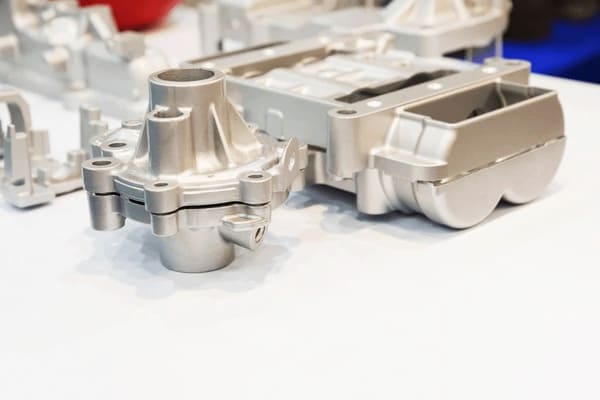
Automotive Components
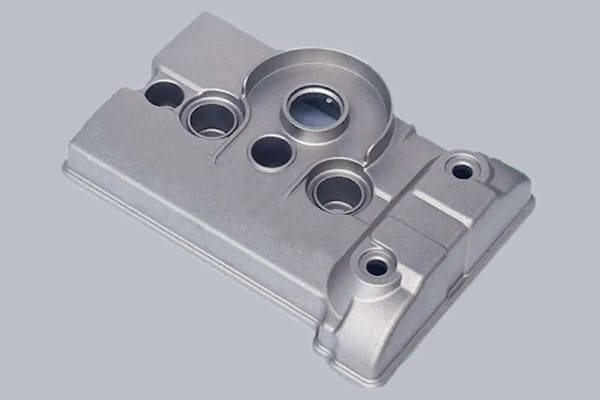
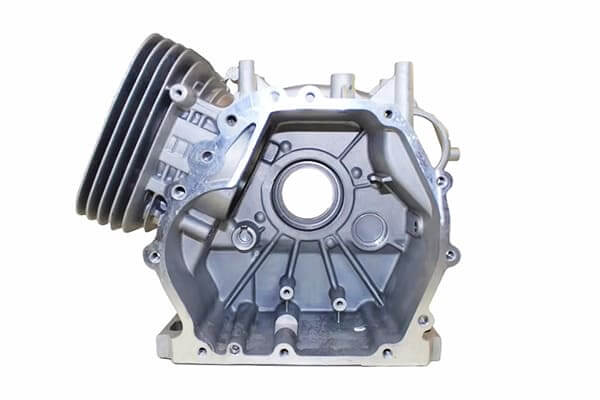
- Transmission Housings & Bell Housings:
• Complex, thin-walled geometries (≤ 1.5 mm) with integrated bosses and ribs.
• Must withstand torque reactions up to 5 kN·m and continuous temperatures of 120 °C.
• Case in point: A major OEM reports 20% weight savings and 30% cycle-time reduction by switching from A380 to ADC12 Aluminum Alloy in lightweight transmission cases. - Engine Brackets & Mounts:
• High load–bearing interfaces (tensile 240 MPa; fatigue life > 10⁶ cycles).
• Require tight hole tolerances (± 0.05 mm) for bolt alignment.
• Benefit: ADC12’s T5 temper delivers stable dimensions with minimal post-cast distortion (< 0.2 mm). - Brake Caliper Housings:
• Must resist hydraulic pressures up to 25 MPa and thermal cycling between –40 °C to 150 °C.
• Surface impregnation ensures zero leakage in safety-critical assemblies.
Consumer Electronics & Thermal Management
- LED Heat-Sink Housings:
• Thin fins (0.8–1.2 mm) maximize surface area, leveraging ADC12’s thermal conductivity (100 W/m·K).
• ADC12 Aluminum Alloy castings achieve Ra ≈ 3 µm, improving thermal interface adhesion. - Connector Shells & EMI Shields:
• Tight dielectric housings with intricate snap-lock features.
• Require deep-draw surface finishes for corrosion protection—often anodized to 10 µm thickness.
Industrial Valves, Pumps & Fluid Power
- Hydraulic Pump Bodies & Valve Manifolds:
• High-pressure leak-free assemblies (tested to 20 MPa) with internal oil galleries.
• Vacuum impregnation seals micro-porosity, delivering < 1 × 10⁻⁴ mL/min leak rates. - Compressor Housings:
• Must endure cyclic pressures and rotational imbalances; ADC12’s fatigue endurance (~70 MPa at 10⁶ cycles) ensures service life > 10 years.
Aerospace & Defense Fittings
- Control-Actuator Housings:
• Require ± 0.1 mm tolerances and Ra ≤ 2 µm for hydraulic interfaces at altitudes down to – 60 °C.
• ADC12’s T6 temper yields tensile up to 300 MPa with elongation ~ 2 %, meeting stringent airworthiness standards. - Structural Brackets & Mounts:
• Light-weight yet stiff supports for avionics; repeated thermal cycles (– 55 °C to + 85 °C) demand stable CTE (21 µm/m·K).
Emerging & Rapid-Tooling Applications
- 3D-Printed Pattern Inserts:
• Use of additive-printed wax or polymer patterns in HPDC dies accelerates design iteration—costing $500 per insert vs. $5 000 for steel dies.
• Enables rapid prototyping of complex castings in R&D aerospace and motorsport. - Electric Vehicle (EV) Powertrain Components:
• Battery housing brackets and EV-motor end-covers leverage ADC12’s lightweight strength and high-volume die-cast capability.
• Manufacturers report 15 % reduction in assembly weight and improved thermal management compared to steel alternatives.
10. ADC12 Aluminum Alloy Compared With Other Alloys
Alloy Comparison Summary
Here’s an expanded comparison that includes additional common die-casting alloys for broader reference:
| Alloy | Si (wt %) | Cu (wt %) | Mg (wt %) | Typical Tensile (MPa) | Elongation (%) | Castability | Heat-Treatable | Best Use Case |
|---|---|---|---|---|---|---|---|---|
| ADC12 | 9.0–12.0 | 1.5–3.5 | 0.3–0.6 | 220–260 | 3–6 | Excellent (thin walls) | Yes (T5/T6) | High-volume thin-wall HPDC parts |
| A380 | 8.0–12.0 | 3.5–5.0 | 0.1–0.5 | 250–300 | 2–5 | Very good | Limited (T5) | Under-hood, pressure-tight automotive parts |
| ADC10 | 7.0–11.0 | 0.2–0.6 | 0.3–0.6 | 180–220 | 4–8 | Excellent | Yes (T5) | General-purpose die-casting, economical parts |
| ADC11 | 10.0–14.0 | 2.0–4.0 | 0.3–0.6 | 200–240 | 3–6 | Excellent | Yes (T5) | Decorative and thin-section castings |
| A356-T6 | 6.5–7.5 | 0.1 | 0.3–0.5 | 230–270 | 5–8 | Good (moderate walls) | Yes (T6) | Aerospace brackets, electronics housings |
| A413 | 11.0–13.0 | 3.0–5.0 | 0.2–0.5 | 280–320 | 2–4 | Moderate | No | High-temperature components, wear parts |
| 6061-T6 | 0.4–0.8 | — | 1.0 | 310–350 | 10–12 | Poor (non-cast) | Yes (multiple) | Machined structural components |
| A390 | 17.0–20.0 | 4.5–6.0 | 0.2–0.6 | 380–420 | 1–3 | Low (thick walls) | No | Bearings, wear-resistant parts |
ADC12 vs. A380 (AA 3003-Series)
- Fluidity & Thin-Wall Filling:
ADC12’s 9–12 % Si gives it superior flow in sub-millimeter sections, whereas A380 (8–12 % Si, higher Cu) fills slightly thicker walls more reliably. - Strength:
A380’s higher copper (3.5–5 %) and magnesium content yield tensile strengths up to 300 MPa (T5), about 15 % above ADC12’s 260 MPa peak. - Corrosion & Heat Resistance:
Both alloys form a protective Al₂O₃ film, but A380 tolerates under-hood temperatures up to 200 °C with less strength loss. - Cost & Machinability:
ADC12 runs 5–10 % cheaper in high-volume jobs and machines easier—allowing 20–30 % longer tool life—thanks to lower hardness in the as-cast state.
ADC12 vs. 6061 (Heat-Treatable Wrought Alloy)
- Castability vs. Wrought Forming:
ADC12 flows easily into HPDC dies; 6061 requires extrusion or forging and cannot cast thin walls. - Mechanical Performance:
6061-T6 delivers tensile strengths of 310–350 MPa with 10–12 % elongation—far exceeding ADC12’s 260 MPa and 6 % elongation. - Heat-Treatment Flexibility:
6061 supports multiple tempers (T4, T6, T651) for tailored strength‐ductility balances, while ADC12 only accepts T5/T6 with limited response. - Cost & Density:
ADC12 costs roughly 30 % less per kg in cast parts. Both share the same density (2.70 g/cm³), but ADC12 reduces secondary machining needs.
ADC12 vs. A356 (Precision Die-Casting Alloy)
- Alloy Chemistry:
A356 carries ~7 % Si with 0.3 % Mg, emphasizing heat-treatability, whereas ADC12 uses 9–12 % Si and up to 0.6 % Mg for superior fluidity. - Heat Treatment:
In T6 temper, A356 reaches 230–270 MPa tensile—comparable to ADC12’s T6—but requires slower solidification and thicker sections to avoid hot cracks. - Surface Finish & Detail:
A356’s finer solidification grants smoother as-cast surfaces (Ra 1–2 µm) vs ADC12’s Ra 3–6 µm, favoring parts where cosmetic finish is critical. - Cost & Cycle Time:
ADC12’s faster HPDC cycles (5–10 s) and thinner walls cut part-cycle time by 20–30 % compared to A356 casting aluminum, which often needs a slower fill to manage thermal gradients.
11. Conclusion
ADC12 aluminum alloy delivers a robust combination of castability, mechanical performance, and cost-effectiveness.
Its JIS standardization, extensive global supply, and compatibility with HPDC make it a cornerstone of modern die-cast manufacturing.
By understanding its alloying philosophy, process parameters, and finishing options, engineers optimize ADC12 for applications ranging from automotive powertrains to precision electronics.
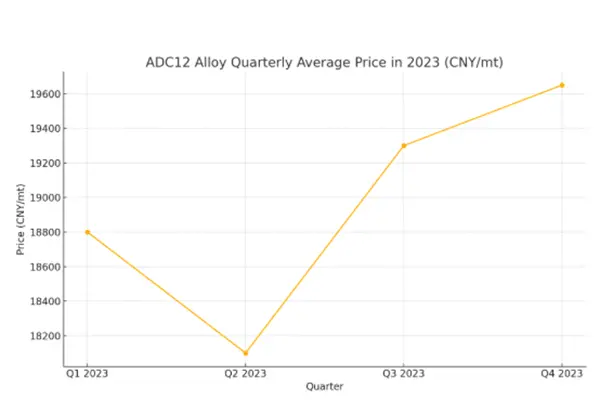
12. ADC12 2023 rmb price chart
Frequently Asked Questions
What is ADC12 aluminum alloy?
A high-silicon, copper-bearing die-casting alloy standardized under JIS H5302, equivalent to EN AC-AlSi12Cu and ASTM A383.0.
Can ADC12 be anodized?
Yes—ADC12 accepts Type II and Type III anodizing, achieving decorative and protective oxide layers up to 12 µm thick.
How does ADC12 differ from A380 in mechanical properties?
ADC12 offers slightly better fluidity and thin-wall filling, while A380 delivers higher tensile (up to 300 MPa) and yield strengths.
What heat-treatment options exist beyond T6 for ADC12?
Aside from T5 and T6, foundries sometimes apply T4 (natural aging) for minimal distortion or specialized double-aging cycles for tailored properties.
Which surface treatment best protects ADC12 in marine environments?
A combination of chromate conversion and high-build epoxy or PVDF coatings extends corrosion protection beyond 2,000 h salt-spray exposure.
What design guidelines optimize ADC12’s die-casting performance?
Maintain wall thickness≥ 1.5 mm, use uniform section thickness, provide generous draft angles (≥ 1°), and position gates to ensure directional solidification without hot spots.
Related products
-
 Customized casting aluminum
A380 Aluminum Alloy: The Ultimate Guide to Die-Casting Performance
¥4,225.00Unlock the secrets of A380 aluminum alloy—its composition, mechanical properties, castability, and finishing techniques. Learn why A380 reigns as the die-casting benchmark in automotive, electronics, and industrial applications.
-
 Customized casting aluminum
Langhe Customized A356 Casting Aluminum Parts
¥4,220.00Explore how Customized A356 casting aluminum parts deliver exceptional strength‑to‑weight ratios, fine geometric detail, and superior fatigue resistance—ideal for automotive, aerospace, and industrial applications.