


Contents
show
1. Defining 1100 Aluminum Foil: Composition and Purity
To truly understand 1100 aluminum foil, we must first look at the alloy itself.
The designation “1100” comes from the Aluminum Association (AA) naming system for wrought aluminum alloys.
- The 1xxx Series: This series designates aluminum alloys with a minimum purity of 99.00% aluminum.The last two digits in the designation indicate the minimum aluminum percentage above 99.00%.For 1100, this means it contains a minimum of 99.00% aluminum.
- Controlled Impurities: The remaining percentage (up to 1.00%) consists primarily of controlled amounts of silicon (Si) and iron (Fe).Other elements like copper (Cu), manganese (Mn), magnesium (Mg), and zinc (Zn) are present in very small, specified trace amounts.The specific control of these impurities is crucial, as even small variations can subtly influence properties.
Typical Chemical Composition Limits for 1100 Aluminum (Weight %):
| Element | Percentage (%) | Significance |
|---|---|---|
| Aluminum (Al) | ≥ 99.00 | Base metal; determines core properties like density, conductivity, corrosion resistance. |
| Silicon (Si) + Iron (Fe) | ≤ 0.95 | Primary impurities; slightly increase strength but reduce ductility and conductivity compared to higher purity Al. |
| Copper (Cu) | ≤ 0.05 – 0.20 | Can slightly increase strength but significantly reduces corrosion resistance if levels are too high.
Controlled tightly. |
| Manganese (Mn) | ≤ 0.05 | Minor impurity. |
| Zinc (Zn) | ≤ 0.10 | Minor impurity. |
| Others, Each | ≤ 0.05 | Strict limits on other individual trace elements. |
| Others, Total | ≤ 0.15 | Overall limit for all other trace elements combined. |
(Note: Exact limits may vary slightly based on specific standards like ASTM, EN, or ISO).
Why Purity Matters
The high aluminum content (≥ 99.00%) is the defining feature of the 1100 alloy and directly contributes to its most valued characteristics:
- Excellent Corrosion Resistance: Exposing pure aluminum to air forms a thin, tough, self-healing oxide layer (Al₂O₃), offering strong protection against weathering and chemicals. Low alloying elements, especially copper, enhance this resistance.
- High Thermal Conductivity: Aluminum is an excellent conductor of heat.The high purity of 1100 minimizes disruptions to the crystal lattice structure, allowing for efficient heat transfer, second only to copper and silver among common metals.
- High Electrical Conductivity: Similarly, the high purity results in excellent electrical conductivity, approximately 61% of the International Annealed Copper Standard (IACS).
- Superb Workability/Formability: 1100 aluminum foil is highly ductile and malleable, especially in its annealed state (O temper). It bends, draws, spins, stamps, roll-forms, and embosses easily without cracking, making it ideal for complex shapes.
- Non-Toxic Nature: Its purity and stable oxide layer make it suitable for applications involving food contact, provided it meets relevant regulatory standards (like FDA or EFSA requirements).
Compared to higher-strength aluminum alloys (like the 3xxx, 5xxx, or 6xxx series), 1100 aluminum prioritizes these properties over mechanical strength.
This makes 1100 aluminum foil a specialist material chosen precisely when formability, conductivity, or corrosion resistance are paramount.
2. How 1100 Aluminum Foil is Made: A Simplified Look
Producing 1100 aluminum foil requires a precise, multi-stage process to achieve tight thickness control, uniform properties, and the desired surface finish.
Overview:
-
Primary Aluminum Production: Bauxite is mined, refined into alumina, and smelted into pure aluminum via the Hall-Héroult process. Minimal alloying for 1100.
-
Casting: Molten aluminum is cast into billets (rolling ingots), often using continuous casting for consistency.
-
Hot Rolling: Preheated billets are rolled at high temperatures (>350°C) to reduce thickness and refine the structure.
-
Cold Rolling: The key stage where the coil is rolled at room temperature through multiple passes, greatly reducing thickness. Lubricants control friction and ensure surface quality.
-
Work Hardening: Cold rolling increases strength and hardness while reducing ductility, enabling different tempers like H18.
-
Doubling (Pack Rolling): For very thin foils (<50 µm), two layers are rolled together, creating a bright and a matte side.
-
Annealing: Controlled heating restores ductility (O temper) or adjusts properties (H2x tempers) through partial annealing.
-
Finishing Operations:
-
Slitting: Cutting coils to narrower widths.
-
Surface Treatments: Cleaning, etching, coating, or printing.
-
Cutting/Winding: Preparing final products.
-
-
Quality Control: Continuous monitoring of composition, thickness, mechanical properties, surface quality, and dimensional accuracy ensures compliance with specifications.
Precise control of rolling, lubrication, tension, and annealing is critical to producing high-quality 1100 aluminum foil.
3. Understanding Temper Designations for 1100 Foil
The temper of aluminum foil refers to its state of hardness and strength, achieved through thermal treatments (annealing) and/or mechanical working (strain hardening via cold rolling).
The temper significantly impacts the foil’s mechanical properties, particularly its formability and strength.
Common tempers for 1100 aluminum foil include:
- O (Annealed):
- Condition: Fully softened through annealing.Recrystallized grain structure.
- Properties: Lowest strength, highest ductility and formability.Excellent for deep drawing, complex bending, embossing, and applications where maximum workability is needed before potential work hardening during forming.
- Typical Use: Deep drawn containers, intricate fins, applications requiring maximum formability.
- H1x (Strain-Hardened Only): The ‘H1’ indicates strain hardening as the primary strengthening mechanism.The second digit signifies the degree of strain hardening (and thus final strength):
- H12: Quarter-hard.Some work hardening applied after annealing.Offers slightly higher strength than O temper with good formability remaining.
- H14: Half-hard.Moderate work hardening.A popular temper offering a good balance between strength and formability.Suitable for many general-purpose applications, moderate forming operations.
- H16: Three-quarters-hard.Significant work hardening.Higher strength, reduced ductility compared to H14.Used where greater rigidity is needed but some forming is still required.
- H18: Full-hard.Maximum practical cold work applied.Highest strength and hardness achievable for 1100 through strain hardening alone.Lowest ductility.Used where maximum strength/rigidity is the primary requirement and minimal forming is involved (e.g., flat labels, some types of fins where bending is simple).
- H2x (Strain-Hardened and Partially Annealed): The ‘H2’ indicates the foil was strain-hardened more than desired, then partially annealed (softened back) to reach the target strength level.This can sometimes result in slightly better formability at a given strength level compared to H1x tempers.
- H24: Equivalent in final strength properties to H14, but achieved via strain hardening then partial annealing.Often chosen for its specific forming characteristics.
- H26: Equivalent in final strength properties to H16, achieved via strain hardening then partial annealing.
Performance data of 1100 aluminum foil in different tempers
| Temper | Tensile Strength (MPa / ksi) | Yield Strength (0.2% Offset) (MPa / ksi) | Elongation (% in 50mm / 2in) | Hardness (Brinell / Rockwell) | General Characteristics |
|---|---|---|---|---|---|
| O | 90 – 115 / 13 – 17 | 35 – 50 / 5 – 7 | 20 – 40% | ~23 HB / Low | Softest, most ductile, best formability |
| H12 | 105 – 130 / 15 – 19 | 85 – 110 / 12 – 16 | 8 – 18% | ~28 HB / Intermediate | Good formability, slightly stronger |
| H14 | 115 – 145 / 17 – 21 | 105 – 130 / 15 – 19 | 5 – 15% | ~32 HB / Intermediate | Good balance of strength & formability |
| H16 | 130 – 165 / 19 – 24 | 125 – 150 / 18 – 22 | 3 – 10% | ~38 HB / Higher | Higher strength, reduced formability |
| H18 | ≥ 150 / ≥ 22 | ≥ 140 / ≥ 20 | 2 – 8% | ~44 HB / Highest | Strongest (strain-hardened), stiffest |
| H24 | 115 – 145 / 17 – 21 | 105 – 130 / 15 – 19 | 6 – 16% | ~34 HB / Intermediate | Similar strength to H14, potentially better forming |
(Note: These are typical values.
Actual properties depend on exact thickness, processing, and specific standards.
Always refer to supplier specifications.)
Choosing the Right Temper: Selecting the correct temper is crucial for successful application.
- Use O temper for severe forming.
- Use H14 or H24 for general purposes needing moderate strength and good formability.
- Use H18 when maximum strength/stiffness is needed and forming is minimal or involves simple bends.
4. Key Properties of 1100 Aluminum Foil: A Detailed Look
The utility of 1100 aluminum foil stems directly from its inherent physical, mechanical, thermal, electrical, and chemical properties.
4.1. Mechanical Properties:
- Strength: As shown in the temper table, 1100 aluminum has relatively low mechanical strength compared to many other aluminum alloys.Its tensile strength ranges from around 90 MPa (13 ksi) in the O temper to over 150 MPa (22 ksi) in the H18 temper.This limits its use in structural applications requiring high load-bearing capacity.
- Ductility/Formability: This is a standout characteristic, especially in the O temper.Its high elongation values indicate it can undergo significant plastic deformation before fracturing.This allows it to be easily:
- Drawn into complex shapes (deep drawing).
- Bent tightly without cracking.
- Embossed with detailed patterns.
- Folded and crimped effectively (dead-fold characteristic).
- Work Hardening: 1100 aluminum foil work-hardens rapidly during cold forming, increasing its strength but decreasing its ductility as it deforms. This requires consideration during multi-stage forming processes and may necessitate intermediate annealing steps.
- Hardness: Ranges from soft (O temper) to moderately hard (H18 temper).Sufficient for many applications but susceptible to scratching and denting compared to harder alloys or steel.
4.2. Physical Properties:
- Density: Approximately 2.71 g/cm³ (0.098 lb/in³).This is about one-third the density of steel or copper, making 1100 foil exceptionally lightweight.This is a major advantage in packaging, transportation, and aerospace/automotive applications where weight reduction is critical.
- Melting Point: Approximately 657°C (1215°F).While high, prolonged exposure to temperatures above ~200°C (392°F) can lead to annealing (softening) effects, especially for harder tempers.The melting point itself is relevant for recycling and some high-temperature processing but less so for typical end-use applications.
- Appearance: Typically has a bright, silvery appearance (mill finish).As mentioned, very thin foils might have one bright and one matte side due to pack rolling.
4.3. Thermal Properties:
- Thermal Conductivity: This is a primary advantage of 1100 aluminum.Its thermal conductivity is excellent, typically around 220-230 W/(m·K) at room temperature.This high value facilitates rapid and efficient heat transfer.
- Significance: Makes 1100 foil ideal for heat exchanger fins (radiators, HVAC coils, condensers), heat sinks, and thermal shielding applications where efficient dissipation or distribution of heat is required.
- Reflectivity: Aluminum foil is highly reflective to radiant heat (thermal radiation), reflecting up to 95-98% of incident thermal energy.It also has low emissivity (meaning it radiates little heat itself).
- Significance: This property is key for thermal insulation applications, such as radiant barriers in buildings, reflective duct wrap, and heat shields in automotive or industrial settings.
- Specific Heat Capacity: Approximately 0.9 J/(g·K).This indicates the amount of heat required to raise its temperature.
- Coefficient of Thermal Expansion: Approximately 23.6 µm/(m·K).Describes how much the material expands or contracts with temperature changes.This needs consideration in designs involving dissimilar materials or large temperature fluctuations.
4.4. Electrical Properties:
- Electrical Conductivity: Another major strength.1100 aluminum foil exhibits high electrical conductivity, typically ~61% IACS (International Annealed Copper Standard).While lower than copper (~100% IACS), its significantly lower density gives it a better conductivity-to-weight ratio.
- Significance: Makes it suitable for electrical applications like capacitor electrodes, transformer windings (especially foil-wound transformers), electrical shielding (EMI/RFI), and busbars where light weight is also important.
- Electrical Resistivity: The inverse of conductivity, typically around 2.82 microhm-cm (µΩ·cm) at 20°C.
4.5. Chemical Properties:
- Corrosion Resistance: Excellent resistance to atmospheric corrosion and many neutral or mildly acidic/alkaline environments due to the stable, passive aluminum oxide (Al₂O₃) surface layer.It performs well in contact with most foods, water, and organic compounds.
- Significance: Ideal for food packaging, pharmaceutical packaging, chemical equipment components, architectural applications (though usually thicker forms), and outdoor exposure (within limits).
- Reactivity: While generally resistant, 1100 aluminum can be attacked by:
- Strong acids (e.g., hydrochloric acid, sulfuric acid).
- Strong alkalis (e.g., sodium hydroxide, potassium hydroxide).
- Solutions containing heavy metal salts (e.g., copper salts can cause pitting).
- Seawater or environments with high chloride concentrations can cause pitting corrosion over time.
- Food Grade Compatibility: Its high purity and corrosion resistance make 1100 aluminum foil inherently suitable for food contact applications.However, for commercial use, it must meet specific regulatory standards (e.g., ASTM B479 in the US) which involve controls on lubricants used during rolling and specific compositional limits.Any coatings applied must also be food grade.
- Non-Toxic: Aluminum is generally considered non-toxic and non-absorbent.
4.6. Barrier Properties:
- Impermeability: Solid aluminum foil, even at thin gauges (down to ~6 µm), provides a near-perfect barrier to:
- Light (total opacity)
- Oxygen and other gases
- Moisture (water vapor)
- Oils and fats
- Microorganisms
- Odors
- Significance: This makes it an exceptional material for protective packaging, preserving the freshness, flavor, aroma, and shelf life of sensitive products like food, pharmaceuticals, and cosmetics.
Summary Table of Key 1100 Aluminum Foil Properties:
| Property Category | Key Characteristics | Primary Advantages / Relevance |
|---|---|---|
| Mechanical | Low-to-moderate strength, Excellent ductility (esp.
O temper) |
Superb formability for complex shapes, Ease of processing (bending, drawing, embossing) |
| Physical | Low density (~2.71 g/cm³) | Lightweight applications (packaging, transport) |
| Thermal | High thermal conductivity (~220-230 W/(m·K)), High reflectivity | Efficient heat transfer (heat exchangers, fins), Thermal insulation (radiant barriers) |
| Electrical | High electrical conductivity (~61% IACS) | Electrical components (capacitors, transformers), Shielding, Good conductivity-to-weight ratio |
| Chemical | Excellent corrosion resistance (passive oxide layer), Non-toxic | Durability in many environments, Food/pharma packaging suitability, Chemical equipment |
| Barrier | Impermeable to light, gas, moisture, odors | Superior product protection, Shelf life extension |
5. Diverse Applications: Where 1100 Aluminum Foil Shines
The unique property profile of 1100 aluminum foil makes it a preferred material across a wide spectrum of industries and applications:
5.1. Heat Transfer Applications:
- Heat Exchanger Fins: Perhaps one of the most significant uses.Thin 1100 foil (often in O or H14 temper for formability) is stamped or roll-formed into intricate fin shapes and bonded (e.g., brazed or mechanically expanded) onto tubes carrying fluids.Found in:
- HVAC systems (air conditioners, heaters)
- Automotive radiators and condensers
- Industrial refrigeration units
- Power plant cooling systems
- Heat Sinks: Used as fins or base plates in heat sinks designed to dissipate heat from electronic components.
- Evaporator Coils: Used in refrigeration cycles.
5.2. Electrical Applications:
- Capacitor Foil: Thin gauge 1100 foil (often highly pure variants like 1145, but 1100 is also used) serves as the electrode material in electrolytic and film capacitors.Often etched to increase surface area.
- Transformer Windings: Particularly in foil-wound transformers, where strips of 1100 foil replace traditional copper wire windings.Offers advantages in space utilization, heat dissipation, and potentially lower cost/weight.Commonly used in distribution transformers.
- Electrical Shielding: Used to shield cables or electronic enclosures from electromagnetic interference (EMI) or radio frequency interference (RFI), although its effectiveness varies with frequency compared to copper.
- Cable Wrap: Sometimes used as a shielding or conductive layer within electrical cables.
5.3. Packaging Applications:
- Food Packaging:
- Lids: Heat-sealable lids for yogurt cups, dairy containers, and ready meals (often lacquered).
- Containers & Trays: Semi-rigid containers (often thicker foil or laminates) for bakery products, takeaway meals.
- Wrappers: Protective wraps for butter, cheese, confectionery (less common than alloys like 8011 but used where specific properties are needed).
- (Must meet food-grade standards, e.g., ASTM B479)
- Pharmaceutical Packaging:
- Blister Packs: As the lidding foil for push-through blister packs, providing excellent barrier against moisture and light to protect medication (often requires specific coatings/heat seal layers).
- Bottle Cap Liners: Used as a liner material inside bottle caps to provide a seal and barrier.
- Cosmetic Packaging: Components requiring barrier properties and a metallic look.

5.4. Insulation Applications:
- Radiant Barriers: Used in building construction (attics, walls) to reflect thermal radiation and reduce heat transfer, improving energy efficiency.Often laminated to paper, plastic films, or fiberglass.
- Duct Wrap Insulation: Wrapping HVAC ductwork to minimize heat loss or gain.
- Automotive Heat Shields: Placed near engines or exhaust systems to reflect heat away from sensitive components or the passenger cabin.
5.5. Industrial and Technical Applications:
- Nameplates and Labels: 1100 foil (often H18 temper for stiffness) is used for durable nameplates, serial number tags, and decorative labels due to its corrosion resistance and ability to be etched or printed.
- Chemical Processing Equipment: Components like liners or heat transfer elements in environments compatible with aluminum’s chemical resistance.
- Printing Substrates: Used as a metallic substrate for certain high-quality printing applications.
- Reflectors: For lighting fixtures or solar applications, leveraging its reflectivity (though often requires specific surface treatments for optimal performance).
- Honeycomb Structures: Thin foil can be formed and bonded into lightweight but strong honeycomb core structures used in aerospace and transportation.
5.6. Cooking/Household (Limited Use):
Household aluminum foil typically uses alloys like 8011 or 8079, which are optimized for cost and dead-fold properties. However, you can use 1100 foil for cooking applications due to its non-toxicity and heat resistance, though it may be less robust and have different handling characteristics compared to standard kitchen foil.
6. Advantages of Using 1100 Aluminum Foil
Choosing 1100 aluminum foil offers several distinct benefits:
- Exceptional Formability: Easily shaped into complex designs without fracture, reducing manufacturing complexity.
- Superior Thermal Conductivity: Enables highly efficient heat transfer in thermal management applications.
- High Electrical Conductivity: Provides a lightweight and effective solution for many electrical conductor and shielding needs.
- Excellent Corrosion Resistance: Ensures durability and longevity in many environments, including food contact.
- Lightweight: Significantly reduces the weight of components and products compared to copper or steel.
- Effective Barrier: Provides unparalleled protection against environmental factors for sensitive goods.
- Non-Toxic & Food Safe: Suitable for direct contact with food and pharmaceuticals (when certified).
- Recyclability: Aluminum is highly and infinitely recyclable, supporting sustainability goals.
- Cost-Effectiveness: Generally offers good performance value, especially considering its conductivity-to-weight ratio compared to copper.
- Good Weldability/Brazability: Can be joined using various techniques, important for assembling components like heat exchangers.
Despite its strengths, 1100 aluminum foil has limitations:
- Low Mechanical Strength: Not suitable for applications requiring high tensile or yield strength; easily dented or torn compared to stronger alloys.
- Temperature Sensitivity (Softening): While the melting point is high, harder tempers (H1x, H2x) will lose strength and soften (anneal) if exposed to moderately elevated temperatures (above ~150-200°C) for extended periods.
- Work Hardening: Can become brittle if excessively cold-worked without intermediate annealing, limiting formability in some multi-stage processes.
- Galvanic Corrosion Potential: When in direct contact with more noble metals (like copper or stainless steel) in the presence of an electrolyte (like moisture), 1100 aluminum can act as the anode and corrode preferentially.Design considerations are needed for dissimilar metal joints.
- Susceptibility to Strong Alkalis and Acids: Not suitable for highly corrosive chemical environments without protective coatings.
- Surface Sensitivity: The soft surface can be easily scratched or marred if not handled carefully.
7. Comparing 1100 Foil with Other Common Foil Alloys
Understanding how 1100 compares to other frequently used aluminum foil alloys helps in material selection:
| Feature | 1100 Aluminum Foil | 3003 Aluminum Foil | 8011 Aluminum Foil |
|---|---|---|---|
| Primary Alloying Element(s) | None (≥99.00% Al) | Manganese (Mn ~1.2%) | Iron (Fe ~0.7%) & Silicon (Si ~0.6%) |
| Purity | High (Commercially Pure) | Lower than 1100 | Lower than 1100 |
| Tensile Strength | Lower | Higher (~20% stronger than 1100) | Moderate (Often similar to or slightly > 1100) |
| Formability | Excellent | Good (slightly less than 1100) | Good |
| Corrosion Resistance | Excellent | Very Good (Mn adds little negative impact) | Good (Fe/Si can slightly reduce resistance) |
| Thermal/Electrical Conductivity | Highest | High (slightly lower than 1100) | High (slightly lower than 1100) |
| Typical Tempers | O, H14, H18, H24 | O, H14, H18, H24 | O, H18, H22, H24 |
| Key Advantages | Formability, Conductivity, Corrosion Res. | Higher Strength, Good Formability | Cost-effective, Good all-round properties |
| Common Applications | Heat Exchangers, Electrical, Packaging, Industrial | Cookware, Chemical Equip., Building Products | Household Foil, Flexible Packaging, Containers |
8. Specifications and Standards Governing 1100 Foil
To ensure quality, consistency, and suitability for specific applications, 1100 aluminum foil production adheres to various international and regional standards.
Key examples include:
- ASTM B209 / B209M: Standard Specification for Aluminum and Aluminum-Alloy Sheet and Plate (covers foil within its scope).Defines chemical composition, mechanical property requirements for different tempers, dimensional tolerances.
- ASTM B479: Standard Specification for Annealed Aluminum and Aluminum-Alloy Foil for Flexible Barrier, Food Contact, and Other Applications.Specifically addresses requirements for foil used in food packaging, including surface conditions and lubricant residues.Crucial for food grade certification.
- EN 485: European standard series for Aluminum and aluminum alloys – Sheet, strip and plate.
- EN 546: European standard series for Aluminum and aluminum alloys – Foil.
- EN 602: European standard for Aluminum and aluminum alloys – Wrought products – Chemical composition of semi-finished products used for the fabrication of articles for use in contact with foodstuff.
- ISO 6361: Wrought aluminium and aluminium alloys – Sheets, strips and plates.
These standards dictate acceptable ranges for:
- Chemical composition percentages.
- Mechanical properties (tensile strength, yield strength, elongation) for each temper.
- Dimensional tolerances (thickness, width, flatness).
- Surface quality (freedom from defects).
- Testing procedures.
Adherence to these standards ensures that 1100 aluminum foil from reputable suppliers meets the expected performance characteristics.
Always request material certifications traceable to relevant standards.
9. Surface Treatments and Finishes
While often used in its plain “mill finish” state, 1100 aluminum foil can undergo various surface treatments to enhance performance or aesthetics:
- Cleaning/Degreasing: Removes residual rolling oils and contaminants, essential for food contact or subsequent coating/printing.
- Etching: Chemical or electrochemical processes roughen the surface, increasing surface area (vital for capacitor foils) or improving adhesion for inks, coatings, or adhesives.
- Coating/Lacquering: Application of organic coatings (lacquers, paints, heat sealants) to provide:
- Protection against specific chemicals or abrasion.
- Heat sealability (for lids).
- Color or decorative effects.
- Improved slip or release properties.
- (Coatings must be food grade for relevant applications).
- Anodizing: An electrochemical process that thickens the natural oxide layer, significantly enhancing corrosion and abrasion resistance.Less common on very thin foils due to process challenges but feasible for thicker foil gauges.Can also be dyed for color.
- Printing: Applying inks for branding, instructions, or decoration using methods like flexography or gravure.Requires compatible foil surface preparation.
The choice of surface treatment depends entirely on the end-use requirements.
10. Environmental Considerations and Sustainability
Aluminum, including 1100 alloy foil, has both positive and negative environmental aspects:
- Primary Production Impact: Extracting aluminum from bauxite and smelting it is highly energy-intensive, carrying a significant carbon footprint and impacting landscapes through mining.
- Recycling Advantage: Aluminum is highly recyclable without losing quality. Recycling aluminum uses only about 5% of the energy required for primary production, significantly reducing greenhouse gas emissions and resource depletion. You can readily recycle 1100 aluminum foil along with other aluminum scrap.
- Recycling Challenges:
- Collection: Ensuring used foil enters the recycling stream can be challenging.Consumer awareness and accessible collection programs are key.
- Contamination: Food residues or non-aluminum layers (in laminates) can complicate recycling.Cleaning foil before disposal helps.
- Thin Gauge Loss: Very thin foil can sometimes oxidize and be lost during the melting process if not properly collected and processed (e.g., baled).
- Sustainability Efforts: The aluminum industry actively pursues initiatives like:
- Increasing the use of renewable energy in primary production.
- Improving recycling rates and technologies.
- Developing alloys with higher recycled content.
- Responsible sourcing of bauxite.
Using 1100 aluminum foil and ensuring its proper disposal for recycling contributes to a more circular economy.
11. Frequently Asked Questions (FAQ)
Q1: Is 1100 aluminum foil the same as household kitchen foil?
A1: Not usually. While 1100 could be used, standard household foil is more commonly made from alloys like 8011 or 8079.
1100 foil is typically used in more industrial or technical applications where its specific properties (like high conductivity or formability) are required.
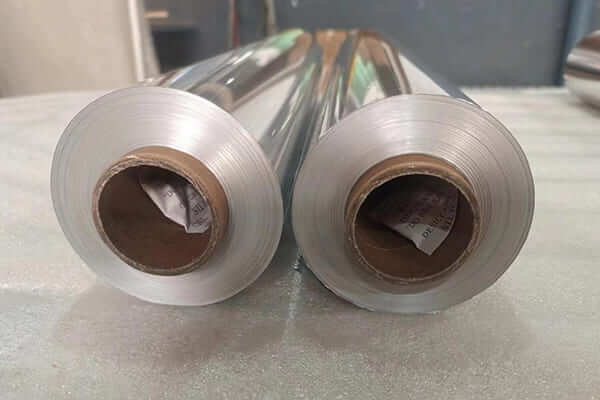
Q2: Is 1100 aluminum foil food grade?
A2: 1100 aluminum alloy itself is inherently non-toxic and suitable for food contact due to its purity and corrosion resistance.
However, for a specific foil product to be certified “food grade,” it must meet regulatory standards like ASTM B479, which control factors like lubricants used during manufacturing and specific compositional limits.
Q3: How strong is 1100 aluminum foil?
A3: It has relatively low strength compared to other aluminum alloys (like 3003 or 5052) or steel.
Q4: What are the main advantages of 1100 aluminum foil?
A4: Its main advantages are excellent formability (easy to shape), high thermal conductivity (transfers heat well), high electrical conductivity (conducts electricity well), excellent corrosion resistance, and light weight.
Q5: Can you weld or solder 1100 aluminum foil?
A5: 1100 aluminum has good weldability using techniques like TIG and MIG welding.
Q6: Is 1100 aluminum foil expensive?
A6: As a commercially pure grade, it is generally one of the less expensive aluminum alloys.
12. Conclusion
1100 aluminum foil is far more than just a simple metallic sheet.
It is a precisely engineered material whose high purity translates directly into exceptional performance characteristics.
Its standout features – superior formability, high thermal and electrical conductivity, and excellent corrosion resistance – make it irreplaceable in critical applications ranging from advanced heat exchangers and efficient electrical components to protective packaging and durable industrial tags.
Its relatively low mechanical strength limits its structural use, but in many contexts, the ability to shape intricate forms and manage heat and electricity efficiently takes priority.
Understanding the nuances of its composition, the impact of different tempers (O, H14, H18, etc.), and its behavior under various conditions allows engineers, designers, and manufacturers to leverage its full potential.
Compared to other alloys, 1100 foil occupies a vital niche where the properties derived from commercial purity are the deciding factor.
Its continued relevance stems from sustained demand in industries prioritizing thermal management, electrical efficiency, lightweighting, and product preservation.
As industries push for greater performance and sustainability, the inherent recyclability and unique property set of 1100 aluminum foil ensure it will remain a cornerstone material, quietly and effectively performing essential tasks behind the scenes.
Related products
-

 Aluminum Foil
3004 Aluminum Foil
¥4,880.00Discover the unique advantages of 3004 aluminum foil. Learn about its enhanced strength, superior formability, corrosion resistance, and its key role in food packaging, cookware, and automotive industries. Get the…
-

 Aluminum Foil
1070 Aluminum Foil
¥5,360.00Discover why 1070 aluminum foil isn’t standard foil. Learn how its 99.7% purity drives superior conductivity, corrosion resistance & formability (O Temper) for specialized electrical, thermal, and industrial applications.
-

 Aluminum Foil
1050 Aluminum Foil
¥3,800.00Unlock the potential of 1050 Aluminum Foil. Discover how its >99.5% purity drives superior conductivity, formability & corrosion resistance. In-depth specs, applications & expert insights.
-

 Aluminum Foil
3003 Aluminum Foil
¥4,800.00Need aluminum foil stronger than pure grades yet highly formable? Discover 3003 Aluminum Foil – the optimal Mn-alloy solution for containers, HVAC & beyond.
-

 Aluminum Foil
1060 Aluminum Foil
¥4,680.00Deep dive into 1060 Aluminum Foil: Composition (≥99.60% Al), mechanical/physical properties, tempers, manufacturing insights, and key industry applications.
-

 Aluminum Foil
8006 Aluminum Foil
¥4,550.00Discover everything about 8006 aluminum foil, a high-performance Al-Fe-Si-Mn alloy ideal for food packaging, electronics, and automotive industries. Explore its chemical composition, mechanical properties, and advanced manufacturing processes.
-

 Aluminum Foil
1235 Aluminum Foil
¥4,250.001235 aluminum foil is high-purity aluminum material renowned for its excellent barrier properties and conductivity. Learn about its chemical composition, physical properties, and production processes. Discover the diverse applications of…
-

 Aluminum Foil
8079 Aluminum Foil
¥3,400.00A detailed guide to 8079 aluminum foil, covering composition, properties, production, and applications in packaging, electronics, and new energy. Highlights include high strength, corrosion resistance, sustainability, and industry standards
-

 Aluminum Foil
8021 Aluminum Foil
¥6,080.00Explore the exceptional properties and versatile applications of 8021 aluminum foil. Discover how its superior barrier protection, durability, and recyclability make it the top choice for pharmaceutical, food, and industrial…
-

 Aluminum Foil
8011 Aluminum Foil
¥4,880.008011 aluminum foil is a vital material across multiple industries. Its excellent chemical and physical properties make it widely used in food packaging and pharmaceutical packaging.