




Contents
show
1. Introduction
1.1 Overview of 3003 Aluminum Plate
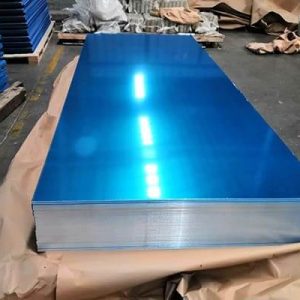
3003 aluminum plate is a widely used alloy in the 3xxx series, known for its excellent workability, corrosion resistance, and moderate strength.
Primarily alloyed with manganese, 3003 offers a significant improvement over the 1xxx series (pure aluminum) in terms of strength while retaining excellent formability.
This makes it highly versatile for various applications across numerous industries, including transportation, construction, and consumer goods.
This article provides a detailed exploration of 3003 aluminum sheet, covering its composition, properties, manufacturing processes, applications, and considerations for selection.
2. Basic Characteristics of 3003 Aluminum Plate
2.1 Chemical Composition
The key to 3003 aluminum’s properties lies in its carefully controlled chemical composition, defined by ASTM B209.
| Element | % Range | Role in Properties |
|---|---|---|
| Aluminum (Al) | 90.5-93.0 | Base metal, matrix |
| Manganese (Mn) | 1.2-1.8 | Primarily contributes to strength through solid solution strengthening and grain refinement |
| Silicon (Si) | 0.6 | Improves fluidity during casting |
| Iron (Fe) | 0.4 | Limit to minimize detrimental effects |
| Copper (Cu) | 0.15 | Beneficial for strength |
| Magnesium (Mg) | 0.10 | Minor influence |
| Chromium (Cr) | 0.18 | Improves corrosion resistance |
| Zinc (Zn) | 0.25 | Grain refining agent |
2.2 Physical Properties
| Property | Value | Units |
|---|---|---|
| Density | 2.699 | g/cm³ |
| Melting Point | 648 °C (1198 °F) | °C/°F |
| Thermal Conductivity | 212 W/m·K | W/m·K |
| Electrical Conductivity | 35-38% IACS | % IACS |
| Coefficient of Thermal Expansion | 23.8 x 10⁻⁶/°C | /°C |
2.3 Mechanical Properties (Typical values for O condition)
| Property | Value | Units |
|---|---|---|
| Tensile Strength (Yield) | 120 | MPa |
| Tensile Strength (Ultimate) | 170 | MPa |
| Elongation | 22 | % |
| Hardness (Brinell) | 65-85 | HB |
3. Manufacturing Process and Production Flow
3.1 Raw Materials and Smelting
The production of 3003 aluminum plate begins with high-purity aluminum ingots, to which precise amounts of manganese, copper, and other elements are added.
These raw materials are melted in a furnace at temperatures exceeding 700°C to form a homogeneous molten alloy.
Maintaining strict control over the composition and temperature during smelting is crucial to ensure the desired properties of the final product.
3.2 Casting and Homogenization
Once the molten alloy achieves the required composition, it is cast into large slabs or billets through continuous or semi-continuous casting methods.
These castings undergo a homogenization process, involving heating to elevated temperatures to eliminate chemical segregation and promote uniformity in the microstructure.
This step enhances the workability and mechanical properties of the alloy.
3.3 Rolling Processes
The homogenized slabs are subjected to rolling processes to achieve the desired thickness and mechanical properties.
Depending on the application, either hot rolling or cold rolling techniques are employed:
-
Hot Rolling: Involves heating the slabs to temperatures between 400°C and 500°C and then passing them through rollers to reduce thickness. This process refines the grain structure and improves mechanical properties.
-
Cold Rolling: Performed at or near room temperature, cold rolling further reduces the thickness and enhances surface finish, strength, and hardness. It also imparts strain hardening to the material.
3.4 Heat Treatment and Annealing
While 3003 aluminum is a non-heat-treatable alloy, annealing processes are applied to relieve stresses induced during rolling and to adjust mechanical properties.
Annealing involves heating the material to approximately 415°C, holding it at this temperature, and then cooling it slowly.
This process restores ductility and facilitates further forming operations.
3.5 Surface Treatment Technology
To enhance corrosion resistance and aesthetic appeal, 3003 aluminum plates may undergo various surface treatments:
-
Anodizing: Creates a protective oxide layer on the surface, improving corrosion resistance and allowing for coloring.
-
Painting or Coating: Applies organic or inorganic coatings to provide additional protection and decorative finishes.
-
Mechanical Finishing: Processes such as polishing or brushing improve surface smoothness and appearance.
3.6 Tolerance Control
Precision in thickness, width, and flatness is critical for the performance of 3003 aluminum plates.
Advanced rolling mills equipped with automatic gauge control systems ensure tight tolerances.
Additionally, rigorous inspection and testing protocols are implemented to verify dimensional accuracy and mechanical properties, ensuring compliance with industry standards.

4. Common Heat Treatment States
O State (Annealing)
The O state is a fully annealed condition, providing maximum ductility and softness.
It is ideal for applications requiring extensive forming or bending.
H12 and H14 Tempers
- H12: Provides moderate strength with limited work hardening.
- H14: Offers higher strength than H12 due to increased work hardening but retains good formability.
5. Applications of 3003 aluminum plate
3003 aluminum plate serves diverse applications thanks to its balanced properties.
Below are some key applications:
5.1 Transportation
- Automotive: Fuel tanks, body panels (weight reduction by 40% vs steel)
- Aerospace: Cabin components (A380 uses 3003 for interior trim)
- Marine: Boat hulls (resists saltwater corrosion 3x better than stainless steel)

5.2 Construction & Decoration
- Architectural panels: 30-year lifespan in coastal environments
- Signage: UV-resistant coatings for outdoor use
- HVAC ductwork: 50% lower thermal conductivity than steel
5.3 Electronics & Home Appliances
- Heat sinks: 30% higher thermal conductivity than plastic alternatives
- Refrigerator linings: Maintains -20°C without embrittlement
- Consumer electronics casings: EMI shielding through anodizing
5.4 Manufacturing
- Tooling: Die faces for stamping operations (wear resistance improved by 25%)
- Packaging: Beverage cans (3003-H19 achieves 0.2mm thickness)
5.5 Chemical & Food
- Storage tanks: Resists sulfuric acid up to pH 2
- Cooking utensils: Non-toxic surface meets FDA standards
- Brewery equipment: Maintains 0.5% weight loss over 10 years
5.6 Other Applications
- Cryogenic tanks (LNG carriers use 3003 at -162°C)
- Musical instruments (flutes achieve 90% tone clarity vs copper)
6. Advantages and Limitations
Advantages:
- Excellent formability (draw ratio 1:1.5)
- Cost-effective compared to 5000 series alloys
- Recyclable (95% material recovery)
- Non-magnetic properties
Limitations:
- Lower strength than 6061 aluminum (30% lower yield strength)
- Susceptible to stress corrosion cracking in chloride environments
- Lower fatigue resistance compared to heat-treatable alloys
7. Comparison with Other Aluminum Alloys
| Alloy | Tensile Strength (MPa) | Corrosion Resistance | Cost | Primary Use |
|---|---|---|---|---|
| 3003 | 110–220 | Excellent | Low | General-purpose |
| 5052 | 230–290 | Superior (marine-grade) | High | Marine, aerospace |
| 6061 | 310–350 | Moderate | High | Structural frames |
| 1100 | 90–125 | Good | Lowest | Decorative |
Data synthesized from industrial benchmarks.
8. FAQ
Q: What is the maximum operating temperature for 3003 aluminum?
A: Up to 150°C in continuous service, though thermal conductivity reduces by 15% at this temperature.
Q: Can 3003 aluminum be heat-treated?
A: No, it relies on cold working (H12, H14) for strength, as manganese does not respond to heat treatment.
Q: Can 3003 be welded?
A: Yes, but requires TIG welding with 311 filler rod. Avoid brazing due to Mn content.
Q: How does manganese content affect properties?
A: Mn increases strength through solid solution strengthening while maintaining ductility better than Mg-containing alloys.
Q: What is the difference between 3003 and 3004?
A: 3004 contains 0.5% Mg for improved seawater resistance, but reduced formability.
Conclusion
3003 aluminum sheet holds a significant position in the aluminum alloy landscape due to its ideal balance of properties, workability, and affordability.
From transportation and construction to appliances and chemical processing, it serves a vast array of applications.
Understanding its composition, processing, and limitations ensures efficient and effective utilization of this versatile material.
Langhe-Alu is committed to providing high-quality 3003 aluminum plate, tailored to meet your specific requirements.
Langhe Webs: https://langhe-metal.com/ & https://langhe-industry.com/ & https://langhe-alu.com/
Related products
-

 Aluminum Sheet Plate, Products
6005 Aluminum Sheet
Name
6005 Aluminum SheetThickness
0.3-6.0 mmWidth
1000 mm – 2600 mm,CustomizeSurface
Bright, polished, hair line, brush, sand blast, checkered, embossed, etching, etc.Technical
Wrought alloy、Cold rolling (CC)、Heat treated (T4/T6) -

 Aluminum Sheet Plate
High‑Strength 2024 Aluminum Sheet Plate – Superior Lightweight Performance
¥6,800.00Elevate your projects with 2024 Aluminum Sheet Plate, offering an exceptional strength‑to‑weight ratio, outstanding corrosion resistance, and reliable fatigue strength—ideal for aerospace, automotive, and marine applications.
-

 Aluminum Sheet Plate
Amazing 2024 Aluminum Sheet – The Ultimate Strength Breakthrough
¥6,500.00Explore premium 2024 aluminum sheet, offering exceptional fatigue resistance and elevated tensile strength for aerospace, defense, and high‑performance engineering. Available in T3, T4, and T6 tempers.
-

 Aluminum Sheet Plate
Honeycomb aluminum panel
¥4,500.00Discover how honeycomb aluminum panel deliver superior flexural stiffness, thermal insulation, and fire safety—all at 70% less weight than solid metal. Ideal for façades, aerospace, and industrial design.
-

 Aluminum Sheet Plate
3105 Aluminum Sheet
¥3,450.00Learn why 3105 aluminum sheet is the go-to for packaging, construction, and transportation. With tensile strength up to 210 MPa (H34 temper), food-grade safety, and easy deep drawing, it delivers…
-

 Aluminum Sheet Plate
3104 Aluminum Sheet
¥3,500.00Explore the key features of 3104 aluminum sheet, including its excellent corrosion resistance, formability, and strength. Understand its production process and how it compares to other aluminum alloys in the…
-
 Aluminum Sheet Plate
5052 Aluminum Sheet
¥5,880.005052 aluminum sheet belongs to the 5000 series aluminum alloy. The main added element is Mg. It is obtained by rolling the aluminum alloy. It has strong corrosion resistance and…
-

 Aluminum Sheet Plate
6061 Aluminum Sheet
¥5,450.006061 aluminum sheet provided by Langhe-Alu is a popular industrial material. With its excellent comprehensive performance, it is widely used in aerospace, machinery manufacturing, shipbuilding, automotive industry and architectural decoration.
-

 Aluminum Sheet Plate
5754 Aluminum Sheet
¥5,208.005754 aluminum plate is widely used due to its excellent strength-to-weight ratio, corrosion resistance and machinability. Such as: aerospace, automobile, ship, construction applications, pressure vessel landing, etc.
-

 Aluminum Sheet Plate
1060 Aluminum Sheet
¥3,468.001060 aluminum plate is a common lightweight material belonging to the 1000 series aluminum alloy. It is popular in the market due to its low price, strong corrosion resistance and…