


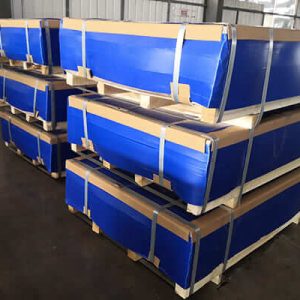
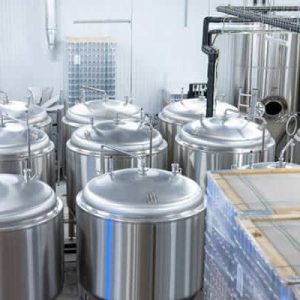
The world of aluminum alloys is vast and varied, among these, the 5005 aluminum sheet stands out, particularly for its exceptional anodizing qualities and good formability.
This article provides an in-depth exploration of the 5005 aluminum sheet, covering its characteristics, technical specifications, processing performance, and key applications, ensuring you gain a thorough understanding of this versatile material.
Contents
show
1. Introduction to 5005 Aluminum Sheet
Understanding the fundamentals of the 5005 aluminum sheet is crucial before delving into its more technical aspects.
1.1 What Is 5005 Aluminum Sheet?
5005 aluminum sheet is a non-heat-treatable alloy belonging to the 5xxx series of aluminum-magnesium (Al-Mg) alloys.
Magnesium is the primary alloying element, typically present in a nominal amount of 0.8%.
This composition imparts moderate strength, excellent corrosion resistance, and, most notably, superior anodizing characteristics, making it a popular choice for architectural and decorative applications.
It shares many similarities with the more common 3003 alloy but offers distinct advantages in surface finishing.
1.2 Market Positioning and Importance of 5005 Aluminum Sheet
The 5005 aluminum sheet carves a niche for itself in applications where a high-quality, consistent anodized finish is paramount.
While not as strong as some other 5xxx series alloys (like 5052 or 5083), its strength is adequate for many structural and non-structural uses.
Its importance lies in its ability to provide an aesthetically pleasing and durable surface that other alloys struggle to match, especially when color anodizing or achieving a bright, clear anodic film is required.
Consequently, it’s a preferred material for high-end architectural facades, decorative trim, and appliance panels.
2. Core Features and Advantages of 5005 Aluminum Sheet
The 5005 aluminum offers several compelling features that contribute to its widespread use.
2.1 Excellent Anodizing Performance
This is arguably the most significant advantage of the 5005 aluminum sheet.
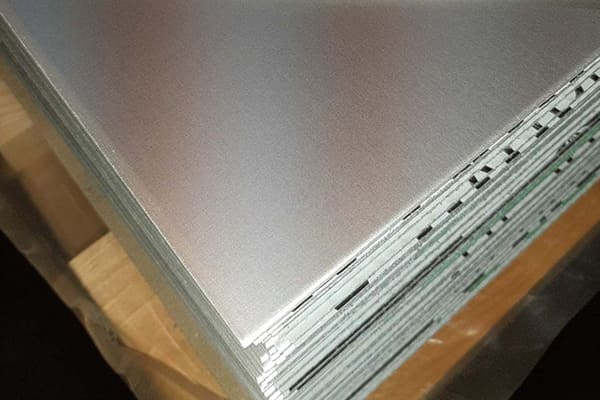
It readily accepts various anodizing treatments, resulting in a clear, uniform, and aesthetically pleasing protective oxide layer.
The anodic film formed on 5005 aluminum is often brighter and more consistent in color than that on alloys like 3003, making it ideal for decorative finishes where appearance is critical.
2.2 Good Corrosion Resistance
Like other 5xxx series alloys, the 5005 aluminum sheet exhibits good resistance to general corrosion, particularly in atmospheric and marine environments.
The presence of magnesium contributes to this characteristic, making it durable for outdoor applications.
2.3 Good Processing Formability
5005 aluminium sheet demonstrates good formability, allowing it to be easily bent, drawn, and roll-formed.
This makes it suitable for a wide range of manufacturing processes to create complex shapes.
Its formability is particularly notable in the softer tempers like ‘O’ (annealed).
2.4 Good Welding Performance
This alloy can be readily welded using common techniques such as MIG (Metal Inert Gas) and TIG (Tungsten Inert Gas) welding.
It produces strong and reliable welds, although the heat-affected zone (HAZ) may experience a slight reduction in strength, typical for non-heat-treatable alloys.
2.5 Moderate Strength (Non-Heat Treatment Strengthened Alloy)
While not a high-strength alloy, the 5005 aluminum plate provides moderate strength, sufficient for many applications.
Its strength is primarily achieved through work hardening (strain hardening), designated by H-tempers, rather than heat treatment.
2.6 High Strength-to-Weight Ratio
Aluminum alloys, in general, offer an excellent strength-to-weight ratio, and the 5005 aluminum is no exception.
This property is beneficial in applications where weight reduction is desirable without significantly compromising structural integrity, such as in transportation and portable structures.
3. Material Composition and Properties of 5005 Aluminum Sheet
A deeper dive into the technical specifications reveals why 5005 aluminum sheet behaves the way it does.
3.1 Chemical Composition
The specific elemental makeup of 5005 aluminum sheet dictates its overall performance.
| Element | Content (%) | Function |
| Silicon (Si) | ≤ 0.30 | Improves castability, can reduce ductility slightly. |
| Iron (Fe) | ≤ 0.7 | Impurity, can affect corrosion resistance and anodizing quality if high. |
| Copper (Cu) | ≤ 0.20 | Can increase strength, but may reduce corrosion resistance. |
| Manganese (Mn) | ≤ 0.20 | Improves strength, controls grain structure. |
| Magnesium (Mg) | 0.50 – 1.1 | Primary alloying element; enhances strength, corrosion resistance. |
| Chromium (Cr) | ≤ 0.10 | Improves corrosion resistance, controls grain structure. |
| Zinc (Zn) | ≤ 0.25 | Minor additions can influence properties. |
| Others, each | ≤ 0.05 | |
| Others, total | ≤ 0.15 | |
| Aluminum (Al) | Balance | Base metal. |
Note: Exact composition ranges may vary slightly based on specific standards (e.g., ASTM B209, EN AW-5005).
Chemical Composition and Element Function
Magnesium (Mg) is the star player in the 5005 aluminum sheet. It forms a solid solution with aluminum, significantly enhancing its strength through solid solution strengthening and improving its strain-hardening response.
Moreover, magnesium contributes to the alloy’s excellent corrosion resistance, especially in marine environments.
The controlled, relatively low levels of other elements like iron and silicon are crucial for achieving the superior anodizing characteristics that distinguish 5005 aluminum sheets.
3.2 Mechanical Properties by Temper
The mechanical properties of the 5005 aluminum sheet vary significantly depending on its temper (degree of work hardening).
Common Tempers
| Temper | Tensile Strength (MPa, typical) | Yield Strength (MPa, typical) | Elongation (% in 50mm, typical) | Hardness (Brinell, HBW, typical) |
| O | 105 – 145 | 35 | 20 – 26 | 28 – 32 |
| H32 | 130 – 170 | 105 | 5 – 8 | 41 – 45 |
| H34 | 145 – 185 | 125 | 4 – 7 | 47 – 51 |
| H36 | 160 – 200 | 140 | 3 – 6 | 53 – 57 |
| H38 | ≥ 175 | ≥ 155 | 3 – 5 | ≥ 59 |
Tensile Strength
The maximum stress the material can withstand while being stretched or pulled before necking.
Yield Strength
The stress at which the material begins to deform plastically.
Elongation
A measure of the material’s ductility, indicates how much it can stretch before fracturing.
Hardness (Brinell, Rockwell)
Resistance to indentation. Brinell (HBW) is commonly cited for aluminum.
Fatigue Strength (Fatigue Strength) – (if applicable)
The ability of the material to withstand cyclic loading.
For 5005, this is generally good but application-specific.
Shear Strength (Shear Strength) – (if applicable)
The ability to resist forces that would cause internal layers to slide past each other.
For 5005-O, it’s approximately 85 MPa, increasing with H-tempers.
3.3 Physical Properties
These inherent material characteristics are independent of temper.
Density
Approximately 2.70 g/cm³ (0.0975 lb/in³)
Melting Range
Approximately 632 – 655 °C (1170 – 1210 °F)
Thermal Conductivity
Approximately 190 – 210 W/m·K (at 25 °C)
Electrical Resistivity / Electrical Conductivity
Approximately 3.5 – 4.0 µΩ·cm (at 20 °C) / Approximately 43-49% IACS (International Annealed Copper Standard)
Modulus of Elasticity
Approximately 69 GPa (10,000 ksi)
Coefficient of Thermal Expansion
Approximately 23.6 µm/m·°C (20-100 °C)
4. Processing and Manufacturing Performance of 5005 Aluminum Plate
The versatility of the 5005 aluminum sheet is evident in its excellent processing characteristics.
4.1 Formability
5005 aluminum sheet is known for its good formability, especially in the annealed (O) temper.
Cold Bending Performance
The ‘O’ temper exhibits the best cold bending properties, allowing for very tight bend radii.
As the temper increases (e.g., H32, H34, H38), the material becomes harder and less ductile, requiring larger bend radii to prevent cracking.
Drawing Performance
5005 aluminum sheet is suitable for moderate deep drawing operations, especially in the O temper.
It can be drawn into various shapes for containers, casings, and panels.
Punching Performance
Softer tempers are easier to punch but may result in more deformation around the punched hole.
Harder tempers yield cleaner cuts but require more force and can lead to increased tool wear.
4.2 Weldability
This alloy is considered to have good weldability.
Applicable Welding Methods (TIG, MIG, etc.)
TIG (GTAW) and MIG (GMAW) are commonly used. Resistance welding is also feasible.
Recommended Welding Materials (such as 5356 Welding Wire)
Filler alloys such as 5356 are typically recommended for welding 5005 aluminum sheet to itself or other 5xxx series alloys.
4043 can also be used if the welded component will not be anodized subsequently, as 4043 can cause discoloration in the weld area after anodizing.
4.3 Machinability
Cutting Performance Evaluation
The machinability of the 5005 aluminium sheet is generally fair. It can be somewhat gummy in the O temper due to its softness.
Harder tempers (e.g., H34, H38) offer improved machinability, producing better chip formation and surface finish.
Using sharp tools, appropriate cutting speeds, and coolants is recommended.
4.4 Surface Treatment – (Key Points)
Surface treatment is where 5005 aluminum truly shines.
Anodizing:
Why 5005 is special:
Compared to an alloy like 3003, 5005 aluminum produces a clearer, brighter, and more uniform anodic film.
This is due to its lower iron and silicon content and refined grain structure.
It is less prone to the slight yellow or grey tint that can appear on 3003 aluminum sheet plate after anodizing.
Applications:
Ideal for clear anodizing, color anodizing (dyeing or electrolytic coloring), and hard anodizing where aesthetic consistency is key.
Benefits:
Enhanced corrosion resistance, increased surface hardness and wear resistance, decorative appeal, and an electrically insulating surface.
Painting/Powder Coating:
Pre-treatment:
Proper pre-treatment (cleaning, etching, and often a conversion coating like chromate or non-chrome alternatives) is essential for good adhesion.
Adhesion:
5005 aluminum sheet provides a good substrate for paint and powder coatings, offering durable and colorful finishes.
Polishing and Brushing
Can be mechanically polished to a high luster or brushed to achieve various decorative satin finishes. These finishes can then be protected by clear anodizing or lacquering.
5. Main application fields of 5005 aluminium sheet
The unique combination of properties makes the 5005 aluminum sheet suitable for a diverse range of applications.
5.1 Construction and Decoration
This is a primary market for 5005 aluminum sheets due to its anodizing quality.
- Architectural facades, curtain walls, cladding panels
- Roofing systems, soffits, and gutters
- Interior decorative panels, ceilings, and partitions
- Window and door frames, decorative trim
- Signage, nameplates, and display panels

5.2 Electrical housing and panel
Its good formability and ability to achieve a durable, attractive finish make it suitable for:
- Casings for consumer electronics
- Control panels and enclosures for electrical equipment
- Appliance components (e.g., refrigerator doors, washing machine panels)
5.3 Transportation
While not for primary structural components requiring high strength, its light weight and good finish are utilized in:
- Interior trim and decorative elements in automotive, marine, and rail applications
- Non-critical body panels for recreational vehicles
- License plates
5.4 Chemical application
While 5052aluminum sheet might be preferred for more aggressive chemical environments, the good general corrosion resistance of 5005 aluminum sheet allows its use for:
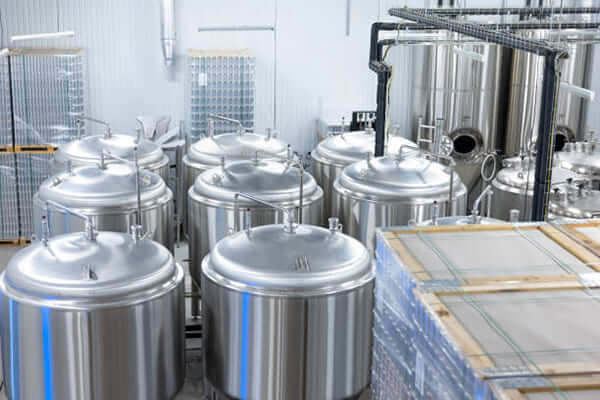
- Tanks and containers for certain mild chemicals or food products (where anodizing can further enhance protection)
- Laboratory equipment and benchtops.
6. 5005 Aluminum Sheet Comparison with Other Alloys
Understanding how 5005 aluminum sheet stacks up against other common alloys helps in material selection.
6.1 5005 vs. 3003 aluminum sheet
- Anodizing: 5005 aluminium sheet offers a significantly superior anodized finish – clearer, brighter, and more uniform. 3003 can sometimes appear slightly grey or yellow after anodizing.
- Strength: 3003 (Al-Mn alloy) generally has slightly higher strength than 5005 in similar tempers.
- Corrosion Resistance: Both have good corrosion resistance, but 5005 (Al-Mg) might have a slight edge in marine environments.
- Formability: Both are very formable.
- Cost: 3003 is often less expensive.
- Choose 5005 if: Superior anodized appearance is the primary requirement.
6.2 5005 vs. 5052 aluminum sheet
- Strength: 5052 (higher Mg content) is significantly stronger than 5005 aluminum sheet.
- Corrosion Resistance: 5052 has excellent corrosion resistance, particularly in saltwater, often considered superior to 5005.
- Formability: 5005 is generally more formable than 5052, especially in complex bends.
- Anodizing: A 5005 aluminum sheet typically provides a better decorative anodized finish. While 5052 anodizes well for protection, it may not achieve the same clarity or color consistency as 5005.
- Cost: 5052 is usually more expensive than 5005.
- Choose 5005 if: Decorative anodizing and good formability are more critical than maximum strength or marine corrosion resistance.
6.3 5005 vs. 6061 aluminum sheet
- Strength: 6061 is a heat-treatable alloy (Al-Mg-Si) and can achieve much higher strength (especially in T6 temper) than the non-heat-treatable 5005 aluminum.
- Anodizing: A 5005 aluminum plate generally provides a better decorative anodized finish. 6061 anodizes well for protection and can be colored, but the finish might not be as aesthetically refined as 5005.
- Formability: 5005 in softer tempers is more formable than 6061, especially 6061-T6.
- Weldability: Both are weldable, but 6061 experiences a significant strength reduction in the heat-affected zone unless post-weld heat treatment is performed.
- Cost: 6061 is often more expensive, especially when considering heat treatment.
- Choose 5005 if: The application requires excellent anodizing and good formability, and the moderate strength of 5005 is sufficient.
6.4 When to Choose 5005 Aluminum Sheet
You should opt for 5005 aluminum plate sheet when:
- A high-quality, aesthetically pleasing anodized finish is essential. This is its primary differentiator.
- The application requires good formability for bending, drawing, or stamping.
- Moderate strength is acceptable.
- Good general corrosion resistance is needed.
- The project involves architectural elements, decorative components, or appliance casings where visual appeal is paramount.
7. Langhe 5005 Aluminum Sheet Specification
As a leading supplier, Langhe (or any reputable supplier) would typically offer 5005 aluminum sheets meeting international standards with various specifications:
- Alloy: 5005
- Standards: ASTM B209, EN AW-5005 (EN 485/573), GB/T 3880, JIS H4000
- Tempers: O, H12, H14, H16, H18, H22, H24, H26, H28, H32, H34, H36, H38 (Commonly H34 for architectural applications due to a good balance of strength and formability, and excellent anodizing)
- Thickness Range: Typically 0.2mm to 8.0mm (Thicker plates might be available)
- Width Range: Typically up to 2200mm (Wider options may be available)
- Length: Standard sheet lengths (e.g., 2000mm, 2440mm, 3000mm) or coil form. Custom lengths are available.
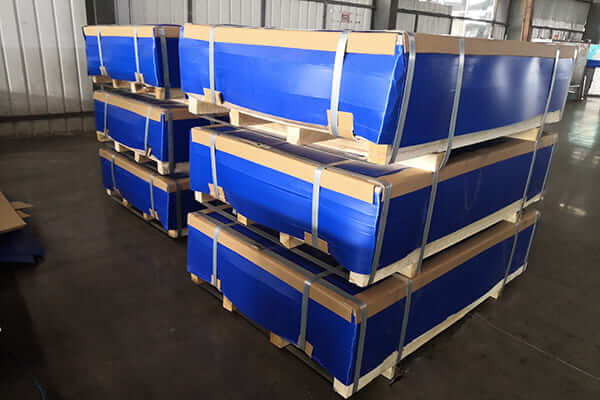
- Surface Finish: Mill finish, PVC/PE film coated (one or two sides), paper interleaved.
- Anodizing Quality (AQ): Often specified for applications requiring superior anodized finishes.
It’s crucial to consult the specific supplier’s datasheet for precise specifications and availability.
8. FAQ
Q1: Is the 5005 aluminum sheet suitable for outdoor use?
A: Yes, the 5005 aluminum sheet has good corrosion resistance, especially when anodized, making it well-suited for many outdoor applications, including architectural elements and signage.
Q2: Can the 5005 aluminum sheet be painted?
A: Absolutely. With proper surface preparation, the 5005 aluminum sheet provides an excellent substrate for painting and powder coating, offering durable and vibrant finishes.
Q3: What is the main difference between 5005 and 5052 aluminum?
A: The main differences are strength and anodizing quality. 5052 is significantly stronger and has better marine corrosion resistance. However, 5005 aluminum generally offers a superior decorative anodized finish and is more formable.
Q4: Is 5005 aluminum sheet heat-treatable?
A: No, 5005 aluminum sheet is a non-heat-treatable alloy. Its strength is increased through work hardening (strain hardening), denoted by H-tempers.
Q5: How does the cost of 5005 aluminum compare to 3003?
A: Generally, a 5005 aluminum sheet is slightly more expensive than a 3003 aluminum sheet, primarily due to the tighter controls on composition required for its superior anodizing characteristics.
9. Conclusion
The 5005 aluminum sheet is a valuable engineering material that masterfully balances moderate strength, good formability, and commendable corrosion resistance with an unparalleled capacity for high-quality anodized finishes.
Its ability to produce bright, clear, and uniformly colored anodic coatings makes it the go-to choice for architectural projects, decorative applications, and consumer products where aesthetics are as important as functionality.
While other alloys may offer higher strength or specialized corrosion resistance, the 5005 aluminum sheet holds a distinct advantage when the final visual appeal after anodizing is a critical design criterion.
Understanding its unique properties allows designers and engineers to leverage its full potential, creating products that are both durable and visually stunning.
Related products
-

 Aluminum Sheet Plate, Products
6005 Aluminum Sheet
Name
6005 Aluminum SheetThickness
0.3-6.0 mmWidth
1000 mm – 2600 mm,CustomizeSurface
Bright, polished, hair line, brush, sand blast, checkered, embossed, etching, etc.Technical
Wrought alloy、Cold rolling (CC)、Heat treated (T4/T6) -
 Aluminum Sheet Plate, Products
6082 Aluminum Sheet Plate
Name
6082 Aluminum Sheet PlateThickness
0.3-200mmWidth
100mm – 2600mm,CustomizeSurface
Bright, polished, hair line, brush, sand blast, checkered, embossed, etching, etc.Technical
Hot rolled (DC)、Cold rolling (CC) -
 Aluminum Sheet Plate
6063 Aluminum Sheet: Achieve Flawless Finishes
¥5,800.00Known for its exceptional surface quality and superior anodizing response, 6063 Aluminum Sheet is the ideal material for architectural trim, decorative components, and applications where aesthetics are paramount.
-

 Aluminum Sheet Plate
Amazing 2024 Aluminum Sheet – The Ultimate Strength Breakthrough
¥6,500.00Explore premium 2024 aluminum sheet, offering exceptional fatigue resistance and elevated tensile strength for aerospace, defense, and high‑performance engineering. Available in T3, T4, and T6 tempers.
-
 Aluminum Sheet Plate
5454 Aluminum Sheet Plate
¥3,600.00Choose 5454 Aluminum Sheet Plate for lightweight strength in marine decks, chemical vessels, and pressure containers. Proven reliability, easy fabrication.
-
 Aluminum Sheet Plate
5086 Aluminum Sheet
¥3,750.00Unlock the technical advantages of 5086 Aluminum Sheet. In-depth analysis of its durability, excellent weldability, and supreme corrosion proofing for critical structures and harsh conditions.
-

 Aluminum Sheet Plate
Honeycomb aluminum panel
¥4,500.00Discover how honeycomb aluminum panel deliver superior flexural stiffness, thermal insulation, and fire safety—all at 70% less weight than solid metal. Ideal for façades, aerospace, and industrial design.
-

 Aluminum Sheet Plate
1070 Aluminum Sheet Plate
¥3,300.00Explore the chemical composition, corrosion resistance, and manufacturing process of 1070 aluminum sheet. See why engineers choose it for bus bars, heat exchangers, and decorative panels.
-
 Aluminum Sheet Plate
3003 Aluminum Plate
¥3,350.003003 aluminum plate: corrosion-resistant, formable, ideal for tanks, roofing & transport. Available in H14/H24/O tempers, thickness 0.2-150mm. Choose mill, embossed or painted finishes.
-
 Aluminum Sheet Plate
1050 Aluminum Sheet
¥3,428.001050 aluminum sheet is a commercially pure aluminum alloy (99.5% aluminum content) that belongs to the 1000 series of aluminum alloys.