
Hot


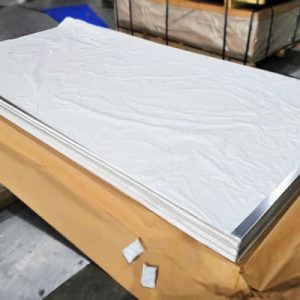
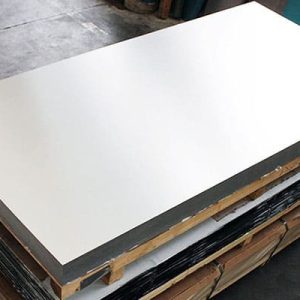


In the dynamic world of materials science, 5182 aluminum sheet plate emerges as a standout performer, particularly valued for its exceptional formability and robust mechanical properties.
This alloy, a key member of the 5xxx aluminum-magnesium series, has carved a significant niche in industries demanding complex shapes, lightweight designs, and reliable durability.
This guide offers an in-depth exploration of 5182 aluminum sheet plate, equipping engineers, designers, and manufacturers with the knowledge to harness its full potential.
Contents
show
1. Introduction to 5182 Aluminum Sheet Plate
What Is 5182 Aluminum Sheet Plate?
5182 aluminum sheet plate is a non-heat-treatable wrought alloy where magnesium is the principal alloying element.
This composition imparts excellent ductility, particularly in the annealed (O) temper, making it ideal for deep drawing and intricate forming operations.
Beyond its formability, 5182 offers good strength, which work hardening can further enhance, along with commendable corrosion resistance.
Market Positioning & Importance of 5182 Aluminum Sheet Plate
The market highly values 5182 aluminum sheet plate for applications where formability is paramount.
Its most significant impact lies in the automotive industry, where it facilitates the production of complex body panels, contributing to vehicle lightweighting and improved fuel efficiency.
Furthermore, the packaging industry extensively uses it for items like beverage can ends, capitalizing on its ability to be shaped precisely while maintaining structural integrity.
Its unique combination of properties makes it a critical material for modern manufacturing challenges.
2. Core Advantages & Features of 5182 Aluminum Sheet Plate
Exceptional Formability
This is the hallmark of 5182 aluminum sheet plate. It exhibits superior performance in deep drawing, stamping, and bending operations, allowing for the creation of intricate components with minimal tearing or cracking.
Its fine grain structure also contributes to a good surface finish after forming, often with a reduced “orange peel” effect.
Good Balance of Strength and Toughness
While classified as a medium-strength alloy, 5182 aluminum sheet plate offers a favorable balance.
It possesses good initial strength, which significantly increases with cold work.
This work-hardening capability allows designers to achieve higher strength in formed parts.
It also maintains good fracture toughness, crucial for components subjected to impacts or stress.
Excellent Corrosion Resistance
Like other 5xxx series alloys, 5182 aluminum sheet plate demonstrates excellent resistance to general corrosion, particularly in atmospheric and marine environments.
The magnesium content forms a stable, protective oxide layer on the surface, ensuring long-term durability.
Good Weldability
Manufacturers can readily weld 5182 aluminum sheet plate using common fusion welding techniques such as MIG (GMAW) and TIG (GTAW), as well as resistance spot welding (RSW), which is prevalent in automotive assembly.
It typically produces strong and reliable weld joints.

Lightweighting Advantage
The inherent low density of aluminum, combined with the good strength of 5182 aluminum sheet plate, makes it an excellent candidate for lightweighting initiatives.
In automotive applications, this translates directly to reduced vehicle mass, leading to better fuel economy and lower emissions without compromising safety or performance.
3. Properties of 5182 Aluminum Alloy
A detailed look at the material properties of 5182 aluminum sheet plate reveals the science behind its performance.
Understanding Chemical Composition
The precise chemical makeup of 5182 aluminum sheet plate is key to its unique characteristics.
Magnesium (Mg) is the primary alloying element, significantly enhancing both formability and strength.
Small additions of manganese (Mn) further contribute to strength and grain refinement.
Tight control over impurity elements like iron (Fe) and silicon (Si) is crucial to maintain optimal formability.
| Element | Content (%) (Typical for ASTM B209) | Function |
|---|---|---|
| Silicon (Si) | ≤ 0.20 | Impurity; kept low to maintain good formability and avoid formation of brittle Mg₂Si if Cr is present. |
| Iron (Fe) | ≤ 0.35 | Impurity; high levels can reduce ductility and corrosion resistance. Controlled for better formability. |
| Copper (Cu) | ≤ 0.15 | Minor additions can increase strength but may reduce corrosion resistance and weldability if too high. |
| Manganese (Mn) | 0.20 – 0.50 | Improves strength through solid solution strengthening and strain hardening; refines grain structure. |
| Magnesium (Mg) | 4.0 – 5.0 | Primary alloying element; significantly increases strength, improves strain hardening response, and enhances formability. Also contributes to corrosion resistance. |
| Chromium (Cr) | ≤ 0.10 | Can improve corrosion resistance and control grain structure. |
| Zinc (Zn) | ≤ 0.25 | Generally an impurity in this alloy; high levels can reduce corrosion resistance. |
| Titanium (Ti) | ≤ 0.10 | Often added as a grain refiner during casting, leading to improved formability and surface finish. |
| Others, each | ≤ 0.05 | |
| Others, total | ≤ 0.15 | |
| Aluminum (Al) | Balance | Base metal. |
Note: Specific composition ranges may vary slightly based on governing standards like EN AW-5182.
Physical Properties
These inherent material characteristics are largely independent of temper.
- Density: Approximately 2.65 g/cm³ (0.0957 lb/in³)
- Melting Range: Approximately 590 – 640 °C (1095 – 1185 °F)
- Modulus of Elasticity (Young’s Modulus): Approximately 70 GPa (10,150 ksi)
Decoding Mechanical Properties
The mechanical properties of 5182 aluminum sheet plate are highly dependent on its temper (degree of work hardening).
Common tempers include O (annealed), H111 (strain-hardened by shaping), and various Hxx tempers (strain-hardened and sometimes partially annealed or stabilized).
Automotive applications often utilize specialized tempers like H48.
| Temper | Tensile Strength (MPa, typical) | Yield Strength (MPa, typical) | Elongation (% in 50mm, typical) | Hardness (Brinell, HBW, typical) |
|---|---|---|---|---|
| O | 260 – 305 | 110 – 150 | 22 – 28 | 60 – 70 |
| H32 | 290 – 345 | 200 – 260 | 10 – 15 | 75 – 85 |
| H34 | 305 – 360 | 220 – 280 | 8 – 13 | 80 – 90 |
| H111 | 270 – 315 | 125 – 165 | 18 – 25 | 65 – 75 |
| H48 (Automotive) | 280 – 320 | 130 – 180 | 20 – 26 | ~70 |
Note: Values are indicative and can vary. Refer to specific standards for guaranteed minimums.
Key formability parameters like the strain hardening exponent (n-value) and plastic strain ratio (r-value) are also critical for predicting forming behavior, with 5182 aluminum sheet plate exhibiting favorable values for deep drawing.
Corrosion Resistance & Durability
5182 aluminum sheet plate provides excellent resistance to atmospheric corrosion and many common chemicals.
This makes it suitable for exterior automotive panels and food-grade packaging.
While generally good, like other high-magnesium 5xxx alloys, prolonged exposure to temperatures above 65°C (150°F) can sensitize it to stress corrosion cracking (SCC) if under sustained stress.
However, for most of its intended applications, this is not a significant concern.
Thermal & Electrical Characteristics
- Thermal Conductivity: Approximately 120 – 140 W/m·K (at 25 °C)
- Electrical Resistivity: Approximately 4.9 – 5.2 µΩ·cm (at 20 °C) / Electrical Conductivity: ~33-35% IACS
- Coefficient of Thermal Expansion: Approximately 23.9 µm/m·°C (20-100 °C)
4. Processing and Fabrication Guide for 5182 Aluminum Sheet Plate
Maximizing the benefits of 5182 aluminum sheet plate requires an understanding of its processing characteristics.
Formability (The Core Strength)
The exceptional formability of 5182 aluminum sheet plate is its defining feature.
- Deep Drawing: It excels in deep drawing operations due to its high elongation and favorable n and r values. Proper tooling design, lubrication, and material in the O (annealed) temper are key for optimal results.
- Bending: It can be readily bent, with minimum bend radii depending on temper and thickness.
- Stretch Flanging: Performs well in stretch flanging operations common in automotive panel production.
- Lüders Bands (Stretcher Strains): 5182 aluminum sheet plate, particularly in the O temper or lightly worked conditions, can be susceptible to the formation of Lüders bands (unsightly surface markings) during initial yielding. This manufacturers can mitigate through temper rolling (skin passing) or by using specific tempers like H111 or automotive tempers (e.g., H48) designed to minimize this effect.
Weldability
5182 aluminum sheet plate offers good weldability.
- Recommended Welding Methods:
- Gas Metal Arc Welding (GMAW or MIG)
- Gas Tungsten Arc Welding (GTAW or TIG)
- Resistance Spot Welding (RSW) – extensively used in automotive assembly for joining aluminum panels.
- Recommended Filler Metals: 5356 is a common choice for general welding. For applications requiring slightly higher weld strength or specific corrosion characteristics, 5554 or 5183 might be considered.
- Considerations: Thorough surface cleaning to remove oxides and contaminants before welding is crucial. Control of heat input helps minimize distortion.
Machinability
The machinability of 5182 aluminum sheet plate is rated as fair.
- In softer tempers (like O), it can be somewhat “gummy,” leading to longer chips and potential built-up edge on tooling. Harder tempers generally offer better machinability.
- Using sharp tools, appropriate cutting speeds, and effective coolants is recommended for optimal results.
Surface Treatment
Various surface treatments can be applied to 5182 aluminum sheet plate.
- Anodizing: It can be anodized, primarily to enhance corrosion resistance or as a pre-treatment for painting. Its decorative anodizing quality is generally not as high as alloys like 5005 or 5052 due to its higher magnesium content.
- Coating: 5182 aluminum sheet plate provides an excellent substrate for painting, powder coating, and E-coating (electrophoretic deposition), which are standard in the automotive industry. Proper pre-treatment (cleaning, etching, conversion coating) is essential for optimal adhesion.
- Chemical Conversion Coating: Applied to enhance paint adhesion and provide an additional barrier against corrosion.
5. Key Application of 5182 Aluminum Sheet/Plate
The unique properties of 5182 aluminum sheet plate drive its use in several key industries.
Automotive Industry (Core Application)
This is the primary market for 5182 aluminum sheet plate. Its exceptional formability allows for the production of:
- Body Panels (Closures): Hoods (bonnets), doors, fenders (wings), roof panels, and trunk lids (boot lids).
- Inner Panels & Reinforcements: Certain structural or semi-structural components where formability is a key requirement.
It plays a vital role in vehicle lightweighting, contributing to improved fuel efficiency, reduced emissions, and enhanced vehicle dynamics. Its good energy absorption characteristics also contribute to crash safety performance.

Marine Applications
While not as prevalent as 5083 or 5086 for primary hull structures, 5182 aluminum sheet plate can find use in less structurally critical marine components that require good formability and corrosion resistance, such as certain enclosures or interior fittings.
Packaging Industry
5182 aluminum sheet plate is a key material for:
- Beverage Can Ends/Lids: Its ability to be formed into complex geometries while maintaining strength makes it ideal for easy-open ends.
- Other Deep-Drawn Containers: Various food and specialty containers benefit from its formability and corrosion resistance.
Construction and Architectural
In construction, 5182 aluminum sheet plate might be used for moderately formed architectural panels or decorative elements where its specific forming advantages are beneficial, though alloys like 5005 or 3003 are more common for general architectural work.
Appliances & Electronics
Its formability makes 5182 aluminum sheet plate suitable for:
- Housings and Casings: For appliances and electronic devices that require complex stamped or drawn shapes.
- Internal Brackets and Panels: Where intricate forms are needed.
6. 5182 Aluminum Sheet/Plate vs. Other Common Alloys
When you select a sheet or plate alloy, you balance formability, strength, corrosion resistance, weldability, machinability, and cost.
| Alloy | Formability | Tensile Strength(MPa) | Corrosion Resistance | Weldability | Machinability | Typical Uses | Relative Cost |
|---|---|---|---|---|---|---|---|
| 3003 | Very High | 130–160 | Moderate | Excellent | Good | Kitchenware, electrical enclosures | Low |
| 5052 | High | 200–240 | Excellent | Excellent | Fair | Fuel tanks, pressure vessels | Moderate |
| 5182 | Exceptional | 230–260 | Excellent | Excellent | Fair | Deep‑drawn panels, can ends, marine | Moderate–High |
| 6061 | Moderate | 290–310 | Good | Good | Good | Structural frames, aerospace fittings | Moderate |
| 7075 | Low | 500–570 | Fair | Poor | Poor | High‑stress aerospace parts | High |
Key Takeaways
- Formability
- 5182 > 5052 > 3003 > 6061 > 7075.
- Strength vs. Weight
- 6061 and 7075 deliver higher ultimate strength but sacrifice formability and corrosion performance.
- 5182 strikes a balance: good strength for load‑bearing panels while still lighter than steel.
- Corrosion Behavior
- For marine or humid conditions, 5052 and 5182 resist pitting exceptionally well.
- 3003 performs adequately in mild atmospheres but struggles in saltwater.
- Weldability
- Alloys with low alloying elements—3003, 5052, 5182—weld smoothly with standard TIG/MIG filler rods.
- 6061 requires careful pre‑ and post‑heat treatment; 7075 is generally not recommended for welding.
- Machinability & Cost
- 3003 and 6061 machine readily; 5182 and 5052 need slower feeds and carbide tooling.
- 3003 remains the most cost‑effective; 5182 costs more but offsets with reduced scrap and rework in deep‑drawing.
How to Choose
- Deep Drawing & Spinning
Prioritize 5182 for cups, panels, or can ends—you minimize wrinkling and springback. - Structural & Load‑Bearing Parts
If strength outweighs formability, consider 6061. Use 5182 when occasional impacts or marine exposure occur. - Cost‑Sensitive, Simple Shapes
For flat parts or light forming, 3003 offers the best price‑performance ratio. - High‑Temperature or Specialized Uses
For applications above 150 °C or extreme stresses, select heat‑treatable alloys like 6061 or even 7075 (with welding caveats).
7. Standards, Specifications & Quality Assurance
5182 aluminum sheet plate is manufactured to various international and national standards to ensure quality and consistency. Common standards include:
- ASTM B209 (Standard Specification for Aluminum and Aluminum-Alloy Sheet and Plate)
- EN AW-5182 (European Standard)
- AMS (Aerospace Material Specifications) for certain applications.
- Specific automotive manufacturer specifications.
Quality assurance involves rigorous control over chemical composition, rolling processes, temper conditions, mechanical properties, dimensional tolerances, and surface quality.
For critical applications like automotive, suppliers often provide detailed certifications and adhere to stringent quality management systems.
8. Langhe 5182 Aluminum Sheet Specification (Example/Generic)
As a leading supplier, Langhe (or any reputable supplier) would typically offer 5182 aluminum sheet plate with specifications that adhere to international standards and meet customer requirements. Below is an example of generic specifications one might expect:
| Specification Item | Details |
|---|---|
| Alloy Designation | 5182 |
| Governing Standards | ASTM B209, EN AW-5182, Customer-specific standards |
| Available Tempers | O, H111, H32, H34, H48 (Automotive), other Hxx tempers as per requirement |
| Thickness Range | Sheet: Typically 0.5mm – 6.0mm (0.020″ – 0.249″) Plate: >6.0mm (>0.249″) |
| Width Range | Standard widths up to 2200mm (86.6″); wider options may be available depending on mill capability |
| Length | Standard sheet/plate lengths (e.g., 2000mm, 2440mm, 3000mm, 6000mm) or supplied in coil form |
| Supply Form | Sheet, Plate, Coil |
| Surface Finish | Mill Finish (standard) |
| Surface Protection | Options include: – PVC/PE protective film (one or two sides) – Paper interleaved (for coils) |
| Special Finishes/ Pre-treatments |
Options may include: – Pre-lubricated (for enhanced formability) – Pre-treated for painting (e.g., conversion coating) |
| Dimensional Tolerances | As per ASTM B209, EN 485, or agreed customer specifications |
| Surface Quality | Standard commercial quality; specific automotive surface quality requirements (e.g., Class A, Ra values) can be met |
| Edge Condition | Mill Edge, Slit Edge |
| Certification | Mill Test Certificate (MTC) detailing chemical composition and mechanical properties; specific automotive or other industry certifications upon request |
If you need more detailed information about 5182 aluminum plate or need advice, please contact Langhe Alu:
Whatapp: +8615333853330
Email: alu@langhe-industry.com
9. Conclusion
5182 aluminum sheet plate stands as a testament to material innovation, offering an outstanding combination of superior formability, good strength, and reliable corrosion resistance.
Its pivotal role in the automotive industry for producing intricate, lightweight body panels and its widespread use in the demanding packaging sector highlight its unique capabilities.
While considerations like Lüders band formation and relative strength compared to heat-treatable alloys are important, proper material selection and processing techniques allow designers and engineers to fully leverage the remarkable advantages of 5182 aluminum sheet plate.
It remains an indispensable partner in the pursuit of complex designs, lightweighting, and sustainable manufacturing.
10. Frequently Asked Questions (FAQ)
Q1: What is the most outstanding advantage of 5182 aluminum sheet plate?
A: Its exceptional formability, particularly its suitability for deep drawing complex shapes, is the most outstanding advantage of 5182 aluminum sheet plate.
Q2: What are the main differences in performance between 5182-O and 5182-H111?
A: 5182-O (annealed) offers the highest ductility and formability but the lowest strength.
5182-H111 has undergone some strain hardening from shaping processes, resulting in slightly higher strength and lower formability than O-temper, but it’s often processed to minimize Lüders bands.
Q3: How can Lüders bands be avoided when stamping 5182 aluminum sheet plate?
A: Lüders bands (stretcher strains) can be minimized or avoided by using material that has undergone a temper rolling or skin pass operation after annealing (e.g., H111 or specific automotive tempers like H48) or by ensuring sufficient initial strain in the forming process to move beyond the Lüders elongation region.
Q4: Is 5182 aluminum sheet plate suitable for structural load-bearing components?
A: While 5182 aluminum sheet plate has good strength, especially after work hardening, it’s generally not the first choice for primary structural load-bearing components that require very high strength.
Heat-treatable alloys (like 6xxx or 7xxx series) or higher-strength 5xxx alloys (like 5083) are typically preferred for such applications.
However, it is used for some semi-structural automotive parts.
Q5: What are the primary automotive applications for 5182 aluminum sheet plate?
A: The primary automotive applications for 5182 aluminum sheet plate include “hang-on” body panels such as hoods, doors, fenders, roof panels, and trunk lids, as well as some inner panels, due to its excellent formability for these complex shapes.
Related products
-

 Aluminum Sheet Plate, Products
6005 Aluminum Sheet
Name
6005 Aluminum SheetThickness
0.3-6.0 mmWidth
1000 mm – 2600 mm,CustomizeSurface
Bright, polished, hair line, brush, sand blast, checkered, embossed, etching, etc.Technical
Wrought alloy、Cold rolling (CC)、Heat treated (T4/T6) -
 Aluminum Sheet Plate
5086 Aluminum Sheet
¥3,750.00Unlock the technical advantages of 5086 Aluminum Sheet. In-depth analysis of its durability, excellent weldability, and supreme corrosion proofing for critical structures and harsh conditions.
-
 Aluminum Sheet Plate
5083 Aluminum Sheet
¥3,780.00Discover high-performance 5083 aluminum sheet, engineered for shipbuilding, automotive, and structural applications. Superior corrosion resistance, weldability, and durability.
-

 Aluminum Sheet Plate
3104 Aluminum Sheet
¥3,500.00Explore the key features of 3104 aluminum sheet, including its excellent corrosion resistance, formability, and strength. Understand its production process and how it compares to other aluminum alloys in the…
-
 Aluminum Sheet Plate
5005 Aluminum Sheet
¥3,680.00Unlock the potential of 5005 aluminum sheet, ideal for superior anodized finishes in architectural, decorative, and electrical uses. Learn its benefits and why it stands out.
-
 Aluminum Sheet Plate
3003 Aluminum Plate
¥3,350.003003 aluminum plate: corrosion-resistant, formable, ideal for tanks, roofing & transport. Available in H14/H24/O tempers, thickness 0.2-150mm. Choose mill, embossed or painted finishes.
-

 Aluminum Sheet Plate
1000 Series Aluminum Sheet
¥3,250.001000 series aluminum sheet: known for its excellent corrosion resistance, high electrical conductivity, and formability. Ideal for applications in chemical equipment, food processing, and architectural projects
-
 Aluminum Sheet Plate
1100 Aluminum Sheet
¥3,482.001100 aluminum sheet excellent corrosion resistance, formability, and conductivity make it ideal for applications in chemical equipment, food processing, and architectural projects. Learn why it’s a top choice for industrial…
-

 Aluminum Sheet Plate
5754 Aluminum Sheet
¥5,208.005754 aluminum plate is widely used due to its excellent strength-to-weight ratio, corrosion resistance and machinability. Such as: aerospace, automobile, ship, construction applications, pressure vessel landing, etc.
-
 Aluminum Sheet Plate
1050 Aluminum Sheet
¥3,428.001050 aluminum sheet is a commercially pure aluminum alloy (99.5% aluminum content) that belongs to the 1000 series of aluminum alloys.