



Contents
show
Mastering 5052 Aluminum Coil: The Definitive Guide to a Marine-Grade Workhorse
In the vast universe of industrial metals, few materials balance versatility, performance, and cost-effectiveness as adeptly as 5052 aluminum coil.
This particular alloy stands as a pillar in modern manufacturing, underpinning everything from the sleek skins of transportation vehicles to the critical components in marine and architectural applications.
Its unique blend of properties—notably superior corrosion resistance, excellent workability, and good strength-to-weight ratio—has cemented its status as a premier choice for engineers and fabricators worldwide.
This comprehensive guide delves deep into the essence of 5052 aluminum coil, exploring its composition, properties, applications, and how industry leaders like Langhe Aluminum are shaping its future.
Decoding the Alloy: Composition and Metallurgy of 5052 Aluminum
To truly appreciate the capabilities of 5052 aluminum coil, we must first understand its fundamental blueprint.
Unlike the 1000 or 3000 series, which are primarily pure aluminum or manganese-based, 5052 belongs to the magnesium-alloyed family.
Key Alloying Elements:
Magnesium (Mg): The primary alloying element, comprising approximately 2.2-2.8% of the composition. Magnesium significantly enhances strength through solid-solution strengthening without drastically compromising ductility. It is also the key contributor to the alloy’s excellent corrosion resistance in marine environments.
Chromium (Cr): A minor but crucial addition, typically around 0.15-0.35%. Chromium helps control grain structure and further improves resistance to stress-corrosion cracking.
The balance, over 95%, is high-purity aluminum. This specific cocktail of elements yields a non-heat-treatable alloy (or “H” series).
We enhance its mechanical properties through strain hardening—the process of cold working the material during rolling to achieve various tempers, from the soft, formable 5052-O coil to the highly strong 5052-H32 or 5052-H34 coil.
Why This Matters: The magnesium content provides a superb balance. It offers substantially higher strength than pure aluminum (like 1100) while maintaining far better corrosion resistance compared to copper-bearing alloys (like 2024). This makes 5052 aluminum sheet and coil a perfect “Goldilocks” material for many demanding applications.
The Unmatched Property Profile: Why 5052 Stands Out
The popularity of 5052 aluminum coil is not accidental; it is the direct result of a compelling and well-rounded property portfolio. Here is a breakdown of its most celebrated characteristics:
1. Exceptional Corrosion Resistance
This is arguably the superstar trait. The magnesium oxide layer formed on the surface is highly stable and protective, especially in chloride-rich environments.
5052 aluminum coil demonstrates outstanding performance in saltwater atmospheres, outperforming many other aluminum alloys and most steels.
This innate resistance makes it a first-choice material for marine components, offshore structures, and coastal architectural elements.
2. High Fatigue Strength
Components made from 5052-H32 aluminum coil exhibit an excellent ability to withstand repeated loading and unloading cycles without failure.
This property is critical for applications like vehicle flooring, marine decking, and pressure vessels where dynamic stresses are a constant factor.
3. Excellent Workability and Formability
Even in its harder tempers, 5052 aluminum coil maintains good formability. It can be readily bent, stamped, drawn, and roll-formed without cracking.
The “O” temper offers deep draw capabilities for complex shapes. This ease of fabrication reduces production time and costs, a major advantage for manufacturers.
4. Good Weldability and Brazeability
5052 aluminum sheet and coil can be welded using all common techniques, including MIG and TIG.
It generally produces sound, strong welds, though proper procedure and filler alloy selection (such as 5356 or 4043) are essential to preserve corrosion resistance in the weld zone.
5. Attractive Surface Finish
The alloy accepts anodic oxidation (anodizing) beautifully, allowing for a durable, corrosion-resistant, and aesthetically pleasing colored finish.
It also takes paint and other coatings exceptionally well, offering designers both functional and decorative flexibility.
6. Light Weight and Moderate Strength
With a density of only 2.68 g/cm³ (about one-third that of steel), 5052 aluminum coil provides significant weight savings.
Its strength, while not matching that of high-strength aerospace alloys, is more than sufficient for a vast range of structural and semi-structural applications, offering an excellent strength-to-weight ratio.
The Tempers of Performance: Understanding 5052-H32, H34, O, and More
The “temper” designation of a 5052 aluminum coil defines its mechanical state, which is achieved through specific thermal and mechanical treatments.
Choosing the correct temper is as crucial as selecting the alloy itself.
| Temper Designation | Description | Typical Yield Strength (MPa) | Typical Tensile Strength (MPa) | Primary Applications |
|---|---|---|---|---|
| 5052-O | Annealed, softest state | ≤65 | 170-210 | Deep drawing, complex spinning, applications requiring maximum formability. |
| 5052-H32 | Strain hardened and stabilized. A quarter-hard temper. | 160-195 | 230-280 | General sheet metal work, marine components, fuel tanks, electronic chassis. The most common temper. |
| 5052-H34 | Strain hardened and stabilized. Half-hard temper. | 185-230 | 250-305 | Applications requiring higher strength than H32, like vehicle panels, pressure vessels, and heavier-duty marine uses. |
| 5052-H36 | Strain hardened and stabilized. Three-quarter-hard temper. | 215-260 | 270-325 | Parts demanding significant strength and stiffness with moderate forming. |
| 5052-H38 | Strain hardened and stabilized. Full-hard temper. | 240+ | 290+ | Applications where maximum strength from the alloy is needed, with limited forming requirements. |
Key Insight: The “H3x” temper series indicates the material has been strain-hardened and then stabilized by a low-temperature thermal treatment to prevent age-softening (a phenomenon called “natural aging”). This stabilization ensures the mechanical properties remain consistent over time—a vital feature for long-term product reliability.
5052 Aluminum Coil vs Other Alloys
To make an informed material selection, engineers often compare 5052 aluminum coil against other readily available options. The following table highlights key distinctions.
| Property / Alloy | 5052 Aluminum | 3003 Aluminum | 6061 Aluminum | 2024 Aluminum |
|---|---|---|---|---|
| Primary Alloying | Magnesium | Manganese | Magnesium & Silicon | Copper |
| Temper Type | Non-Heat-Treatable (H) | Non-Heat-Treatable (H) | Heat-Treatable (T) | Heat-Treatable (T) |
| Corrosion Resistance | Excellent (Best in group) | Very Good | Good | Poor (Requires cladding) |
| Strength (Typical) | Moderate-High | Low-Moderate | High | Very High |
| Formability | Very Good | Excellent | Good (in T4 temper) | Fair |
| Weldability | Good | Excellent | Good (Post-Weld heat treatment often needed) | Poor |
| Typical Cost | Moderate | Lower | Moderate-Higher | Higher |
| Star Application | Marine, Transportation | Cookware, Ductwork, General Sheet Metal | Structural Framing, Truck Bodies, Aerospace | Aerospace Primary Structures |
The Takeaway: Choose 5052 aluminum coil when your priority list includes outstanding corrosion resistance (especially marine), good strength, and excellent fabricability. It sacrifices the ultimate strength of 6061-T6 or 2024-T3 but offers far superior corrosion performance and easier forming. It outperforms 3003 in strength for applications where that is a critical factor.
Real-World Impact: Diverse Applications of 5052 Aluminum Coil
The theoretical properties of 5052 aluminum coil translate into tangible benefits across a staggering array of industries. Its adaptability is its greatest asset.
Marine & Offshore Industry
Boat Hulls and Superstructures: Its resistance to saltwater corrosion makes it ideal for hull plating, decks, cabins, and railings.
Marine Hardware: Cleats, ladders, hatches, and fuel tanks (often 5052-H32 or H34) leverage its strength and corrosion resistance.
Offshore Walkways and Platforms: Used in non-structural panels and safety grating.
Transportation & Automotive
Vehicle Body Panels: Truck trailer skins, bus panels, and RV siding benefit from its formability, weldability, and light weight.
Fuel Tanks and Lines: Its compatibility with fuels and excellent fatigue resistance are critical here.
Interior Components: Flooring, partitions, and decorative trim.
Aerospace Non-Structural Parts: Interior panels, ducting, and fairings.
Architecture & Construction
Roofing and Wall Cladding: Especially in coastal areas due to its corrosion resistance.
Gutters, Downspouts, and Flashings: Long-lasting performance with minimal maintenance.
Decorative Trim and Interior Accents: Often anodized for color and durability.
Electrical & Electronics
Chassis and Enclosures: Provides EMI/RFI shielding, light weight, and corrosion protection for sensitive equipment.
Heat Sinks: While not as conductive as 1000 series, its balance of properties is suitable for many applications.
Consumer Goods & General Manufacturing
Appliance Panels: Refrigerator liners, oven panels.
Signage and Nameplates: Takes paint and anodizing well for durable graphics.
Food Processing Equipment: Non-toxic and corrosion-resistant in various food environments.
Manufacturing Excellence: The Role of Suppliers like Langhe Aluminum
The consistent quality, precise tolerances, and reliable supply of 5052 aluminum coil are not automatic; they are the result of sophisticated manufacturing processes and stringent quality control upheld by premier producers.
Companies like Langhe Aluminum exemplify this commitment to excellence.
Langhe Aluminum is a prominent and vertically integrated manufacturer specializing in the production of high-quality aluminum coil, sheet, and plate.
Their expertise in processing 5052 aluminum ensures the material meets the exacting standards of global industries. Their process typically involves:
- Casting: Molten aluminum of precise 5052 composition is cast into large slabs.
- Homogenization: The slab is heated to a high temperature to ensure uniform distribution of alloying elements—a critical step for consistency.
- Hot Rolling: The slab is reduced to an intermediate gauge coil at elevated temperatures, breaking down the cast structure.
- Cold Rolling: The coil is further reduced to its final thickness at room temperature. This is where the desired temper (H32, H34, etc.) is developed through precise control of reduction and annealing cycles.
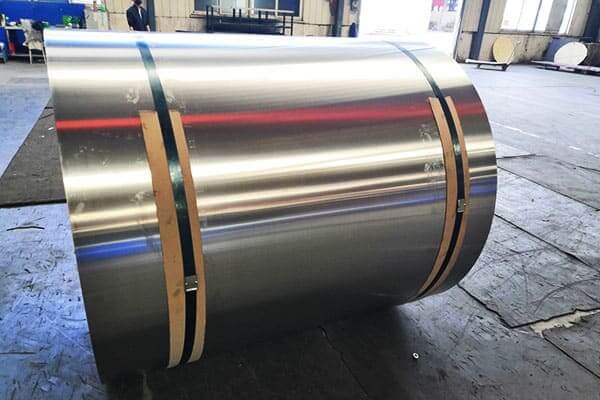
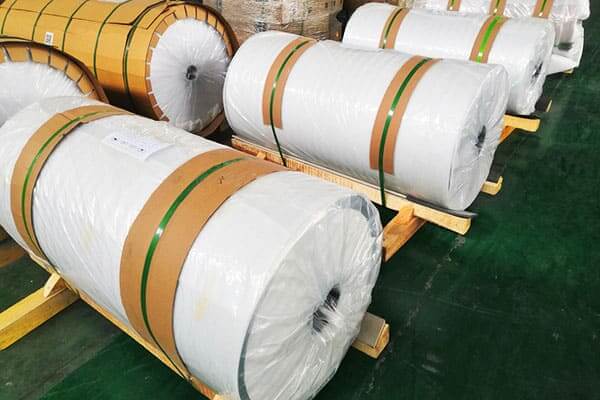
- Finishing: The coil can be leveled, slit, coated (with PE film, for example), or cut to specific sheet sizes. Advanced surface inspection ensures defect-free delivery.
Why Partnering with a Specialist Matters: A supplier like Langhe Aluminum doesn’t just sell metal; they provide a solution. They offer:
* Customization: Ability to supply 5052 aluminum coil in non-standard widths, thicknesses, and tempers.
* Technical Support: Guidance on temper selection, fabrication techniques, and application challenges.
* Quality Assurance: Certifications (like ISO, ASTM, ASME) and Mill Test Reports guaranteeing chemical and mechanical properties.
* Supply Chain Reliability: Consistent stock and production planning to meet just-in-time demands.
When sourcing 5052 aluminum coil, focusing on specifications ensures you get the right material for the job and avoid costly rework or failures.
Critical Specification Checklist:
* Alloy and Temper: Clearly specify “5052-H32” or “5052-O,” etc.
* Thickness (Gauge): Provide tolerance requirements (e.g., ±0.1mm).
* Width and Inner/Outer Diameter: Standard mill coil dimensions or custom slit widths.
* Surface Finish: Mill finish, embossed, or pre-coated (painted, anodized).
* Protective Packaging: PE film, paper interleaving, or heavy-duty crate packing for export.
* Certification: Request a Material Test Report (MTR) or Certificate of Conformance.
Common Pitfalls to Avoid:
* Assuming “Aluminum” is Generic: Not all aluminum coils are created equal. The difference between 3003 and 5052 in a marine application can be catastrophic.
* Neglecting Temper: Using an “O” temper for a structural part will lead to premature failure, while specifying “H38” for a complex deep-draw part will result in cracking.
* Ignoring Tolerances: For precision fabrication, tight thickness and flatness tolerances are essential. Discuss these with your supplier upfront.
The Future Trajectory: Innovation and Sustainability
The story of 5052 aluminum coil is one of continuous evolution. Emerging trends are shaping its future:
- Advanced Coatings: The development of more durable, environmentally friendly, and self-healing coatings will expand the lifespan and applications of 5052 aluminum products.
- Alloy Optimization: Ongoing metallurgical research may produce minor tweaks to the 5052 composition to further enhance specific properties like strength or stress-corrosion cracking resistance for niche markets.
- Recycling and Circular Economy: Aluminum is infinitely recyclable without loss of properties. The high recyclability of 5052 aluminum coil is a massive sustainability advantage, reducing the carbon footprint of products over their entire lifecycle. Suppliers are increasingly focusing on closed-loop recycling programs.
- Lightweighting Megatrend: As the transportation industry pushes for greater fuel efficiency and reduced emissions, the demand for reliable, formable, and strong lightweight materials like 5052 aluminum coil will only intensify.
FAQs About 5052 aluminum coil
Q1: Can 5052 aluminum coil be used for marine applications in saltwater?
A: Absolutely. This is one of its primary strengths. 5052 aluminum coil, particularly in the H32, H34, or H38 tempers, offers excellent resistance to saltwater corrosion, making it a top choice for boat hulls, decks, fittings, and offshore structures.
Q2: What is the difference between 5052-H32 and 5052-H34 coil?
A: Both are strain-hardened and stabilized. The key difference is the degree of hardening. H34 is harder and stronger than H32. H32 (yield strength ~160-195 MPa) is excellent for general forming and marine work. H34 (yield strength ~185-230 MPa) is chosen for applications needing higher strength with moderate forming, like heavy-duty vehicle panels or pressure vessels.
Q3: Is 5052 aluminum weldable?
A: Yes, 5052 aluminum sheet and coil are considered to have good weldability using common arc welding processes (MIG/TIG). It is crucial to use the correct filler alloy (5356 or 4043 are common choices) and clean the material thoroughly before welding to ensure strong, corrosion-resistant joints.
Q4: How does the cost of 5052 compare to steel or stainless steel?
A: On a per-pound basis, 5052 aluminum coil is typically more expensive than mild steel but generally less expensive than stainless steel (like 304). However, when you factor in its lighter weight (requiring less material by volume), lower finishing costs, and superior corrosion resistance leading to lower lifetime maintenance, it often presents a lower total cost of ownership for many applications.
Q5: Where can I get reliable, high-quality 5052 aluminum coil?
A: It is essential to source from established manufacturers or master distributors with a proven track record. Companies like Langhe Aluminum, which specialize in aluminum production, provide certified material, technical support, and consistent quality. Always request mill test reports to verify the alloy and temper specifications.
Conclusion
5052 aluminum coil is far more than just another industrial metal; it is a testament to material science meeting practical engineering needs.
Its robust combination of corrosion resistance, strength, formability, and weldability makes it an indispensable resource across marine, transportation, architectural, and general manufacturing sectors.
Understanding its tempers—from the formable 5052-O to the robust 5052-H34—empowers designers and fabricators to unlock its full potential.
As industries continue to prioritize performance, sustainability, and efficiency, the role of versatile and reliable materials like 5052 aluminum coil will only grow.
By partnering with knowledgeable and quality-focused suppliers and applying the insights contained in this guide, engineers and purchasers can confidently specify and utilize this marine-grade workhorse, ensuring their products are built to perform and endure.
Related products
-

 Aluminum Coil, Products
3105 Aluminum Coil
Name
3105 Aluminum CoilThickness
0.2-3.0mmWidth
1000mm – 2600mm,CustomizeSurface
Bright、matte、hairline、brush、sand blast、checkered、embossed、etching、etc.Technical
Cold rolled (CC)、Hot rolled (DC)、Annealed (O) -

 Aluminum Sheet Plate, Products
6005 Aluminum Sheet
Name
6005 Aluminum SheetThickness
0.3-6.0 mmWidth
1000 mm – 2600 mm,CustomizeSurface
Bright, polished, hair line, brush, sand blast, checkered, embossed, etching, etc.Technical
Wrought alloy、Cold rolling (CC)、Heat treated (T4/T6) -
 Aluminum Sheet Plate, Products
6082 Aluminum Sheet Plate
Name
6082 Aluminum Sheet PlateThickness
0.3-200mmWidth
100mm – 2600mm,CustomizeSurface
Bright, polished, hair line, brush, sand blast, checkered, embossed, etching, etc.Technical
Hot rolled (DC)、Cold rolling (CC) -

 Aluminum Coil
3003 Aluminum Coil: The Ultimate Workhorse for Form & Function
¥3,270.00Discover why 3003 aluminum coil dominates packaging, HVAC, and architectural markets. From deep‑draw capability to corrosion resilience, learn how its unique 1–1.5% Mn chemistry delivers cost‑effective strength and versatility.
-

 Aluminum Coil
1050 Pure Aluminum Coil: Properties, Applications, and Fabrication
¥3,200.00Explore the definitive guide to 1050 pure aluminum coil. Uncover its detailed properties, technical specifications, key applications in electronics and cookware, and how it compares to alloys like 3003 and…