




Contents
show
1. Introduction
1.1 Definition of 8011 Aluminum Foil
8011 aluminum foil represents a specific alloy in the 8000 series that manufacturers predominantly employ to produce high-quality aluminum foil.
This product stands out because manufacturers add small quantities of alloying elements such as iron (Fe) and silicon (Si) to almost pure aluminum (with purity ranging between 97.3% and 98.9%).
The modified composition enhances workability, corrosion resistance, and formability.
Companies invest in 8011 aluminum foil production to meet the rising demand in sectors where lightweight, flexible, and durable foil plays a critical role.
1.2 Overview of Its Significance in Various Industries
Industries worldwide use 8011 aluminum foil due to its multifunctionality and robust performance characteristics. The material finds applications in:
- Food Packaging: Its excellent barrier properties help preserve food freshness and flavor.
- Pharmaceutical Packaging: It ensures hygienic, non-reactive packaging for medicinal products.
- Industrial and Electronic Applications: Its high electrical and thermal conductivity supports components like capacitors and insulation layers.
- Household and Kitchen Use: Durable yet flexible, it plays a crucial role in everyday cooking and storage.
- Special Applications: Areas such as decorative laminates, composite materials, and energy-efficient solutions benefit from its sustainable properties.
Manufacturers, engineers, and end users appreciate 8011 aluminum foil for its cost efficiency, performance stability, and versatility in advanced manufacturing processes.
2. Basic Concepts of 8011 Aluminum Foil
2.1 Definition and Characteristics
8011 aluminum foil describes a thin sheet material made from an 8011 aluminum alloy.
Manufacturers produce this foil using a series of advanced rolling and heat-treatment processes.
Its key characteristics include low density, high formability, superior corrosion resistance, and excellent barrier properties.
These attributes make the foil suitable for diverse applications while keeping product weight minimal, which enhances shipping efficiency and processing productivity.
2.2 Comparison with Other Aluminum Foil Materials
When comparing 8011 aluminum foil with other common aluminum foils such as 1050 or 3003 series, several distinctions appear:
- Chemical Purity vs. Alloying: While 1050 aluminum foil uses nearly pure aluminum (99.5% or more), 8011 foil incorporates iron and silicon to improve strength and durability.
- Mechanical Strength and Formability: 8011 foil achieves higher tensile strength after cold rolling and annealing compared to purer grades. It resists cracking and tearing during complex forming processes.
- Barrier Properties: The slight alloying in 8011 enhances its resistance to oxidation and moisture, making it superior for packaging sensitive items.
- Cost and Production Efficiency: Different production methods apply to each foil type. Manufacturers adjust their processes to balance performance and costs. Engineers choose 8011 when the application demands enhanced mechanical performance without sacrificing lightweight efficiency.
These differences help industries select the most suitable foil for specific applications, ensuring that performance standards are met while keeping production economically viable.
3. Chemical Composition and Physical and Mechanical Properties
3.1 Chemical Composition
Understanding the chemical composition of 8011 aluminum foil offers insights into its performance and application scope.
Manufacturers strictly control the elemental content during production to ensure consistency and reliability.
3.1.1 Main Components
- Aluminum (Al): 97.3% – 98.9%
- This primary constituent determines the foil’s overall lightness and excellent conductivity.
3.1.2 Auxiliary Elements
- Iron (Fe): 0.6% – 1.0%
- Iron enhances the strength and improves the anti-corrosion properties.
- Silicon (Si): 0.50% – 0.90%
- Silicon contributes to improved formability and helps achieve better surface smoothness.
3.1.3 Trace Elements and Impurities
Manufacturers maintain strict limits on other elements to prevent degradation in performance:
- Manganese (Mn): Controlled to ensure improved workability and moderate strength.
- Copper (Cu), Zinc (Zn): Typically remain below 0.10%, ensuring minimal impact on corrosion resistance and ductility.
- Titanium (Ti), Chromium (Cr), Magnesium (Mg): Kept to very low levels (generally ≤0.05%) to avoid adversely affecting the alloy’s properties.
The precise control of these components creates a consistent microstructure that drives the foil’s superior mechanical and barrier properties.
3.1.4 Chemical Composition Table
| Element | Content (%) | Function/Role |
|---|---|---|
| Aluminum | 97.3 – 98.9 | Provides lightweight, high conductivity |
| Iron | 0.6 – 1.0 | Enhances strength and corrosion resistance |
| Silicon | 0.50 – 0.90 | Improves formability and surface finish |
| Manganese | ≤0.20 | Increases workability and moderate strength |
| Copper | ≤0.10 | Should remain minimal to preserve corrosion resistance |
| Zinc | ≤0.10 | Maintains overall alloy balance |
| Titanium | ≤0.08 | Minimal presence to avoid negative effects |
| Chromium | ≤0.05 | Contributes to improved durability, low level |
| Magnesium | ≤0.05 | Kept minimal to preserve formability |
| Others | ≤0.15 (Total) | Total impurities remain controlled |
3.2 Key Physical Properties
8011 aluminum foil exhibits remarkable physical properties that engineers and designers exploit in various applications:
- Density: Approximately 2.71 g/cm³, ensuring low weight.
- Electrical and Thermal Conductivity: High conductivity plays a crucial role in electrical insulation, heat dissipation, and other applications.
- Corrosion Resistance: The foil withstands moisture and chemical attack due to the formation of a stable oxide film.
- Barrier Properties: The material effectively protects contents against oxygen, moisture, light, and microbial infiltration, thereby extending shelf life.
3.3 Mechanical Performance Indicators
Engineers use various mechanical performance indicators to assess 8011 aluminum foil quality:
- Tensile Strength: The foil exhibits high ultimate tensile strength after cold working and annealing, ensuring it resists stretching and tearing.
- Yield Strength: The yield strength remains robust enough to maintain dimensional stability during processing.
- Elongation: The foil demonstrates significant ductility, enabling it to deform without failure under bending and folding loads.
- Strain Hardening: Cold working processes enhance the foil’s strength while retaining enough plasticity for forming operations.
3.4 Surface Characteristics
Surface properties directly influence the foil’s usability, particularly for applications where aesthetics and hygiene count:
- Surface Uniformity: Manufacturers ensure a smooth, consistent surface, free from pinholes or undulations.
- Cleanliness: The foil remains free of contaminants that could affect food safety, pharmaceutical integrity, or electronic functionality.
- Luster: Depending on processing, the foil may provide a bright, reflective appearance or a matte finish as required by specific applications.
- Coating Compatibility: The excellent surface quality allows for various coatings, which further enhance barrier properties or add decorative elements.
4. Manufacturing Process of 8011 Aluminum Foil
Manufacturers devote significant efforts to produce high-quality 8011 aluminum foil.
The production process involves multiple meticulously controlled steps, each playing a crucial role in delivering a consistently excellent product.
4.1 Raw Material Preparation
Manufacturers source high-purity aluminum along with precisely measured alloying elements.
They calibrate mixing ratios to align with the strict composition required for 8011 foil.
Suppliers perform stringent quality checks on raw materials to eliminate impurities that could compromise performance.
4.2 Casting Process
After mixing, manufacturers melt the aluminum and alloying elements in large furnaces. The process involves:
- Melting: Operators heat high-purity aluminum along with auxiliary elements to form a homogeneous molten alloy.
- Continuous Casting: The molten alloy flows into continuous casting molds, forming billets. This method removes dissolved gases and ensures uniform grain structure.
- Billet Conditioning: Billets undergo controlled cooling to maintain a specific microstructure that facilitates subsequent rolling processes.
4.3 Hot Rolling and Rough Rolling
Once billets achieve the desired consistency, manufacturers subject them to hot rolling:
- Heating: Billets reheat to an optimal temperature before entering the rolling mills. Operators monitor temperatures actively.
- Rough Rolling: The hot rolling stage reduces the billet’s thickness, breaking the coarse cast structure and aligning the grains.
- Intermediate Checks: Quality control personnel measure the dimensions and properties after hot rolling to guarantee uniformity.
4.4 Cold Rolling Process
Manufacturers employ a series of cold rolling passes to reduce thickness further:
- Precision Reduction: Multiple cold rolling steps achieve the thinness required for aluminum foil while increasing yield strength.
- Controlled Deformation: Operators regulate the rolling pressure and pass schedule meticulously to avoid cracks or irregularities.
- Monitoring: Continuous inspections occur along the cold rolling line to measure thickness and surface quality.
4.5 Annealing Treatment
Following cold rolling, manufacturers perform controlled annealing:
- Temperature Control: Operators heat the rolled foil to specified temperatures to relieve internal stresses and restore ductility.
- Time Management: Holding times vary by the target temper state. Short annealing cycles maintain some strain hardening, whereas prolonged annealing produces a softer, more malleable product.
- Cooling: The foil cools in a controlled environment to lock in the desired mechanical properties.
4.6 Edge Cutting and Roll Packaging
After annealing, the foil requires cutting and proper packaging:
- Edge Finishing: Operators trim irregular edges and ensure the foil’s width conforms to customer specifications.
- Roll Forming: The foil winds onto cores, creating rolls tailored to various widths and lengths.
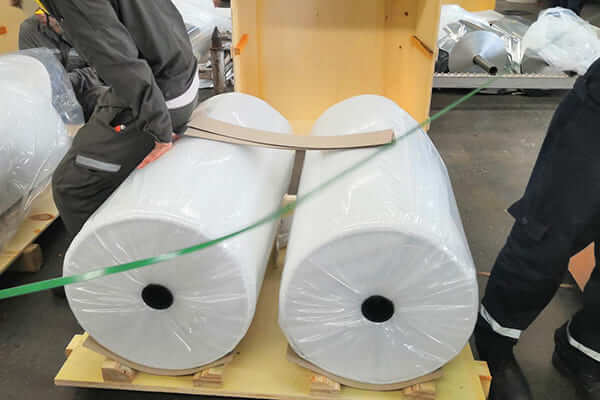
- Packaging: Finished rolls receive protective wrapping and labeling. Quality control documents critical parameters such as thickness, temper, and batch information.
4.7 Critical Control Points and Quality Monitoring
Along the production line, manufacturers implement robust quality control procedures:
- Dimensional Measurements: Thickness, width, and tolerance range values are checked continuously.
- Surface Inspections: Visual and automated inspections detect surface defects, ensuring the foil maintains a high aesthetic and functional quality.
- Chemical Analysis: Spectrometric techniques measure the chemical composition to verify that the alloy falls within prescribed ranges.
- Mechanical Testing: Tensile tests and elongation tests validate the foil’s strength and ductility.
- Documentation: All data record production batches, enabling traceability and continuous improvement.
5. Common Specifications and Product Types
5.1 Thickness and Width Range
8011 aluminum foil manufacturers produce diverse products tailored to different applications:
- Thickness Range: Typical thicknesses vary from approximately 0.014 mm to 0.2 mm. Engineers demand precise control over thickness to ensure barrier and mechanical properties remain consistent.
- Width Range: Foil rolls may span from a few tens of millimeters to over 1,600 mm. Manufacturers customize widths to meet the requirements of food packaging machines, industrial equipment, or consumer products.

5.2 Different Tempering States
Tempering treatments provide foil with distinct mechanical and chemical properties:
- O Temper (Soft Temper): The foil remains soft and ductile, ideal for applications requiring easy forming and low stress.
- H Series (Strain-Hardened): Variants such as H14, H18, H22, etc., offer increased strength and abrasion resistance.
- H14 Temper: Provides moderate hardness and remains flexible for applications like packaging.
- H18 Temper: Maximizes strength while retaining sufficient ductility for bending and forming.
- Customized Tempers: Manufacturers often offer tailored temper options to satisfy specialized performance criteria, balancing strength against ductility.
5.3 Comparison Between Customized and Standard Products
Companies provide both standard and customized options:
- Standard Products: Follow common industry specifications and represent mass-produced goods with well-documented tolerances.
- Customized Products: Offer bespoke dimensions, tempering, coating, and other enhancements to meet niche customer demands.
- Key Differences: Standard products provide predictable performance for high-volume applications, while customized options allow engineers to optimize design requirements for unique applications.
6. Applications of 8011 Aluminum Foil
8011 aluminum foil finds its place across many sectors thanks to its balanced properties. Here, we explore several key application areas.
6.1 Food Packaging
The foil performs exceptionally well in food packaging:
- Barrier Properties: Its ability to block moisture, oxygen, and light protects food contents, extending shelf life.
- Hygiene: Manufacturers produce foil with a clean, uniform surface free of foreign contaminants.
- Flexibility and Conformability: The material adapts well to different shapes, whether wrapping meats, cheeses, or vegetables.
6.2 8011 Aluminum Foil for Pharmaceutical Packaging
Pharmaceutical applications demand high-quality, inert materials:
- Non-Toxicity: The controlled alloy composition ensures that no harmful reactions occur with sensitive drugs.
- Barrier Efficiency: The foil blocks contaminants and moisture from degrading pharmaceuticals.
- Regulatory Compliance: The product meets stringent standards enforced by health organizations.
- Use Cases:
- Blister Packaging: Used in pre-assembled dosing packs.
- Caps and Seals: Provides reliable sealing in medicine vials and containers.
6.3 Industrial and Electronic Applications
The foil also serves a vital role in industrial and electronic settings:
- Electrical Components: The foil forms parts of capacitors and transformers, thanks to its superb electrical and thermal conductivity.
- Insulation Materials: It acts as a barrier in heat exchangers and cable assemblies.
- Mechanical Applications: The foil’s strength permits use in industrial sealing tapes and composite layers.
6.4 Household and Kitchen Use
On the consumer side, 8011 aluminum foil finds everyday utility:
- Cooking Aids: Home cooks use it for baking, grilling, and wrapping leftovers.
- Direct Heat Exposure: The foil withstands direct heat from stoves and ovens without deteriorating.
- Ease of Use: Its malleability allows users to shape and mold the foil around cookware and storage containers.
- Practical Applications:
- Lining baking trays
- Wrapping food for reheating
- Creating disposable pans for messy tasks

6.5 Other Special Applications
Other industries continuously explore innovative uses:
- Decorative Applications: The foil appears in composite panels and modern decorative laminates.
- Energy and Insulation: It plays a part in solar panel assemblies and in reflective insulation systems.
- Automotive Industry: Engineers use the foil in lightweight components and in thermal management solutions for vehicle systems.
7. Advantages, Limitations, and Environmental Considerations
7.1 Comprehensive Advantages
The benefits of 8011 aluminum foil underpin its widespread adoption:
- High Strength-to-Weight Ratio: The foil minimizes weight while delivering sufficient strength.
- Excellent Barrier Properties: Protects against moisture, oxygen, and contaminants.
- Good Formability: Enables intricate shaping without causing cracks or tears.
- Corrosion Resistance: Exhibits stability even in adverse environments.
- Energy Efficiency: Low density decreases energy consumption during transport and use.
- Cost Efficiency: Mass production and precision control lower overall costs.
7.2 Possible Limitations
Despite numerous benefits, some limitations exist:
- Specialized Processing Requirements: The advanced production processes require skilled personnel and high-end machinery.
- Sensitivity to Production Fluctuations: Minor changes in raw material quality can affect final performance.
- High Initial Capital Investment: Setting up an 8011 foil production line involves significant capital expenditure.
- Performance Under Extreme Conditions: In very high-temperature or chemically aggressive environments, foil performance may change.
7.3 Sustainable Development and Recycling
Sustainability remains a core tenet of modern manufacturing:
- Recyclability: Aluminum recycles with minimal loss of properties.
- Energy Savings: Recycling aluminum requires substantially less energy compared to primary production.
- Environmentally Friendly Processing: Companies invest in cleaner, greener production practices.
- Circular Economy Initiatives: Manufacturers embrace end-of-life recovery, encouraging collection and recycling.
- Table: Environmental Impact Comparison
| Parameter | Primary Production | Recycling Process |
|---|---|---|
| Energy Consumption | High | Significantly Lower |
| Carbon Emissions | Elevated | Reduced |
| Reusability of Material | Limited (waste is generated) | Virtually infinite cycle |
| Cost Implications | High | Lower |
Manufacturers and end users increasingly stress environmental certifications and sustainable practices to promote eco-friendly aluminum foil production.
8. Market Status and Price Factors
8.1 Market Supply and Demand Analysis
The market dynamics for 8011 aluminum foil depend on various regional and global factors:
- Growing Demand in Packaging: The food and pharmaceutical industries continue to expand, driving market growth.
- Industrial Expansion: Electronic and automotive sectors adopt lightweight materials, further boosting demand.
- Regional Supply Variations: Developed economies impose strict quality standards, while emerging markets seek cost-effective, yet reliable, foil.
- Supply Chain Stability: Integrated production systems and improved logistics ensure steady supply despite economic fluctuations.
8.2 Price Influencing Factors
Several elements affect the foil’s price:
- Raw Material Costs: Fluctuations in the price of aluminum and energy costs directly impact production expenses.
- Production Efficiency: Advances in production technology lower costs; however, lower volume production or customized products may carry premium pricing.
- Market Competition: Strong competition among suppliers drives innovation and cost control.
- Trade Policies and Tariffs: International trade agreements, regional tariffs, and export restrictions modify overall market pricing.
- Economic Environment: Macroeconomic factors, including inflation and exchange rate fluctuations, contribute to price volatility.
8.3 Major Suppliers and Competitive Advantages
Global suppliers differentiate themselves through quality, service, and technical support:
- Leading Manufacturers: Companies with extensive experience and rigorous quality control hold market advantages.
- Technological Expertise: Suppliers invest in high-end machinery, automated monitoring, and continuous process improvement.
- Customer-Centric Approaches: Competitive suppliers offer customization, swift delivery, and comprehensive after-sales support.
9. Standards, Testing, and Certification
9.1 Relevant Industry Standards and Specifications
8011 aluminum foil adheres to stringent national and international standards to ensure reliability:
- ASTM Standards: Many manufacturers comply with ASTM B209 for aluminum sheet and plate or ASTM guidelines specific to foil products.
- GB Standards: In China, GB/T standards regulate the chemical and mechanical properties of aluminum foil.
- BS and ISO Standards: European and international manufacturers use BS EN and ISO standards to guarantee quality and consistency.
- Industry-Specific Certifications: In food packaging and pharmaceutical applications, FDA and other regulatory authorities establish additional guidelines.
9.2 Testing Methods and Quality Certification
Manufacturers deploy several testing methods to ensure product compliance:
- Chemical Analysis: Spectrometry verifies that the chemical composition meets specification limits.
- Mechanical Testing: Tensile tests, yield strength measurements, and elongation assessments confirm mechanical performance.
- Thickness and Surface Quality Measurement: Laser and ultrasonic gauges control foil dimensions and detect surface defects.
- Corrosion Testing: Accelerated exposure tests and salt spray tests gauge resistance.
- Quality Certifications:
- ISO 9001 ensures quality management
- FDA approval for food and pharmaceutical use
- SGS and other independent test reports offer additional market confidence
10. Frequently Asked Questions (FAQ)
Q1: What is the difference between 8011 aluminum foil and other types of aluminum foil?
8011 aluminum foil contains controlled amounts of iron and silicon, which enhance its strength and corrosion resistance.
In contrast, pure aluminum foils like 1050 excel in malleability but may lack the enhanced mechanical properties provided by 8011’s alloying elements.
Manufacturers choose 8011 when the application demands a higher strength-to-weight ratio and superior barrier properties.
Q2: How does one ensure the hygiene and safety of aluminum foil?
Manufacturers maintain extremely strict cleanliness standards during production.
They use controlled environments, chemical cleaning processes, and protective packaging to guarantee that the foil remains free of contaminants.
Quality certifications such as FDA approval further validate its safe use in food and pharmaceutical packaging.
Q3: What are the application scenarios of 8011 aluminum foil under different tempering conditions?
Different tempering states yield varied properties:
- O Temper: Offers soft, highly formable foil ideal for delicate food wrappers.
- H14 and H18 Tempers: Deliver higher strength for industrial applications, such as in electronic components or durable packaging materials.
Engineers choose the temper based on required performance, processing ease, and end-use conditions.
Q4: How do manufacturers control thickness tolerance and surface quality during the production process?
Continuous monitoring systems track the foil’s thickness and surface quality at every stage.
Automated gauges, laser measurement, and real-time quality control checks minimize variation.
Operators adjust rolling pressures and temperature conditions to maintain the specified tolerances, and routine inspections catch any deviation from standards.
Q5: How can one evaluate the recycling and environmental benefits of 8011 aluminum foil?
Recyclability remains a strong advantage. Recycling aluminum consumes significantly less energy than primary production, reduces carbon emissions, and promotes a circular economy.
Life-cycle assessments (LCA) and independent environmental audits document these benefits.
Manufacturers publish sustainability reports demonstrating energy savings and the environmental impact relative to alternative materials.
11. Summary
8011 aluminum foil holds a critical role in modern manufacturing and packaging industries.
Its unique composition, combining nearly pure aluminum with controlled levels of iron and silicon, results in a material that offers excellent strength, ductility, barrier performance, and corrosion resistance.
Manufacturers produce it through advanced techniques—including precise melting, rolling (both hot and cold), and rigorously controlled annealing treatments—that guarantee uniformity and reliability.
The foil plays a transformative role in food and pharmaceutical packaging, aids in high-performance industrial and electronic applications, and finds everyday use in kitchens and households.
Despite its demanding production processes and certain limitations, 8011 aluminum foil offers distinct competitive advantages and fulfills strict environmental criteria.
Global market dynamics continue to influence pricing, supply, and innovation, while extensive quality and testing procedures ensure compliance with international standards.
Langhe web: https://langhe-metal.com/







Related products
-

 Aluminum Foil
3004 Aluminum Foil
¥4,880.00Discover the unique advantages of 3004 aluminum foil. Learn about its enhanced strength, superior formability, corrosion resistance, and its key role in food packaging, cookware, and automotive industries. Get the…
-

 Aluminum Foil
1070 Aluminum Foil
¥5,360.00Discover why 1070 aluminum foil isn’t standard foil. Learn how its 99.7% purity drives superior conductivity, corrosion resistance & formability (O Temper) for specialized electrical, thermal, and industrial applications.
-

 Aluminum Foil
5052 Aluminum Foil
¥5,600.00Discover the key benefits of 5052 aluminum foil. Unpack its high strength, outstanding saltwater corrosion resistance, formability (H32/H34), and critical uses compared to 3003/1100 foil. Learn more.
-

 Aluminum Foil
1050 Aluminum Foil
¥3,800.00Unlock the potential of 1050 Aluminum Foil. Discover how its >99.5% purity drives superior conductivity, formability & corrosion resistance. In-depth specs, applications & expert insights.
-

 Aluminum Foil
3003 Aluminum Foil
¥4,800.00Need aluminum foil stronger than pure grades yet highly formable? Discover 3003 Aluminum Foil – the optimal Mn-alloy solution for containers, HVAC & beyond.
-

 Aluminum Foil
1100 Aluminum Foil
¥4,560.00Discover the definitive guide to 1100 Aluminum Foil. Understand its high purity, excellent conductivity & formability, tempers, specs & key applications from heat exchangers to packaging. Learn why it’s the…
-

 Aluminum Foil
8006 Aluminum Foil
¥4,550.00Discover everything about 8006 aluminum foil, a high-performance Al-Fe-Si-Mn alloy ideal for food packaging, electronics, and automotive industries. Explore its chemical composition, mechanical properties, and advanced manufacturing processes.
-

 Aluminum Foil
1235 Aluminum Foil
¥4,250.001235 aluminum foil is high-purity aluminum material renowned for its excellent barrier properties and conductivity. Learn about its chemical composition, physical properties, and production processes. Discover the diverse applications of…
-

 Aluminum Foil
8079 Aluminum Foil
¥3,400.00A detailed guide to 8079 aluminum foil, covering composition, properties, production, and applications in packaging, electronics, and new energy. Highlights include high strength, corrosion resistance, sustainability, and industry standards
-

 Aluminum Foil
8021 Aluminum Foil
¥6,080.00Explore the exceptional properties and versatile applications of 8021 aluminum foil. Discover how its superior barrier protection, durability, and recyclability make it the top choice for pharmaceutical, food, and industrial…