
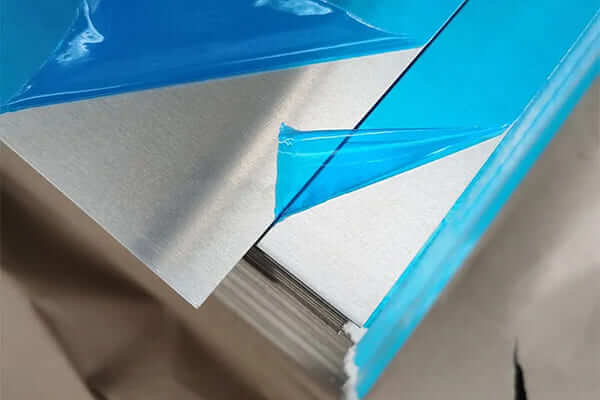


Contents
show
What is 5754 Aluminum Sheet
5754 aluminum sheet is a member of the 5000 series aluminum-magnesium alloys, known for their excellent corrosion resistance, high strength, and good weldability.
This alloy is widely used in various industries due to its balanced combination of mechanical properties and formability.
5754 Aluminum Alloy Chemical Composition
The chemical makeup of 5754 aluminum directly impacts its performance. Below is a breakdown of its primary elements:
| Element | Percentage Range | Role in Alloy |
|---|---|---|
| Magnesium (Mg) | 2.6% – 3.6% | Enhances strength and corrosion resistance. |
| Manganese (Mn) | ≤0.5% | Improves workability and structural integrity. |
| Chromium (Cr) | ≤0.3% | Reduces stress corrosion cracking. |
| Iron (Fe) | ≤0.4% | Balances ductility. |
| Silicon (Si) | ≤0.4% | Controls grain structure. |
| Copper (Cu) | ≤0.1% | Minimized to prevent corrosion. |
| Aluminum (Al) | Remainder | Base metal providing lightweight properties. |
Mechanical properties of 5754 aluminum alloy
The 5754 aluminum alloy is a member of the aluminum-magnesium 5000 series, recognized for its medium to high strength, excellent corrosion resistance, and good weldability.
These properties make it suitable for various applications, including marine and offshore environments.
The mechanical properties of 5754 aluminum alloy vary depending on its temper, reflecting the specific processing and heat treatment it has undergone.
Below is a table summarizing the typical mechanical properties for different tempers of 5754 aluminum alloy:
| Temper | Ultimate Tensile Strength (MPa) | Yield Strength (MPa) | Elongation (%) | Notes |
|---|---|---|---|---|
| O (Annealed) | 220–250 | 80–100 | 16–20 | Soft, annealed condition suitable for forming |
| H111 (Some work hardening) | 220–250 | 80–100 | 16–20 | Slightly strain-hardened from the annealed condition |
| H22 (Quarter-hard) | 260–300 | 180–220 | 12–16 | Strain-hardened and partially annealed |
| H24 (Half-hard) | 270–310 | 200–240 | 10–14 | Strain-hardened and partially annealed |
| H26 (Three-quarter hard) | 290–330 | 220–260 | 8–12 | Strain-hardened and partially annealed |
| H28 (Full hard) | 310–350 | 240–280 | 6–10 | Fully strain-hardened |
Note: The values provided are typical ranges; actual properties may vary based on specific processing and manufacturing conditions.
Characteristics of 5754 Aluminum Sheet
1. Corrosion Resistance
5754 aluminum excels in marine and chemical environments. Its magnesium content forms a protective oxide layer that resists pitting and oxidation, even in saltwater.
2. Weldability
The alloy supports MIG, TIG, and spot welding without cracking or losing strength. This makes it suitable for complex fabrications like ship hulls or fuel tanks.
3. Formability
Cold-working processes like bending, rolling, or stamping shape 5754 sheets easily. Its elongation rate (12%-22%) allows for deep drawing without tearing.
4. Moderate Strength
With a tensile strength of 190-240 MPa, 5754 balances durability and weight savings. It outperforms pure aluminum while remaining lighter than steel.
5. Thermal and Electrical Conductivity
The alloy conducts heat and electricity efficiently (50% IACS), useful in heat exchangers or electrical enclosures.
6. Recyclability
5754 is 100% recyclable, aligning with sustainable manufacturing trends.
Manufacturing Process of 5754 Aluminum Sheet
- Melting and Casting
Workers melt aluminum ingots with magnesium and manganese additives in a furnace. The molten metal pours into molds to form large slabs. - Hot Rolling
Slabs heat to 500°C and pass through rollers to reduce thickness. This step prepares the material for further refinement. - Cold Rolling
Room-temperature rolling achieves precise thickness (0.2mm–6.0mm) and enhances surface finish. Repeated passes increase strength through strain hardening. - Heat Treatment
5754 undergoes annealing (300°C–400°C) to relieve stress and improve formability. Unlike heat-treatable alloys, it does not require quenching. - Surface Treatment
Options include:
- Mill finish: Bare, non-reflective surface for industrial use.
- Anodizing: Electrochemical coating for enhanced corrosion resistance.
- Painting/Powder coating: Custom colors for architectural applications.
- Cutting and Packaging
Laser or shear cutting tailors sheets to customer sizes. Workers pack finished products on wooden pallets with moisture-proof film.
Applications of 5754 Aluminum Sheet
1. Automobile Manufacturing
- Body Panels: Doors, hoods, and fenders benefit from 5754’s dent resistance.
- Fuel Systems: Tanks and lines leverage its weldability and leak-proof properties.
- EV Components: Battery enclosures use 5754 for thermal management and crash safety.
2. Ship Structures
- Hulls and Decks: Withstands saltwater exposure without heavy coatings.
- Railings and Masts: Combines lightweight design with structural integrity.
3. Pressure Vessels
- Chemical Storage: Safely holds acids, alkalis, and solvents.
- Compressed Gas Tanks: Meets high-pressure standards (e.g., ISO 9809).

4. Transportation Equipment
- Railway Cars: Reduces weight for energy-efficient transit.
- Aircraft Cargo Bins: Meets FAA flammability and strength requirements.
Comparison with other aluminum alloys
Here is a detailed comparison between 5754 aluminum alloy and other common aluminum alloys (such as 5052, 6061, 7075, and 2219) in terms of chemical composition and mechanical properties:
Chemical Composition Comparison
| Alloy | Aluminum (Al) | Magnesium (Mg) | Silicon (Si) | Iron (Fe) | Copper (Cu) | Manganese (Mn) | Chromium (Cr) | Zinc (Zn) | Titanium (Ti) | Zirconium (Zr) |
|---|---|---|---|---|---|---|---|---|---|---|
| 5754 | 94.2-97.4% | 2.6-3.6% | ≤0.40% | ≤0.40% | ≤0.10% | ≤0.50% | ≤0.30% | ≤0.20% | ≤0.15% | – |
| 5052 | 96.5-97.7% | 2.2-2.8% | ≤0.25% | ≤0.40% | ≤0.10% | ≤0.10% | 0.15-0.35% | ≤0.10% | – | – |
| 6061 | 95.8-98.6% | 0.8-1.2% | 0.4-0.8% | ≤0.70% | 0.15-0.40% | ≤0.15% | 0.04-0.35% | ≤0.25% | ≤0.15% | – |
| 7075 | 87.1-91.4% | 2.1-2.9% | ≤0.40% | ≤0.50% | 1.2-2.0% | ≤0.30% | ≤0.20% | 5.1-6.1% | ≤0.20% | – |
| 2219 | 90.6-94.0% | – | ≤0.20% | ≤0.30% | 5.8-6.8% | 0.20-0.40% | – | ≤0.10% | ≤0.15% | 0.10-0.25% |
Mechanical Properties Comparison
| Alloy | Ultimate Tensile Strength (MPa) | Yield Strength (MPa) | Elongation (%) | Hardness (HB) |
|---|---|---|---|---|
| 5754 | 200-330 | 80-280 | 2.0-19 | 52-88 |
| 5052 | 193-241 | 89-193 | 5-12 | 60-70 |
| 6061 | 241-310 | 145-276 | 8-17 | 95 |
| 7075 | 510-540 | 430 | 7-9 | 150 |
| 2219 | 380-470 | 240-280 | 10-15 | – |
Key Differences
- Primary Alloying Elements: 5754 and 5052 primarily use magnesium, whereas 2219 uses copper, and 7075 has both zinc and copper as major alloying elements.
- Strength: 7075 and 2219 exhibit the highest strength, making them suitable for aerospace and high-load applications. 5754 and 5052 have lower strength but better corrosion resistance.
- Corrosion Resistance: 5754 and 5052 offer superior corrosion resistance, particularly in marine environments. 2219 has relatively lower corrosion resistance due to its high copper content.
- Weldability: 5754 and 5052 have excellent weldability, whereas 7075 and 2219 are more challenging to weld due to their high strength and hardness.
- Density: 2219 has a slightly higher density compared to 5754 and 5052, affecting weight-sensitive applications.
FAQ
Q1: What is the difference between 5754 and 5052 aluminum plates?
→ Answer: 5754 has higher strength and is more suitable for marine and chemical environments.
Q2: Do you support small batch sample orders?
→ Answer: Free samples are provided (only for first-time cooperation).
Q3: What is the high temperature resistance limit?
→ Answer: The recommended long-term use temperature is ≤150°C.
Q4: Does surface treatment affect corrosion resistance?
→ Answer: Anodizing can further improve the protection performance.
Standards and Specifications
5754 aluminum sheet conforms to several international standards:
- ASTM B209: Specifies the requirements for aluminum and aluminum-alloy sheet and plate.
- EN 485-2: Defines mechanical properties for aluminum and aluminum alloys sheet, strip, and plate.
- EN 573-3: Outlines the chemical composition and form of wrought products for aluminum and aluminum alloys.
Langhe 5754 Aluminum Sheet
Langhe Metal, a leading Chinese manufacturer, produces 5754 sheets with tight thickness tolerances (±0.02mm) and customized annealing cycles.
Their products often include third-party certifications (SGS, TUV) and cater to high-volume buyers with competitive pricing.
Conclusion
5754 aluminum sheet stands out as a versatile, durable solution for industries demanding corrosion resistance and ease of fabrication. From ships traversing oceans to electric vehicles cutting carbon emissions, this alloy bridges performance and sustainability. By understanding its properties, applications, and standards, engineers and purchasers can make informed decisions that optimize project outcomes.
Langhe Other Web: https://langhe-industry.com/ & https://langhe-metal.com/
Related products
-
 Aluminum Sheet Plate, Products
6082 Aluminum Sheet Plate
Name
6082 Aluminum Sheet PlateThickness
0.3-200mmWidth
100mm – 2600mm,CustomizeSurface
Bright, polished, hair line, brush, sand blast, checkered, embossed, etching, etc.Technical
Hot rolled (DC)、Cold rolling (CC) -
 Aluminum Sheet Plate
6063 Aluminum Sheet: Achieve Flawless Finishes
¥5,800.00Known for its exceptional surface quality and superior anodizing response, 6063 Aluminum Sheet is the ideal material for architectural trim, decorative components, and applications where aesthetics are paramount.
-
 Aluminum Sheet Plate
5454 Aluminum Sheet Plate
¥3,600.00Choose 5454 Aluminum Sheet Plate for lightweight strength in marine decks, chemical vessels, and pressure containers. Proven reliability, easy fabrication.
-
 Aluminum Sheet Plate
5086 Aluminum Sheet
¥3,750.00Unlock the technical advantages of 5086 Aluminum Sheet. In-depth analysis of its durability, excellent weldability, and supreme corrosion proofing for critical structures and harsh conditions.
-
 Aluminum Sheet Plate
5083 Aluminum Sheet
¥3,780.00Discover high-performance 5083 aluminum sheet, engineered for shipbuilding, automotive, and structural applications. Superior corrosion resistance, weldability, and durability.
-

 Aluminum Sheet Plate
Honeycomb aluminum panel
¥4,500.00Discover how honeycomb aluminum panel deliver superior flexural stiffness, thermal insulation, and fire safety—all at 70% less weight than solid metal. Ideal for façades, aerospace, and industrial design.
-

 Aluminum Sheet Plate
3104 Aluminum Sheet
¥3,500.00Explore the key features of 3104 aluminum sheet, including its excellent corrosion resistance, formability, and strength. Understand its production process and how it compares to other aluminum alloys in the…
-
 Aluminum Sheet Plate
5005 Aluminum Sheet
¥3,680.00Unlock the potential of 5005 aluminum sheet, ideal for superior anodized finishes in architectural, decorative, and electrical uses. Learn its benefits and why it stands out.
-

 Aluminum Sheet Plate
6061 Aluminum Sheet
¥5,450.006061 aluminum sheet provided by Langhe-Alu is a popular industrial material. With its excellent comprehensive performance, it is widely used in aerospace, machinery manufacturing, shipbuilding, automotive industry and architectural decoration.
-
 Aluminum Sheet Plate
1050 Aluminum Sheet
¥3,428.001050 aluminum sheet is a commercially pure aluminum alloy (99.5% aluminum content) that belongs to the 1000 series of aluminum alloys.