


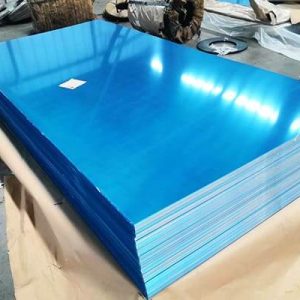
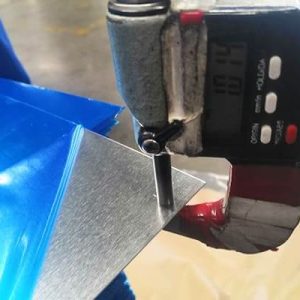


In the realm of high-performance aluminum alloys, 5454 aluminum sheet plate distinguishes itself with a unique combination of excellent corrosion resistance, good strength, and notable performance at moderately elevated temperatures.
This 5xxx series aluminum-magnesium-manganese alloy has become a preferred material for demanding applications where thermal stability and resistance to chemical attack are paramount.
Contents
show
1. Introduction of 5454 Aluminum Sheet Plate
5454 aluminum sheet plate is a non-heat-treatable wrought alloy specifically engineered to maintain its structural integrity and corrosion resistance when exposed to sustained temperatures that might compromise other 5xxx series alloys like 5083.
Its formulation, particularly the controlled magnesium and manganese content, makes it less susceptible to sensitization and stress corrosion cracking (SCC) at service temperatures typically up to around 120-150°C (250-300°F).
This makes 5454 aluminum sheet plate an ideal choice for tank trucks carrying hot liquids, chemical processing equipment, and certain pressure vessel applications.
2. Properties of 5454 Aluminum Alloy
The performance of 5454 aluminum sheet plate stems from its carefully balanced chemical composition and resulting physical and mechanical properties.
Chemical Composition
The key to 5454 aluminum sheet plate’s unique capabilities lies in its alloying elements.
Magnesium (Mg) is the primary strengthening agent and also contributes to corrosion resistance.
Manganese (Mn) further enhances strength and, along with controlled levels of chromium (Cr), helps stabilize the microstructure at elevated temperatures.
| Element | Content (%) (Typical for ASTM B209) | Function |
|---|---|---|
| Silicon (Si) | ≤ 0.25 | Impurity; controlled to maintain desired properties. |
| Iron (Fe) | ≤ 0.40 | Impurity; high levels can reduce ductility and corrosion resistance. |
| Copper (Cu) | ≤ 0.10 | Impurity; controlled to prevent adverse effects on corrosion resistance. |
| Manganese (Mn) | 0.50 – 1.0 | Improves strength; works with Mg and Cr to enhance elevated temperature stability and resistance to intergranular corrosion. |
| Magnesium (Mg) | 2.4 – 3.0 | Primary alloying element; provides significant solid solution strengthening and excellent corrosion resistance. Lower Mg than 5083 helps with elevated temperature stability. |
| Chromium (Cr) | 0.05 – 0.20 | Improves corrosion resistance, controls grain structure, and contributes to stress corrosion cracking resistance. |
| Zinc (Zn) | ≤ 0.25 | Impurity. |
| Titanium (Ti) | ≤ 0.20 | Often added as a grain refiner during casting, improving toughness and formability. |
| Others, each | ≤ 0.05 | |
| Others, total | ≤ 0.15 | |
| Aluminum (Al) | Balance | Base metal. |
Note: Specific composition ranges for 5454 aluminum sheet plate may vary slightly based on governing standards like EN AW-5454 or ASME SB-209.
Physical Properties
These inherent material characteristics are largely independent of temper.
- Density: Approximately 2.69 g/cm³ (0.097 lb/in³)
- Melting Range: Approximately 600 – 650 °C (1110 – 1200 °F)
- Thermal Conductivity: Approximately 130 – 140 W/m·K (at 25 °C)
- Electrical Resistivity: Approximately 4.9 – 5.1 µΩ·cm (at 20 °C) / Electrical Conductivity: ~34% IACS
- Modulus of Elasticity (Young’s Modulus): Approximately 70 GPa (10,150 ksi)
- Coefficient of Thermal Expansion: Approximately 23.7 µm/m·°C (20-100 °C)
Mechanical Properties
The mechanical properties of 5454 aluminum sheet plate are significantly influenced by its temper. Common tempers include O (annealed), H32, H34 (strain-hardened and stabilized), and H111/H112 (strain-hardened by shaping processes).
| Temper | Tensile Strength (MPa, typical) | Yield Strength (0.2% offset) (MPa, typical) | Elongation (% in 50mm, typical for 1.6mm thick) | Hardness (Brinell, HBW, typical) |
|---|---|---|---|---|
| O | 215 – 285 | 85 – 140 | ≥ 12 | 55 – 65 |
| H32 | 250 – 305 | 180 – 240 | ≥ 6 | 70 – 80 |
| H34 | 260 – 330 | 200 – 270 | ≥ 5 | 75 – 85 |
| H111 | 220 – 290 | 100 – 150 | ≥ 10 | 60 – 70 |
Note: Values for 5454 aluminum sheet plate are indicative and can vary with thickness and specific standard. Consult relevant standards for guaranteed minimums.
Importantly, 5454 aluminum sheet plate retains a good percentage of its room temperature strength at moderately elevated temperatures where other alloys might weaken significantly.
Corrosion Resistance
5454 aluminum sheet plate exhibits excellent corrosion resistance to a wide range of environments, including:
- Atmospheric conditions (industrial and marine)
- Freshwater and saltwater
- Many industrial chemicals and food products
- Notably good resistance to alkaline solutions (e.g., sodium hydroxide solutions at moderate concentrations and temperatures).
Its composition is specifically tailored to resist sensitization to intergranular corrosion and stress corrosion cracking (SCC) when exposed to moderately elevated temperatures (typically up to ~150°C), a key differentiator from alloys like 5083 in such service conditions.
3. Manufacturing Process of 5454 Aluminum Sheet Plate
The production of high-quality 5454 aluminum sheet plate involves several carefully controlled stages.
Ingot Casting
The process begins with melting high-purity aluminum and precisely adding alloying elements like magnesium, manganese, and chromium to achieve the target composition for 5454 aluminum.
The molten metal is then typically cast into large rectangular ingots (slabs) using Direct Chill (DC) casting, which ensures a uniform microstructure.

Hot & Cold Rolling to Sheet/Plate
The cast ingots are preheated (homogenized) to dissolve soluble phases and improve workability.
They then undergo hot rolling, where they pass through large rollers to reduce their thickness significantly.
After hot rolling, the material may be further reduced in thickness by cold rolling to achieve the final desired gauge and improve surface finish and mechanical properties of the 5454 aluminum sheet plate.
Annealing and Temper Designations (H111, H114, H32, H34, etc.)
After rolling, 5454 aluminum sheet plate can be subjected to various thermal treatments to achieve specific tempers:
- O Temper (Annealed): Fully softened by heating to a specific temperature and then slowly cooling, providing maximum ductility and formability.
- Hxx Tempers (Strain-Hardened):
- H1x (Strain-Hardened Only): Strength is increased by cold working. For example, H111 implies some strain hardening from shaping processes but without specific control. H114 is a specific temper for some applications.
- H3x (Strain-Hardened and Stabilized): After cold working, the material receives a low-temperature thermal treatment (stabilization) to improve ductility and long-term stability of properties, especially important for 5454 aluminum sheet plate due to its elevated temperature service. H32 (quarter-hard) and H34 (half-hard) are common.
Surface Finishes & Coatings
5454 aluminum sheet plate is typically supplied with a standard mill finish.
For specific applications, protective PVC/PE film coating can be applied to prevent surface damage.
Further surface treatments like anodizing or painting can be performed by the end-user.
4. Forming & Fabrication Techniques for 5454 Aluminum Sheet Plate
5454 aluminum sheet plate offers good fabricability using standard workshop practices.
Cutting (Shearing, Laser, Waterjet)
Standard methods can cut 5454 aluminum sheet plate:
- Shearing: Suitable for straight cuts on thinner gauges.
- Laser Cutting: Provides precise cuts for complex shapes with good edge quality.
- Waterjet Cutting: Excellent for intricate cuts on thicker plates without heat-affected zones.
Plasma cutting is also an option, particularly for thicker sections.
Bending & Drawing of 5454 Aluminum Sheet Plate
5454 aluminum sheet plate has moderate formability.
- Bending: It can be readily bent, especially in the O temper. Harder tempers require larger bend radii to prevent cracking.
- Drawing: Suitable for moderate deep drawing applications. The O temper is preferred for maximum drawability. Proper lubrication and tooling are essential.

Welding (MIG, TIG, Friction Stir)
5454 aluminum sheet plate has good weldability.
- MIG (GMAW) and TIG (GTAW): These are the most common fusion welding methods.
- Filler Metal: 5554 is the preferred filler metal as it closely matches the base metal’s chemical composition, corrosion resistance, and performance at elevated temperatures. 5356 can also be used, but 5554 provides better overall compatibility for 5454 aluminum sheet plate.
- Friction Stir Welding (FSW): A solid-state joining process that can produce high-quality welds with excellent mechanical properties, though less common than fusion methods for this alloy.
Thorough cleaning of weld joints and appropriate shielding gas (usually argon or argon-helium mixtures) are critical.
Machining Best Practices
The machinability of 5454 aluminum sheet plate is generally fair, similar to other 5xxx series alloys.
- Use sharp tools with appropriate rake and clearance angles.
- High cutting speeds and moderate feeds are generally effective.
- Adequate cooling and lubrication are important to prevent chip build-up and achieve a good surface finish.
Joining & Fastening
Besides welding, 5454 aluminum sheet plate can be joined using mechanical fasteners like rivets and bolts.
Compatibility of fastener material is important to prevent galvanic corrosion, especially in corrosive environments.
Adhesive bonding can also be an option for certain applications after proper surface preparation.
5. Advantages of 5454 Aluminum Sheet Plate
Lightweight and Strong
Like all aluminum alloys, 5454 aluminum sheet plate offers an excellent strength-to-weight ratio.
This is particularly advantageous in transportation applications like tanker trucks, where reduced vehicle weight translates to increased payload capacity and improved fuel efficiency.
Its moderate-to-high strength ensures structural integrity.
Excellent Formability (Relative to its Strength and Service)
While not as formable as some lower-strength alloys, 5454 aluminum sheet plate provides good formability, especially in the annealed (O) temper.
This allows for the fabrication of complex shapes required for tanks, vessels, and various components.
Cost-Effectiveness (Life-Cycle Cost)
While the initial material cost of 5454 aluminum sheet plate might be higher than some steels or general-purpose aluminum alloys, its long service life due to excellent corrosion resistance (especially at elevated temperatures) and lower maintenance requirements can lead to better overall life-cycle cost-effectiveness in demanding applications.
A key advantage, not listed in your subheadings but crucial for 5454 aluminum sheet plate, is its Superior Performance at Moderately Elevated Temperatures and Excellent Corrosion Resistance, as discussed earlier. This is its primary differentiator.
6. Key Application of 5454 Aluminum Sheet Plate
Tanker Trucks & Trailers
This is a primary application for 5454 aluminum sheet plate.
It is extensively used for constructing tanks designed to transport hot liquids such as asphalt, hot oil, molten sulfur, and various chemicals.
Its ability to withstand these temperatures without significant strength loss or corrosion is critical.
Dump bodies for hot materials also utilize this alloy.
Chemical Processing Equipment
5454 aluminum sheet plate is employed in the fabrication of storage tanks, process vessels, piping, and heat exchangers that handle corrosive chemicals, especially at moderately elevated operating temperatures.
Its resistance to alkaline solutions is particularly beneficial.
Pressure Vessels
It is an ASME code-approved material for the construction of unfired pressure vessels intended for service at moderate temperatures where its strength and corrosion resistance are advantageous.
Marine Applications
While 5083 or 5086 are more common for general marine structures, 5454 aluminum sheet plate can be used for specific marine components that are exposed to moderately elevated temperatures (e.g., engine room components, exhaust ducting) or require specific chemical resistance beyond typical marine environments.

Automotive Components
Limited but specific uses in automotive include components that experience moderate heat, such as exhaust system heat shields or parts located near hot engine components.
Architectural and Construction
In specialized architectural or construction scenarios where components are exposed to moderate heat and require good corrosion resistance, 5454 aluminum sheet plate might be considered, although it’s not a common choice for general building facades.
7. Comparison of 5454 Aluminum Sheet Plate with Other Alloys
Understanding how 5454 aluminum sheet plate compares to other common aluminum alloys is crucial for making informed material selection decisions.
| Feature / Alloy | 5454 Aluminum Sheet Plate | 5083 Aluminum Sheet | 5052 Aluminum Sheet Plate | 3003/3004 Aluminum Sheet Plate | 6061-T6 Aluminum Sheet Plate |
|---|---|---|---|---|---|
| Primary Advantage | Excellent performance at moderately elevated temperatures | Very high room-temperature strength, excellent marine corrosion resistance | Good general corrosion resistance, good formability | Excellent formability, good general corrosion resistance | High strength (heat-treated), good general corrosion resistance, good machinability |
| Elevated Temp. Performance ( >65°C / 150°F) | Excellent; resists sensitization & SCC | Poor; prone to sensitization & SCC, significant strength loss | Fair to Poor; not typically recommended | Poor; significant strength loss | Poor; significant strength loss, over-aging can occur |
| Room Temp. Strength | Moderate to High | High to Very High | Moderate | Low to Moderate | High (after T6 heat treatment) |
| Corrosion Resistance (General) | Excellent | Excellent (especially marine) | Excellent | Good | Good |
| Corrosion Resistance (Alkaline) | Very Good | Good | Good | Fair | Fair to Good |
| Weldability | Good | Excellent | Good | Good | Good (but significant strength loss in HAZ without post-weld heat treatment) |
| Formability | Moderate (O temper best) | Moderate (O temper best) | Good (O temper best) | Excellent (O temper best) | Fair (O temper); Poor (T6 temper) |
| Typical Applications | Tanker trucks (hot liquids), chemical processing, pressure vessels (hot service) | Marine structures, LNG tanks, cryogenic applications, high-strength welded structures | General sheet metal, marine (less critical), fuel tanks, appliances | General sheet metal, cookware, building products, beverage cans (3004) | General structural, machinery parts, architectural, bicycle frames |
| Heat Treatable? | No | No | No | No | Yes |
| Filler Metal (Preferred) | 5554 | 5183 or 5356 | 5356 | 4043 or 5356 | 4043 or 5356 (pre-heat treatment); 5356 (post-heat treatment) |
Key Takeaways from the Comparison:
- Choose 5454 aluminum sheet plate when your application involves sustained exposure to moderately elevated temperatures (up to ~150°C / 300°F) where resistance to strength loss and stress corrosion cracking is paramount. Its excellent general corrosion resistance, particularly to alkaline solutions, is also a significant benefit.
- If maximum room-temperature strength and marine corrosion resistance are primary, and elevated temperature service is not a factor, 5083 is often preferred.
- For good general-purpose formability and corrosion resistance at ambient temperatures, 5052 is a versatile choice.
- If high-strength via heat treatment is required and elevated temperature service is not a concern, 6061-T6 is a common structural alloy, though its welded properties need careful consideration.
8. What is the Specifications of Langhe Provide (Example/Generic)
Langhe, as a reputable supplier of aluminum products, would typically provide 5454 aluminum sheet plate meeting stringent international standards and customer specifications.
| Specification Item | Langhe Provided Details (Example) |
|---|---|
| Alloy Designation | 5454 |
| Governing Standards | ASTM B209, ASME SB-209, EN AW-5454, Customer-specific requirements |
| Available Tempers | O, H32, H34, H111, H112, H114, other tempers as per request |
| Thickness Range | Sheet: Typically 0.5mm – 6.0mm <br> Plate: Typically 6.0mm – 100mm (or as per mill capability) |
| Width Range | Standard widths (e.g., 1000mm, 1250mm, 1500mm, 2000mm); custom widths available. |
| Length | Standard sheet/plate lengths (e.g., 2000mm, 2500mm, 3000mm, 6000mm) or supplied in coil form (thinner gauges) |
| Surface Finish | Mill Finish (standard), other finishes upon request. |
| Surface Protection | Optional PVC/PE protective film (one or two sides). |
| Dimensional Tolerances | According to applicable standards (ASTM, EN) or stricter customer-defined tolerances. |
| Certification | Mill Test Certificate (MTC) to EN 10204 3.1, detailing chemical composition, mechanical properties, and compliance with standards. Third-party inspection can be arranged. |
This table represents an example. For precise, current specifications for 5454 aluminum sheet plate from Langhe, direct consultation with their sales or technical team is essential.
9. Standards and Quality Assurance for 5454 Aluminum Sheet Plate
Adherence to industry standards and rigorous quality assurance protocols are vital for 5454 aluminum sheet plate, especially given its use in critical applications.
Industry Standards
Key international standards governing 5454 aluminum sheet plate include:
- ASTM B209: Standard Specification for Aluminum and Aluminum-Alloy Sheet and Plate.
- ASME SB-209: Specification for Aluminum and Aluminum-Alloy Sheet and Plate (often for pressure vessel applications).
- EN 485 / EN 573: European standards for aluminum alloys, chemical composition, and form of wrought products.
- Specific industry codes (e.g., ADR for transportation of dangerous goods by road).
Testing Methods
Manufacturers perform various tests to ensure 5454 aluminum sheet plate meets specified requirements:
- Chemical Analysis: Using spectrometry to verify alloy composition.
- Mechanical Testing: Tensile testing (for tensile strength, yield strength, elongation), hardness testing.
- Corrosion Testing: Including tests for intergranular corrosion and stress corrosion cracking susceptibility, especially for tempers intended for elevated temperature service.
- Dimensional Inspection: Verifying thickness, width, length, and flatness.
- Nondestructive Testing (NDT): Ultrasonic testing may be performed on thicker plates to check for internal defects.
10. Conclusion
5454 aluminum sheet plate stands out as a specialized engineering material, uniquely equipped to handle the dual challenges of moderately elevated temperatures and corrosive environments.
Its carefully controlled composition delivers excellent resistance to sensitization and stress corrosion cracking, making it a reliable choice for tanker trucks, chemical processing equipment, and pressure vessels operating under demanding conditions.
While it possesses good strength and weldability, its primary value lies in its thermal stability compared to other 5xxx series alloys.
For applications where performance at “warm” temperatures is critical, 5454 aluminum sheet plate offers an optimal balance of properties, ensuring safety, longevity, and operational efficiency.
Frequently Asked Questions (FAQ)
Q1: What is the primary advantage of 5454 aluminum over 5083 aluminum?
A: The primary advantage of 5454 aluminum sheet plate over 5083 is its superior performance and resistance to sensitization (which can lead to stress corrosion cracking) at moderately elevated temperatures, typically above 65°C (150°F).
Q2: What is the recommended maximum service temperature for 5454 aluminum sheet plate?
A: While specific design codes should always be consulted, 5454 aluminum sheet plate is generally considered suitable for continuous service at temperatures up to approximately 120-150°C (250-300°F), depending on the stress levels and specific environment.
Q3: Is 5454 aluminum suitable for cryogenic applications?
A: Like most aluminum alloys, 5454 aluminum sheet plate maintains good toughness and increases in strength at cryogenic temperatures.
Q4: What filler metal is best for welding 5454 aluminum?
A: The preferred filler metal for welding 5454 aluminum sheet plate is 5554, as it is compositionally matched to provide similar corrosion resistance and performance at elevated temperatures.
Q5: How does the corrosion resistance of 5454 compare to stainless steel in certain chemical environments?
A: The comparison depends heavily on the specific chemical, its concentration, and temperature. 5454 aluminum sheet plate offers excellent resistance to many chemicals, especially alkaline solutions where some stainless steels might struggle.
However, stainless steels generally offer broader resistance to a wider range of aggressive acids and chlorides.
Related products
-
 Aluminum Sheet Plate, Products
6082 Aluminum Sheet Plate
Name
6082 Aluminum Sheet PlateThickness
0.3-200mmWidth
100mm – 2600mm,CustomizeSurface
Bright, polished, hair line, brush, sand blast, checkered, embossed, etching, etc.Technical
Hot rolled (DC)、Cold rolling (CC) -
 Aluminum Sheet Plate
5083 Aluminum Sheet
¥3,780.00Discover high-performance 5083 aluminum sheet, engineered for shipbuilding, automotive, and structural applications. Superior corrosion resistance, weldability, and durability.
-

 Aluminum Sheet Plate
Honeycomb aluminum panel
¥4,500.00Discover how honeycomb aluminum panel deliver superior flexural stiffness, thermal insulation, and fire safety—all at 70% less weight than solid metal. Ideal for façades, aerospace, and industrial design.
-

 Aluminum Sheet Plate
1070 Aluminum Sheet Plate
¥3,300.00Explore the chemical composition, corrosion resistance, and manufacturing process of 1070 aluminum sheet. See why engineers choose it for bus bars, heat exchangers, and decorative panels.
-

 Aluminum Sheet Plate
3105 Aluminum Sheet
¥3,450.00Learn why 3105 aluminum sheet is the go-to for packaging, construction, and transportation. With tensile strength up to 210 MPa (H34 temper), food-grade safety, and easy deep drawing, it delivers…
-

 Aluminum Sheet Plate
3104 Aluminum Sheet
¥3,500.00Explore the key features of 3104 aluminum sheet, including its excellent corrosion resistance, formability, and strength. Understand its production process and how it compares to other aluminum alloys in the…
-

 Aluminum Sheet Plate
1000 Series Aluminum Sheet
¥3,250.001000 series aluminum sheet: known for its excellent corrosion resistance, high electrical conductivity, and formability. Ideal for applications in chemical equipment, food processing, and architectural projects
-
 Aluminum Sheet Plate
1100 Aluminum Sheet
¥3,482.001100 aluminum sheet excellent corrosion resistance, formability, and conductivity make it ideal for applications in chemical equipment, food processing, and architectural projects. Learn why it’s a top choice for industrial…
-

 Aluminum Sheet Plate
5754 Aluminum Sheet
¥5,208.005754 aluminum plate is widely used due to its excellent strength-to-weight ratio, corrosion resistance and machinability. Such as: aerospace, automobile, ship, construction applications, pressure vessel landing, etc.
-

 Aluminum Sheet Plate
1060 Aluminum Sheet
¥3,468.001060 aluminum plate is a common lightweight material belonging to the 1000 series aluminum alloy. It is popular in the market due to its low price, strong corrosion resistance and…