


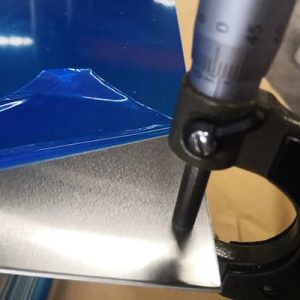
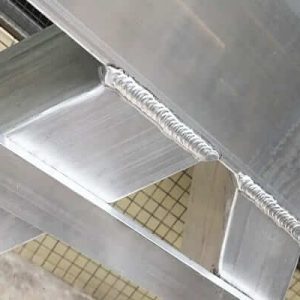


When applications demand exceptional strength, superior corrosion resistance, particularly in harsh marine environments, and excellent weldability, 5086 aluminum sheet emerges as a prime material choice.
This high-performance alloy has carved a significant niche in industries where durability and reliability are non-negotiable.
This comprehensive guide delves into the intricate details of 5086 aluminum sheet, exploring its properties, fabrication characteristics, applications, and how it compares to other alloys, providing you with a profound understanding of this robust material.
Contents
show
1. Introduction to 5086 Aluminum Sheet
What Exactly is 5086 Aluminum Sheet?
5086 aluminum sheet is a high-strength, non-heat-treatable alloy belonging to the 5xxx series of aluminum alloys. Its primary alloying elements are magnesium (typically around 4%) and manganese, which together impart its remarkable characteristics.
This composition makes it renowned for its exceptional performance in aggressive environments, especially saltwater, earning it the “marine-grade” designation. Furthermore, it retains good strength even after welding.
Why 5086 Aluminum Sheet Matters: Market Significance
The importance of 5086 aluminum sheet lies in its ability to solve critical engineering challenges in demanding sectors.
It is indispensable in shipbuilding, offshore structures, cryogenic tanks, and heavy-duty transportation where materials must withstand extreme conditions without faltering.
Consequently, its selection often translates to longer service life, reduced maintenance, and enhanced safety in critical applications.
2. Core Characteristics & Unmatched Advantages of 5086 Aluminum Sheet
Superior Corrosion Resistance, Especially in Marine Environments
One of the hallmark features of 5086 aluminum sheet is its outstanding resistance to corrosion.
It performs exceptionally well in seawater and various other chemical environments.
This makes it a preferred choice for marine applications.
Notably, specific tempers like H116 and H321 are specially processed to provide enhanced resistance to stress corrosion cracking (SCC) and exfoliation corrosion in marine environments.
High Strength-to-Weight Ratio
5086 aluminum sheet offers one of the highest strength levels among non-heat-treatable aluminum alloys.
This high strength, combined with aluminum’s inherent low density, results in an excellent strength-to-weight ratio.
This is particularly beneficial for applications where reducing structural weight is crucial without compromising integrity, such as in transportation and shipbuilding, leading to improved fuel efficiency and payload capacity.
Excellent Weldability
This alloy exhibits excellent weldability using common fusion welding techniques like MIG (GMAW) and TIG (GTAW).
It allows for the creation of large, complex, and structurally sound welded components.
Moreover, 5086 aluminum sheet retains a good percentage of its base metal strength in the as-welded condition, a critical factor for structural applications.
Good Formability
Despite its high strength, 5086 aluminum sheet offers good formability, particularly in the annealed (O) temper.
It can be bent, drawn, and shaped using standard fabrication methods.
While it may require more force and larger bend radii compared to softer 5xxx series alloys, its workability is sufficient for a wide range of structural designs.
Outstanding Performance at Low Temperatures (Cryogenic Suitability)
A significant advantage of 5086 aluminum sheet is its excellent performance at cryogenic temperatures.
Unlike many ferrous metals that become brittle at low temperatures, 5086 retains, and can even slightly increase, its strength and ductility at sub-zero conditions.
This makes it ideal for constructing tanks and vessels for liquefied natural gas (LNG) and other cryogenic liquids.
Good Fatigue Strength
5086 aluminum sheet demonstrates good resistance to fatigue, meaning it can withstand repeated cyclic loading without premature failure.
This is an important consideration for structures subjected to dynamic stresses, such as ship hulls experiencing wave action or vehicle components undergoing vibrations.
3. In-Depth Material Specifications: The Technical Details of 5086 Aluminum
A thorough understanding of 5086 aluminum sheet requires a look at its specific material properties.
Chemical Composition
The precise chemical makeup of 5086 aluminum sheet dictates its performance.
Magnesium (Mg) is the principal alloying element, significantly contributing to its strength and corrosion resistance.
Manganese (Mn) further enhances strength and controls grain structure.
| Element | Content (%) | Role |
|---|---|---|
| Silicon (Si) | ≤ 0.40 | Impurity; can affect weldability if too high. |
| Iron (Fe) | ≤ 0.50 | Impurity; affects ductility and corrosion resistance if excessive. |
| Copper (Cu) | ≤ 0.10 | Kept low to maintain good corrosion resistance. |
| Manganese (Mn) | 0.20 – 0.7 | Increases strength, improves strain hardening, controls grain size. |
| Magnesium (Mg) | 3.5 – 4.5 | Primary strengthening element, enhances corrosion resistance. |
| Chromium (Cr) | 0.05 – 0.25 | Improves corrosion resistance, controls grain structure, reduces SCC. |
| Zinc (Zn) | ≤ 0.25 | Impurity. |
| Titanium (Ti) | ≤ 0.15 | Grain refiner. |
| Others, each | ≤ 0.05 | |
| Others, total | ≤ 0.15 | |
| Aluminum (Al) | Balance | Base metal. |
Typical ranges based on standards like ASTM B209, EN AW-5086.
Mechanical Properties (Segmented by Temper)
The mechanical properties of 5086 aluminum sheet vary significantly with its temper (degree of strain hardening and thermal treatment).
| Temper | Tensile Strength (Ultimate, MPa min) | Yield Strength (0.2% offset, MPa min) | Elongation (% in 50mm, min) | Hardness (Brinell HBW, typical) | Shear Strength (MPa, typical) |
|---|---|---|---|---|---|
| O | 260 – 310 | 115 – 145 | 12 – 22 | 63 – 70 | 165 |
| H32 | 290 – 345 | 205 – 240 | 10 – 12 | 77 – 85 | 170 |
| H34 | 310 – 365 | 240 – 275 | 8 – 10 | 83 – 90 | 180 |
| H111 | 275 | 125 | 12 | 70 | 165 |
| H112 | 270 | 115 | 12 | 67 | 160 |
| H116 | 290 | 205 | 10 | 77 | 170 |
| H321 | 290 | 205 | 10 | 77 | 170 |
Values are typical or minimums as per common standards. H116 and H321 tempers are specifically for enhanced resistance to exfoliation and stress corrosion cracking in marine environments.
Fatigue strength for 5086 is generally good, often around 125-150 MPa for 5×10^7 cycles, but varies with temper and specific conditions.
Physical Properties
| Property | Value (Approximate) |
|---|---|
| Density | 2.66 g/cm³ (0.096 lb/in³) |
| Melting Range | 574 – 638 °C (1065 – 1180 °F) |
| Thermal Conductivity | 117 – 126 W/m·K (at 25 °C, depending on temper) |
| Electrical Resistivity | 5.6 – 5.9 µΩ·cm (at 20 °C) |
| Electrical Conductivity | 29 – 31% IACS |
| Modulus of Elasticity (Tension) | 71 GPa (10,300 ksi) |
| Coefficient of Thermal Expansion | 23.8 µm/m·°C (20-100 °C) |
4. Fabrication & Processing Performance: Working with 5086 Aluminum Sheet
Understanding how to work with 5086 aluminum sheet is key to leveraging its benefits.
Formability Insights
While stronger than many other aluminum alloys, 5086 aluminum sheet still offers good formability.
- Bending: Possible, but requires larger bend radii compared to softer alloys like 5052, especially in harder tempers. The ‘O’ temper is most formable. Always check specific temper guidelines for minimum bend radii to avoid cracking.
- Drawing and Stamping: Suitable for moderate drawing and stamping operations. Proper tooling, lubrication, and consideration of the material’s strength are essential.
- Roll Forming: Can be roll-formed into various profiles, though equipment must accommodate its higher strength.

Welding Excellence
5086 aluminum sheet is renowned for its excellent weldability.
- Recommended Welding Methods:
- Gas Metal Arc Welding (GMAW / MIG): Commonly used for its speed and efficiency, especially in thicker sections.
- Gas Tungsten Arc Welding (GTAW / TIG): Offers excellent control and high-quality welds, suitable for critical joints and thinner materials.
- Suitable Filler Alloys:
- 5183: Often the preferred filler for welding 5086 to itself, as it offers a closer strength match to the base metal and good corrosion resistance.
- 5356: A general-purpose filler for 5xxx series alloys, also suitable, but may result in slightly lower weld strength compared to 5183.
- 5556: Provides higher weld strength than 5356, can be an alternative to 5183.
- Key Welding Considerations:
- Surface Preparation: Thorough cleaning to remove oxides, oils, and contaminants is critical before welding. Use a dedicated stainless steel brush or chemical deoxidizers.
- Heat Input Control: Manage heat input to minimize distortion and potential HAZ softening.
- Shielding Gas: High-purity argon or argon-helium mixtures are typically used.
- HAZ Softening: As a non-heat-treatable, strain-hardened alloy, the heat-affected zone (HAZ) will experience some annealing, leading to a localized reduction in strength. This must be considered in design.
Machinability
The machinability of 5086 aluminum sheet is generally rated as fair to good.
- General Characteristics: It can be machined effectively, though it is tougher than lower-strength aluminum alloys. Chip control can sometimes be a challenge.
- Tooling Recommendations: High-speed steel (HSS) tools can be used, but carbide-tipped tools are recommended for better tool life and higher cutting speeds, especially for harder tempers. Sharp tools with positive rake angles are beneficial.
- Cutting Fluid Usage: Ample use of cutting fluids is advised to reduce tool wear, prevent built-up edge, and improve surface finish.
- Impact of Temper: Harder tempers (e.g., H32, H34) generally offer slightly better machinability with improved chip breakage compared to the softer ‘O’ temper.
Surface Treatment Options
While 5086 aluminum sheet boasts excellent natural corrosion resistance, surface treatments can be applied for specific needs.
- Anodizing: Can be anodized, primarily to further enhance its corrosion resistance and provide a harder surface. However, it’s not typically chosen for decorative anodizing as its appearance may not be as uniform or bright as alloys like 5005. The primary goal is functional protection.
- Painting & Coating: Commonly painted or coated for marine applications to provide additional protection, anti-fouling properties, or for aesthetic/identification purposes. Thorough surface preparation, including cleaning and a suitable conversion coating or primer, is vital for good adhesion.
- Conversion Coatings: Chemical conversion coatings (e.g., chromate or non-chrome alternatives) can be applied to enhance corrosion resistance and provide an excellent base for paint adhesion.
5. Application Areas of 5086 Aluminum Sheet
The unique properties of 5086 aluminum sheet make it the material of choice in several demanding industries.
Shipbuilding and Marine Sector (Flagship Application)
This is where 5086 aluminum sheet truly shines. Its high strength, excellent weldability, and superior resistance to saltwater corrosion make it ideal for:
- Ship and boat hulls (from small crafts to larger vessels)
- Superstructures, masts, and decking
- Fishing vessels, patrol boats, yachts, workboats
- Offshore oil and gas platforms and related marine structures
Pressure Vessels and Storage Tanks
Its good strength, weldability, and performance at low temperatures make 5086 aluminum sheet suitable for:
- Cryogenic storage tanks for liquefied natural gas (LNG), liquid nitrogen, and other liquefied gases.
- Chemical storage tanks and process vessels where corrosion resistance is paramount.
Heavy-Duty Transportation
The high strength-to-weight ratio benefits transportation applications:
- Dump truck bodies and tipper trailers
- Rail cars and components
- Tanker trucks for transporting various liquids
- Military vehicles
Welded Structural Applications in Aggressive Environments
Beyond marine use, 5086 aluminum sheet serves well in:
- Bridges, walkways, and platforms exposed to corrosive industrial or coastal atmospheres.
- Infrastructure components requiring long-term durability with minimal maintenance.
Armor Plate (Certain specialized tempers/specifications)
In specific tempers and thicknesses, 5086 aluminum sheet can be used for ballistic protection applications, offering a lightweight alternative to steel armor.
6. 5086 vs. Other Common Aluminum Alloys
Understanding how 5086 aluminum sheet compares to other frequently used aluminum alloys is crucial for making informed material selections tailored to specific application requirements.
| Feature | 5086 Aluminum Sheet | 5052 Aluminum Sheet | 5083 Aluminum Sheet | 6061-T6 Aluminum Sheet |
|---|---|---|---|---|
| Primary Alloying Elements | Mg, Mn | Mg | Mg, Mn | Mg, Si |
| Heat Treatable | No (Strain Hardened) | No (Strain Hardened) | No (Strain Hardened) | Yes |
| General Strength | High | Medium | Very High (Slightly higher than 5086) | High (in T6 temper) |
| As-Welded Strength | Good retention | Good retention (relative to base) | Good retention | Significant reduction unless post-weld heat treated |
| Corrosion Resistance (General) | Excellent | Very Good | Excellent | Good |
| Corrosion Resistance (Marine) | Superior (especially H116/H321 tempers for SCC resistance) | Good (but less resistant to SCC than specialized 5086/5083) | Superior (especially H116/H321 tempers for SCC resistance) | Moderate (can be prone to pitting in saltwater without protection) |
| Formability | Good (but less than 5052 due to higher strength) | Excellent | Good (similar to 5086, slightly less formable due to strength) | Fair to Good (less formable than 5xxx series, especially in T6) |
| Weldability | Excellent | Excellent | Excellent | Good (but HAZ strength loss is a key concern) |
| Cryogenic Performance | Excellent | Good | Excellent | Good |
| Typical Applications | Shipbuilding, marine structures, pressure vessels (cryogenic), heavy-duty transport | General sheet metal work, marine components (less critical), fuel tanks, appliance parts | Shipbuilding, marine structures, LNG tanks, rail cars, armor plate | General structural applications, automotive parts, bicycle frames, aerospace components |
| Key Advantage | High strength with superior marine corrosion resistance & weldability | Excellent formability & good general corrosion resistance | The highest strength among non-heat-treatable alloys, marine-grade | High strength-to-weight ratio (heat-treated), versatile |
Making the Right Choice: When is 5086 the Ideal Solution?
Choose 5086 aluminum sheet when your application demands:
- Exceptional resistance to saltwater and general corrosion.
- High as-welded strength for structural integrity.
- A good balance of strength and formability for robust structures.
- Reliable performance at cryogenic temperatures.
- Durability in demanding marine, transportation, or industrial environments where other alloys might falter.
7. Availability: Forms, Sizes, and Standards for 5086 Aluminum
5086 aluminum sheet is commercially available in various forms and sizes to meet diverse project needs.
Common Forms
- 5086 Aluminum Sheet: Thinner gauge material, typically up to 6mm (0.25 inches).
- 5086 Aluminum Plate: Thicker material, often used for robust structural applications. 5086 aluminum plate is very common due to its use in shipbuilding and pressure vessels.
- 5086 Aluminum Coil: Can be supplied in coil form for continuous processing.
Typical Thickness, Width, and Length Ranges
- Thickness: Ranges from approximately 0.5mm (0.020 inches) for sheet up to 150mm (6 inches) or more for plate.
- Width & Length: Standard widths (e.g., 1220mm, 1500mm, 2000mm) and lengths (e.g., 2440mm, 3000mm, 6000mm) are common. Custom sizes are often available from suppliers.
Key International and National Standards Governing 5086
5086 aluminum sheet and plate are manufactured to meet stringent international and national standards:
- ASTM B209: Standard Specification for Aluminum and Aluminum-Alloy Sheet and Plate.
- ASTM B928/B928M: Standard Specification for High Magnesium Aluminum-Alloy Sheet and Plate for Marine Service and Similar Environments (specifically covers H116 and H321 tempers).
- EN AW-5086 (Europe): Conforms to EN 485 (Sheet, Strip, Plate) and EN 573 (Chemical Composition).
- Classification Society Approvals: For marine applications, 5086 aluminum sheet often carries approvals from classification societies like DNV (Det Norske Veritas), ABS (American Bureau of Shipping), Lloyd’s Register, RINA, etc., ensuring it meets specific requirements for shipbuilding.
8. Important Considerations & Potential Limitations When Using 5086 Aluminum
Elevated Temperature Performance
5086 aluminum sheet is generally not recommended for sustained service at temperatures above 65°C (150°F).
Prolonged exposure to elevated temperatures can lead to “sensitization,” where magnesium-rich precipitates form along grain boundaries, making the alloy susceptible to intergranular corrosion and stress corrosion cracking.
Strength Reduction in Heat Affected Zone (HAZ) After Welding
As a non-heat-treatable, strain-hardened alloy, the heat from welding will anneal the material in the HAZ, resulting in a reduction in strength in that localized area.
This reduction must be accounted for in the design of welded structures.
Formability
While categorized as having good formability, its higher strength means it is less ductile and requires more force to form compared to softer aluminum alloys like 3003 or 5005.
Larger bend radii are typically needed.
Cost Factor
Due to its higher alloy content and specialized processing for certain tempers (like H116/H321), 5086 aluminum sheet can be more expensive than general-purpose aluminum alloys.
However, its long-term performance and durability often justify the initial investment in demanding applications.
Stress Corrosion Cracking (SCC) Mitigation
For critical applications in corrosive environments, especially marine, it is crucial to select appropriate tempers like H116 or H321.
These tempers are specifically processed to stabilize the microstructure and maximize resistance to SCC and exfoliation corrosion.
9. Conclusion
5086 aluminum sheet stands as a formidable material choice for applications demanding a potent combination of high strength, exceptional corrosion resistance (particularly in marine settings), excellent weldability, and good low-temperature performance.
Its proven track record in shipbuilding, pressure vessel construction, and heavy-duty transportation underscores its reliability and durability.
While considerations such as elevated temperature limitations and HAZ softening in welds are important, proper design and material selection, including specific tempers like H116 and H321 for marine service, enable 5086 aluminum sheets to deliver outstanding long-term performance in some of the most challenging environments.
FAQs
Q1: Is 5086 aluminum suitable for prolonged saltwater exposure?
A: Yes, absolutely. 5086 aluminum sheet, especially in tempers like H116 and H321, offers excellent resistance to saltwater corrosion and is a primary choice for marine applications.
Q2: Can I weld 5086 aluminum easily? What filler should I use?
A: Yes, 5086 aluminum sheets have excellent weldability using MIG (GMAW) or TIG (GTAW) processes. 5183 filler alloy is often preferred for a close-strength match, though 5356 or 5556 can also be used.
Q3: How does 5086 compare in strength to 5052 or 6061?
A: 5086 aluminum sheet is significantly stronger than 5052. Compared to 6061-T6, 5086 may have lower tensile and yield strength in its base form, but it retains a higher percentage of its strength after welding without requiring post-weld heat treatment, which is a major advantage for large welded structures.
Q4: Is 5086 aluminum heat-treatable?
A: No, 5086 aluminum sheet is a non-heat-treatable alloy. Its strength is achieved through alloying with magnesium and manganese, and by strain hardening (work hardening), designated by H-tempers.
Q5: What’s the main difference between 5086 and 5083 aluminum?
A: 5086 and 5083 are very similar high-strength, marine-grade alloys. 5083 typically has slightly higher magnesium content, potentially offering marginally higher strength. 5086 aluminum sheet is sometimes noted for slightly better stress corrosion cracking resistance in certain tempers. In many applications, they are considered interchangeable.
Q6: Why are H116 or H321 tempers important for marine use?
A: The H116 and H321 tempers for 5086 aluminum sheets (and 5083) are specifically processed to stabilize the microstructure against sensitization. This dramatically improves their resistance to exfoliation corrosion and stress corrosion cracking (SCC) when exposed to marine environments for extended periods, making them essential for critical shipbuilding applications.
Related products
-

 Aluminum Sheet Plate, Products
6005 Aluminum Sheet
Name
6005 Aluminum SheetThickness
0.3-6.0 mmWidth
1000 mm – 2600 mm,CustomizeSurface
Bright, polished, hair line, brush, sand blast, checkered, embossed, etching, etc.Technical
Wrought alloy、Cold rolling (CC)、Heat treated (T4/T6) -

 Aluminum Sheet Plate
High‑Strength 2024 Aluminum Sheet Plate – Superior Lightweight Performance
¥6,800.00Elevate your projects with 2024 Aluminum Sheet Plate, offering an exceptional strength‑to‑weight ratio, outstanding corrosion resistance, and reliable fatigue strength—ideal for aerospace, automotive, and marine applications.
-
 Aluminum Sheet Plate
5083 Aluminum Sheet
¥3,780.00Discover high-performance 5083 aluminum sheet, engineered for shipbuilding, automotive, and structural applications. Superior corrosion resistance, weldability, and durability.
-

 Aluminum Sheet Plate
1070 Aluminum Sheet Plate
¥3,300.00Explore the chemical composition, corrosion resistance, and manufacturing process of 1070 aluminum sheet. See why engineers choose it for bus bars, heat exchangers, and decorative panels.
-

 Aluminum Sheet Plate
3105 Aluminum Sheet
¥3,450.00Learn why 3105 aluminum sheet is the go-to for packaging, construction, and transportation. With tensile strength up to 210 MPa (H34 temper), food-grade safety, and easy deep drawing, it delivers…
-

 Aluminum Sheet Plate
3104 Aluminum Sheet
¥3,500.00Explore the key features of 3104 aluminum sheet, including its excellent corrosion resistance, formability, and strength. Understand its production process and how it compares to other aluminum alloys in the…
-
 Aluminum Sheet Plate
5005 Aluminum Sheet
¥3,680.00Unlock the potential of 5005 aluminum sheet, ideal for superior anodized finishes in architectural, decorative, and electrical uses. Learn its benefits and why it stands out.
-
 Aluminum Sheet Plate
5052 Aluminum Sheet
¥5,880.005052 aluminum sheet belongs to the 5000 series aluminum alloy. The main added element is Mg. It is obtained by rolling the aluminum alloy. It has strong corrosion resistance and…
-

 Aluminum Sheet Plate
6061 Aluminum Sheet
¥5,450.006061 aluminum sheet provided by Langhe-Alu is a popular industrial material. With its excellent comprehensive performance, it is widely used in aerospace, machinery manufacturing, shipbuilding, automotive industry and architectural decoration.
-
 Aluminum Sheet Plate
2219 T37 Aluminum Sheet
¥10,714.002219 T37 aluminum sheet is a high-strength alloy sheet in the 2000 series aluminum alloy, which is widely used in aerospace, marine engineering, high temperature environment and other fields.