Contents
show
1. Introduction
Defining 1070 Aluminum Sheet
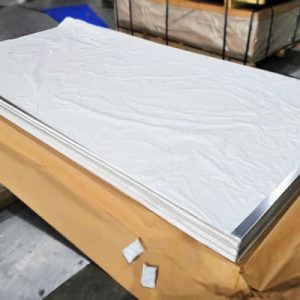
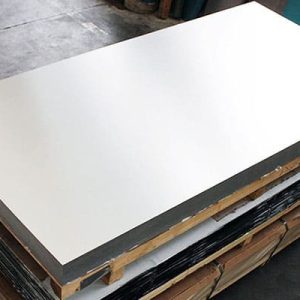
Among the 1xxx series, 1070 aluminum sheet stands out with a minimum aluminum content of 99.7%.
In the EN AW-1070 (EU) and ASTM B209 (USA) standards, 1070 maintains tight control over impurities—iron ≤ 0.25% and silicon ≤ 0.15%—to ensure outstanding purity.
Manufacturers typically produce 1070 sheet in thicknesses ranging from 0.2 mm up to 6 mm, with widths up to 2000 mm for industrial-scale applications.
Its high-purity composition delivers exceptional electrical conductivity (≈ 62% IACS) and thermal conductivity (≈ 235 W/m·K), making it ideal for specialized uses where performance matters more than structural strength.
Overview of Aluminum 1000 Series
1000 series aluminum represents the purest commercially available wrought alloys, prized for their superior conductivity and corrosion resistance.
These alloys contain at least 99.0% aluminum, with only trace amounts of other elements.
Engineers and designers favor the 1000 family—ranging from 1050 through 1100—for applications demanding exceptional electrical or thermal performance.
Importance and Market of 1070 Aluminum Sheet
The global market for pure aluminum sheets like 1070 has grown steadily, driven by increased demand in electronics, chemical processing, and architectural industries.
According to industry analyses, the 1000-series segment accounted for more than 20% of worldwide aluminum sheet consumption in 2023, with 1070 representing a significant portion due to its balanced purity and formability.
As manufacturers push for lighter, more energy-efficient designs—especially in electrical equipment and heat exchangers—the market for 1070 sheet continues to expand.
2. Chemical Composition and Alloy Classification
Chemical composition and element effects
| Element | Composition Limit | Effect / Notes |
|---|---|---|
| Aluminum (Al) | ≥ 99.70 % | Provides high conductivity and corrosion resistance; forms passive oxide layer. |
| Iron (Fe) | ≤ 0.25 % | Slightly increases strength; excessive Fe can reduce ductility and conductivity. |
| Silicon (Si) | ≤ 0.15 % | Refines grain structure during casting; high Si lowers conductivity and formability. |
| Copper (Cu) | ≤ 0.05 % | Improves strength marginally; concentrations above limit degrade electrical performance. |
| Manganese (Mn) | ≤ 0.03 % | Enhances strength and work hardening; minimal impact on conductivity at this level. |
| Titanium (Ti) | ≤ 0.03 % | Aids grain refinement; excessive Ti may create hard spots, affecting formability. |
| Other elements (each) | ≤ 0.05 % | Trace elements (e.g., Zn, Mg) kept low to prevent unwanted phases; excessive total impurities (> 0.10 %) reduce purity and performance. |
Comparison with Related 1xxx Alloys
1050 vs. 1070: While 1050 contains ≥ 99.5% aluminum, 1070’s higher purity (≥ 99.7%) translates to about 0.5% higher conductivity and marginally better corrosion resistance.
1060 vs. 1070: 1060 (≥ 99.6% Al) offers slightly better mechanical formability than 1050 but still lags behind 1070 in conductivity.
1100 vs. 1070: 1100 (≥ 99.0% Al) provides slightly more mechanical strength but sacrifices about 2–3% conductivity compared to 1070. Designers choose 1070 when conductivity or thermal performance outweighs the need for extra strength.
3. Manufacturing Process of 1070 Aluminum Sheet
3.1. Ingot Casting and Homogenization
Manufacturers begin with high-purity aluminum ingots, produced via direct chill (DC) casting.
Molten aluminum cools rapidly in a water-cooled mold, then undergoes a homogenization heat treatment at 400–450 °C for up to 16 hours.
This process eliminates chemical segregation, ensuring uniform composition and reducing the risk of hot tearing during rolling.
3.2. Hot Rolling and Cold Rolling
After homogenization, producers perform hot rolling to reduce slab thickness from roughly 250 mm down to 6 mm in multiple passes at ~450 °C–500 °C.
Hot rolling refines the grain structure and eliminates casting defects.
Subsequent cold rolling at room temperature further reduces the material to final thicknesses—down to 0.2 mm for thin gauge sheet—while enhancing surface finish and mechanical properties.
Cold rolling work-hardens the sheet, raising its strength before annealing.

3.3 Annealing and Temper Control
Full Anneal (O-Temper)
To restore ductility lost during cold work, sheet coil enters a continuous annealing furnace.
Manufacturers heat the coil to 350 °C–450 °C for 15–30 minutes in an inert or low-oxygen atmosphere (nitrogen or forming gas).
This treatment relaxes internal stresses and yields an O-temper sheet with tensile strength around 70–90 MPa and elongation ≥ 35%.
Work-Hardened Tempers (H-Tempers)
If the application calls for higher strength, engineers convert the O-temper to specific H-tempers by light cold working:
- H12: ~10% cold reduction yields tensile ~80–100 MPa and elongation ≥ 25%.
- H14: ~20% reduction delivers tensile ~85–115 MPa and elongation ≥ 20%.
- H16: ~30% reduction results in tensile ~95–125 MPa and elongation ≥ 15%.
3.4 Surface Treatment and Finishes
- Mill Finish
The default surface remains as-rolled from cold rolling, exhibiting fine longitudinal rolling lines. Typical thickness tolerances fall within ± 0.01 mm. This finish suits applications where subsequent forming, welding, or coating occurs. - Bright-Annealed (BA) Finish
When high reflectivity or aesthetic appeal matters, manufacturers offer BA-finish 1070. In a reducing atmosphere furnace (often a hydrogen/nitrogen mix) at 350 °C–400 °C, the sheet develops a mirror-like sheen. Reflectivity can exceed 80%, making BA-1070 ideal for lighting reflectors, decorative panels, or solar reflectors. - Chemical Cleaning
For food processing or pharmaceutical contact, the sheet passes through a chemical cleaning line—alkaline degreasing followed by acid dip (phosphoric or nitric) to remove any residual surface impurities. A final deionized water rinse and nitrogen blow-dry ensure the material meets FDA 21 CFR 175.300 standards. - Anodizing and Coating Preparations
When enhanced corrosion resistance or color stability is required, 1070 sheet undergoes pre-anodizing (Type II or Type III) or is prepared for powder coating/PVDF topcoats. These operations start with a chromate conversion coating in a trivalent chromium bath (e.g., 18 g/L Cr³⁺ at 25 °C for 60 seconds) to promote adhesion of subsequent layers.
4. Physical and Mechanical Properties
1070 aluminum sheet combines high purity with versatile mechanical behavior.
Understanding its physical and mechanical properties allows engineers and designers to select the correct temper and thickness for a given application.
4.1. Physical Properties
- Density: 2.71 g/cm³
At this density, 1070 weighs roughly one-third as much as steel. That weight savings translates to lighter end products and reduced shipping costs. - Thermal Conductivity: ~235 W/m·K
This level of conductivity ranks 1070 among the top-performing alloys for heat transfer. In heat exchanger fins or bus bars, it ensures rapid, uniform dissipation of thermal energy. - Electrical Conductivity: ~62 % IACS (International Annealed Copper Standard)
With conductivity at 62 % IACS—versus pure copper’s 100 %—1070 sheet remains the most economical material for electrical components that demand both good conductivity and low weight. - Melting Range: 658 °C – 660 °C
The narrow melting range allows precise control during soldering or brazing operations, minimizing the risk of warping or grain coarsening. - Coefficient of Thermal Expansion: 23.6 × 10⁻⁶ /°C
When designing assemblies with dissimilar materials (e.g., aluminum-to-steel bonding), engineers account for this expansion rate to avoid thermal stress or buckling as temperatures fluctuate.
4.2. Mechanical Properties by Temper
1070 sheet gains strength and loses ductility as it moves from fully annealed (O) to progressively work-hardened (H) tempers.
Below are typical values—actual results may vary slightly by producer:
| Temper | Tensile Strength (MPa) | Yield Strength (MPa) | Elongation (%) |
|---|---|---|---|
| O (Annealed) | 70 – 90 | ≤ 15 | ≥ 35 |
| H12 | 80 – 100 | 25 – 40 | ≥ 25 |
| H14 | 85 – 115 | 30 – 45 | ≥ 20 |
| H16 | 95 – 125 | 40 – 60 | ≥ 15 |
4.3. Formability and Workability
Thanks to its very high aluminum content, 1070 sheet offers exceptional formability—especially in O-temper.
- Deep Drawing: With an O-temper tensile of 70–90 MPa and elongation > 35 %, 1070 can undergo severe draws without tears or wrinkles.
- Bending and Stamping: Minimum bend radius in the O-temper sits at roughly 1 × sheet thickness (e.g., for 1 mm gauge, a 1 mm inside radius). H14 and H16 tempers require modestly larger radii (≈ 1.5–2 × thickness).
- Springback: As temper hardness increases, springback becomes more pronounced. Engineers compensate in tooling by adjusting bend angles or performing a light reduce-anneal to restore ductility.
5. Corrosion Resistance and Chemical Stability
5.1. Natural Oxide Layer Formation
Aluminum naturally forms a thin Al₂O₃ passive film (2–5 nm) on its surface within minutes of air exposure.
This oxide layer prevents further oxidation and shields the base metal from corrosive agents.
In 1070, the high aluminum content ensures a uniform and continuous oxide barrier, granting excellent resistance in most atmospheric conditions.
5.2. Behavior in Various Environments
- Freshwater and Mild Chemical Environments: 1070 exhibits outstanding resistance to neutral and mildly alkaline solutions, making it suitable for food processing tanks and chemical piping.
- Marine and Coastal Conditions: In salt spray testing (ASTM B117), anodized 1070 sample panels showed minimal pitting after 1,000 hours, outperforming many other aluminum alloys.
- Acidic Environments: 1070 resists weak acids (pH ≥ 4), but prolonged exposure to strong acids (pH < 2) can compromise the oxide film. In such cases, cladding or specialized coatings become necessary.
5.3. Surface Treatments for Enhanced Durability
- Anodizing: Type II (sulfuric acid) or Type III (hard anodized) layers increase oxide thickness to 5–25 µm, boosting corrosion and abrasion resistance.
- Powder Coating (e.g., PVDF): Applied over pre-treated sheet, offers UV stability and color durability, suitable for architectural exteriors where aesthetics matter.
- Chromate Conversion Coatings (Trivalent Chromium): Provide temporary protection prior to painting or powder coating, ensuring adhesion and additional corrosion resistance.
6. Key Applications
1070 aluminum sheet’s exceptional conductivity, corrosion resistance, and formability underpin its adoption across diverse industries.
6.1. Electrical and Electronics
With conductivity near 62 % of pure copper (IACS standard), 1070 aluminum sheet serves as a cost-effective substitute for copper in many electrical components.
Compared to copper bus bars, 1070 bus bars weigh two‐thirds less.
Common Use Cases
- Bus Bars and Conductors: Data centers and industrial switchgear use 1070 bus bars for power distribution. Reduced resistive losses (≈2 % lower than 1050 alloy) translate into measurable energy savings over large installations.
- Capacitor Foils: Electronics manufacturers roll 1070 into ultra‐thin foils (~0.02 mm) for electrolytic capacitors. The high purity minimizes dielectric losses, improving capacitor efficiency and lifespan.
6.2. Chemical and Food Industry
1070 aluminum’s near‐100 % purity meets FDA 21 CFR 175.300 and EU Regulation 10/2011 for food contact surfaces.
Small iron and silicon impurities (<0.25 %) barely affect corrosion resistance, ensuring sanitary operation in food processing and chemical handling.
Typical Applications
- Mixing Vessels and Tanks: Dairy and beverage processors use 1070-lined stainless steel tanks, where a 0.5 mm aluminum liner provides excellent heat transfer and resists mild acids (vinegar, citric acid).
- Heat Exchanger Plates: In beer‐brewing wort chillers, 1070 plate fin stock boosts thermal exchange rates by up to 12 % versus 3003 aluminum alloy, reducing cooling time by 8 %.
- Conveyor Belts: Bakery lines employ 1070 conveyor panels to maintain uniform heat distribution during proofing. The corrosion‐resistant surface cleans easily with standard alkaline washdowns.

6.3. Architectural and Decorative Uses
BA‐1070 sheets deliver a mirror‐like finish that reflects natural and artificial light.
Applications in Architecture
- Interior Wall and Ceiling Panels: Retail stores and airports install BA‐1070 panels to enhance brightness and create a modern aesthetic.
- Light Fixtures and Reflectors: HVAC and lighting manufacturers integrate 1070 reflectors into downlights and LED fixtures, improving luminous efficacy by up to 8 %.
6.4. Automotive and Transportation
In heat shield and under‐hood trim panels, replacing 1 mm mild steel with 1 mm 1070 aluminum shaves ~2.0 kg per component.
Key Uses
- Heat Shields: 1070’s thermal conductivity (235 W/m·K) rapidly dissipates engine heat, protecting adjacent wiring and plastics.
- Interior Trim and Badges: The bright‐annealed finish yields a premium look for dashboards and nameplates without heavy coatings.
- Reflective Insulation: In trailer walls, 1070 laminated panels improve temperature control, reducing refrigeration unit run time by 6–8 % in hot climates.
6.5. HVAC and Heat Exchangers
Heat exchangers built with 1070 fins achieve 10–15 % higher heat transfer coefficients compared to 3003 alloy fins.
Applications
- Finned Coil Assemblies: 1070 fin stock, available in 0.1–0.15 mm thickness, forms corrugated or louvered fin geometries that maximize surface area.
- Condenser and Evaporator Plates: Chiller manufacturers select 1070 plates when rapid thermal exchange is critical, such as pharmaceutical HVAC or data center cooling.
- Ductwork and Duct Liners: Thin 1070 panels in ducting systems offer both thermal insulation and antimicrobial surfaces, improving indoor air quality and reducing energy loss by 2–3 % in long duct runs.

7. Comparison with Other Alloys and Materials
| Material | Al Content (%) | Electrical Conductivity (% IACS) | Tensile Strength (MPa) | Corrosion Resistance | Density (g/cm³) | Relative Cost | Typical Use |
|---|---|---|---|---|---|---|---|
| 1070 Aluminum | ≥ 99.7 | ~ 62 | 70 – 125 (O to H16) | Excellent natural oxide layer; withstands mild acids, alkalis, and saline environments (≥ 500 h salt spray when anodized) | 2.71 | Moderate | Electrical bus bars, heat-exchanger fins, reflective panels |
| 1050 / 1060 Al | ≥ 99.5 / 99.6 | ~ 61 / 61.5 | 65 – 120 (depending on temper) | Very good; slightly less uniform oxide than 1070; similar performance in non-aggressive media | 2.71 | Slightly lower than 1070 | General sheet metal, ductwork, basic cookware |
| 1100 Aluminum | ≥ 99.0 | ~ 60 | 70 – 145 (O to H14) | Very good; oxide film protects in most atmospheres; marginally weaker against salt spray vs. 1070 | 2.71 | Similar to 1050/1060 | Decorative trim, chemical equipment, food-contact surfaces |
| 3003 Aluminum | ~ 98.6 Al, 1.2 Mn | ~ 49 | 110 – 185 (H14 to H18) | Good; Mn helps resist corrosion but slightly lower purity can allow minor pitting in highly corrosive settings | 2.73 | Similar to 1070 | Drawn cookware, architectural panels, HVAC ducting |
| 5052 Aluminum | ~ 97.3 Al, 2.5 Mg | ~ 35 | 215 – 275 (H32 to H34) | Excellent in marine and chemical environments; Mg enhances resistance but lowers conductivity | 2.68 | Higher than 1070 | Marine hardware, pressure vessels, fuel tanks |
| Copper | ≥ 99.9 | 100 | 200 – 300 (C11000) | Good; forms cuprous oxide but less resistant in acidic/alkaline media; heavier galvanic corrosion risk | 8.96 | 3 – 5× cost of 1070 | High-performance bus bars, cables, heat exchangers |
| Stainless Steel | – | ~ 2–10 (depending on grade) | 500 – 800 (304/316) | Excellent in most environments; passive chromium oxide resists extreme corrosion but low conductivity | 7.8 – 8.0 | ~ 2× cost of 1070 | Structural components, chemical tanks, high-temp ducts |
Notes:
- 1070 vs. 1050/1060: While 1050 and 1060 contain slightly less aluminum, they offer nearly identical formability. However, 1070’s extra 0.2–0.7% purity delivers roughly 1–2% higher conductivity, crucial for high-efficiency electric or thermal applications.
- 1070 vs. 1100: 1100 trades some conductivity (≈ 60% IACS) for slightly increased strength. Engineers choose 1100 when mechanical loads exceed 1070’s capabilities, but they sacrifice 3–4% conductivity and about 5% of thermal performance.
- 1070 vs. 3003/5052: Alloys like 3003 (Al–Mn) and 5052 (Al–Mg) offer higher strength—up to 200 MPa in H32 temper—but conductivity falls to ≈ 49% IACS (3003) or 35% IACS (5052). In chemical or marine environments requiring both moderate strength and corrosion resistance, 3003 or 5052 may outshine 1070 despite lower conductivity.
- 1070 vs. Copper and Stainless Steel: Copper excels at conductivity (≈ 97% IACS) but costs 3–5× more per kilogram and weighs 3× as much. Stainless steel offers mechanical strength but only ≈ 15% conductivity and is prone to fouling in heat exchangers. For applications balancing cost, weight, and conductivity, 1070 emerges as a compelling compromise.
8. Conclusion
1070 aluminum sheet occupies a unique niche in the aluminum alloy landscape.
With ≥ 99.7% purity, it delivers exceptional electrical conductivity, thermal performance, and corrosion resistance, making it indispensable in electrical, chemical, and architectural sectors.
While it trades some strength compared to 3003 or 5052, or some conductivity compared to pure copper, its balanced properties—backed by rigorous manufacturing and tight quality controls—ensure reliable performance across diverse applications.
Related products
-
 Aluminum Sheet Plate, Products
6082 Aluminum Sheet Plate
Name
6082 Aluminum Sheet PlateThickness
0.3-200mmWidth
100mm – 2600mm,CustomizeSurface
Bright, polished, hair line, brush, sand blast, checkered, embossed, etching, etc.Technical
Hot rolled (DC)、Cold rolling (CC) -

 Aluminum Sheet Plate
High‑Strength 2024 Aluminum Sheet Plate – Superior Lightweight Performance
¥6,800.00Elevate your projects with 2024 Aluminum Sheet Plate, offering an exceptional strength‑to‑weight ratio, outstanding corrosion resistance, and reliable fatigue strength—ideal for aerospace, automotive, and marine applications.
-
 Aluminum Sheet Plate
6063 Aluminum Sheet: Achieve Flawless Finishes
¥5,800.00Known for its exceptional surface quality and superior anodizing response, 6063 Aluminum Sheet is the ideal material for architectural trim, decorative components, and applications where aesthetics are paramount.
-
Aluminum Sheet Plate
5182 Aluminum Sheet Plate
¥3,650.00Choose high‑performance 5182 aluminum sheet plate for exceptional formability, weldability, and lasting durability in marine, automotive, and industrial uses.
-

 Aluminum Sheet Plate
3104 Aluminum Sheet
¥3,500.00Explore the key features of 3104 aluminum sheet, including its excellent corrosion resistance, formability, and strength. Understand its production process and how it compares to other aluminum alloys in the…
-

 Aluminum Sheet Plate
3004 Aluminum Sheet
¥3,860.00The 3004 aluminum sheet from Langhe Aluminum Co. is a versatile material known for its corrosion resistance, moderate strength, and excellent formability. Composed primarily of aluminum and manganese, it is…
-
 Aluminum Sheet Plate
3003 Aluminum Plate
¥3,350.003003 aluminum plate: corrosion-resistant, formable, ideal for tanks, roofing & transport. Available in H14/H24/O tempers, thickness 0.2-150mm. Choose mill, embossed or painted finishes.
-

 Aluminum Sheet Plate
1000 Series Aluminum Sheet
¥3,250.001000 series aluminum sheet: known for its excellent corrosion resistance, high electrical conductivity, and formability. Ideal for applications in chemical equipment, food processing, and architectural projects
-
 Aluminum Sheet Plate
1050 Aluminum Sheet
¥3,428.001050 aluminum sheet is a commercially pure aluminum alloy (99.5% aluminum content) that belongs to the 1000 series of aluminum alloys.
-
 Aluminum Sheet Plate
2219 T37 Aluminum Sheet
¥10,714.002219 T37 aluminum sheet is a high-strength alloy sheet in the 2000 series aluminum alloy, which is widely used in aerospace, marine engineering, high temperature environment and other fields.