



Contents
show
1. Introduction
1.1 Overview of 6061 Aluminum Sheet
6061 aluminum alloy, originally known as “Alloy 61S,” was developed in 1935.
It is a precipitation-hardened aluminum alloy containing magnesium and silicon as its major alloying elements.
6061 aluminum is one of the most versatile and widely used aluminum alloys.
It belongs to the 6000 series, which is primarily alloyed with magnesium (Mg) and silicon (Si).
This alloy is known for its excellent mechanical properties, corrosion resistance, and high strength-to-weight ratio, making it ideal for a wide range of structural and industrial applications.
Unlike pure aluminum, which is soft and lacks strength, 6061 aluminum sheet undergoes a heat treatment process, improving its hardness, strength, and machinability.
It is commonly used in aerospace, automotive, marine, construction, and general manufacturing industries.
Due to its balance of strength, corrosion resistance, and ease of machining, it is a preferred material in engineering and industrial applications.
2. Chemical Composition and Basic Properties
6061 aluminum sheet exhibits a unique blend of elements that produce a well-rounded combination of strength, corrosion resistance, and machinability.
A deep understanding of its chemical composition and physical properties serves as the basis for optimizing its use in specific applications.
2.1 Chemical Composition
The alloy’s chemical composition primarily involves magnesium and silicon as its major alloying elements.
Minor additions of copper, chromium, iron, manganese, zinc, and titanium fine-tune its properties.
The table below presents typical chemical ranges for 6061 aluminum:
| Element | Typical Range (wt.%) | Role/Effect |
|---|---|---|
| Silicon (Si) | 0.4 – 0.8 | Improves fluidity in casting; ref |
| Iron ( | ≤ 0.7 | Controls grain growth and |
| Copper (Cu) | 0.15 – 0.4 | In |
| Manganese (Mn) | 0 | Enhances strength and resistance to wear |
| Magnesium (Mg) | 0. | Provides the primary strengthening mechanism via precipitation hardening. |
| Chromium (Cr) | 0.04 – 0 | Improves corrosion resistance; increases temper |
| Zinc (Zn) | ≤ 0.25 | Minor influence; may assist in |
| Titanium (Ti) | ≤ 0.15 | Controls grain |
| Others ( | – | May include elements |
Each element interacts synergistically during processing, allowing engineers to fine-tune the alloy for targeted applications.
The magnesium and silicon content combine to form Mg₂Si precipitates during heat treatment, which drives the strength improvements observed in T6 or T651 temper conditions.
2.2 Physical Properties
6061 aluminum offers several physical properties that render it a favorite among manufacturers.
These properties include a low density, high thermal conductivity, and good electrical conductivity.
Key physical properties include:
- Density: Approximately 2.70 g/cm³, which makes the alloy light enough for structural applications while maintaining robustness.
- Melting Range: Typically between 582°C and 652°C, a useful range for processes such as extrusion and welding.
- Thermal Conductivity: High thermal conductivity supports its use in applications where heat dissipation matters.
- Electrical Conductivity: While not as high as pure copper, the conductivity remains sufficient for many electrical and electronic applications.
The alloy’s low density and excellent heat management make it a primary candidate in aerospace and automotive sectors where weight reduction and thermal performance matter.
2.3 Mechanical Properties
The mechanical properties of 6061 aluminum are among its most compelling attributes.
These properties adjust significantly with various heat treatment conditions.
For instance, the T6 temper produces a high yield strength and tensile strength due to fine, uniformly distributed precipitates.
| Property | Approximate Value (T6 Temper) | Notes |
|---|---|---|
| Yield Strength | 240 – 275 MPa | Precipitation hardening |
| Ultimate Tensile Strength | 290 – 310 MPa | Uniform precipitate distribution enhances tensile strength. |
| Elong | 8 – 12% | S |
| Hardness | Moderate, allowing for both forming and post-processing. | Balances strength and machinability. |
Engineers depend on these properties to ensure that structural parts, fasteners, and components retain performance under cyclic loading and thermal stresses.
A detailed understanding of mechanical properties aids in selecting the appropriate temper and processing method for each intended use.
2.4 Processing Characteristics
6061 aluminum excels during several processing stages.
Its unique alloy design supports excellent formability and weldability, critical factors that influence manufacturing efficiency.
2.4.1 Formability
Engineers enjoy 6061 aluminum’s formability during various forming operations, including bending, deep drawing, and stamping.
The alloy retains enough ductility to allow complex shapes to form without cracking.
Optimized heat treatments further enhance formability, making 6061 a preferred choice for structural and decorative components alike.
2.4.2 Weldability
Weldability remains a strong suit for 6061 aluminum.
The alloy withstands various welding processes—including gas tungsten arc welding (GTAW/TIG) and metal inert gas welding (MIG)—without experiencing significant degradation in strength.
While weld zones may show slightly reduced mechanical properties, modern welding techniques minimize these effects and ensure robust joint performance.
Manufacturers regularly employ pre-weld cleaning and post-weld heat treatment to maintain joint integrity.
3. Manufacturing Process and Processing Flow
Manufacturing 6061 aluminum sheet involves multiple steps, each critical to producing a high-quality final product.
The process begins with raw material selection and smelting, advances through milling and rolling, and includes specialized treatments like heat treatment and surface finishing. Manufacturers continuously innovate techniques to meet increasingly stringent industry standards.
3.1 Raw Materials and Smelting Process
Engineers source high-purity aluminum along with specific alloying elements to ensure consistency in composition.
Raw materials undergo rigorous testing before they enter the smelting furnace.
In the smelting process, aluminum ingots mix with precise quantities of magnesium, silicon, and trace elements.
The process uses controlled melting conditions and inert gas environments to avoid oxidation and contamination.
Advanced sensors and real-time monitoring ensure that temperature, composition, and flow remain within predefined parameters.
During smelting, engineers monitor:
- Temperature: Maintaining an optimal range ensures complete melting and homogeneity.
- Alloying Element Distribution: Uniform dispersion prevents weak spots in the final product.
- Impurity Levels: Minimizing impurities ensures enhanced mechanical and chemical properties.
The smelting process ultimately yields high-quality ingots or billets that serve as the starting material for the subsequent milling and rolling steps.
3.2 Milling and Rolling Process
The milling and rolling process transforms raw ingots into flat sheets with precise thickness and surface quality.
Modern mills employ computer-controlled rolling stands that adjust rolling speed, pressure, and temperature in real time.
Engineers design the rolling schedule to achieve desired mechanical properties while minimizing internal stresses.
Key steps include:
- Preheating and Forging: Engineers preheat the ingot to reduce internal stresses and then forge it to align the grain structure.
- Hot Rolling: The heated ingot passes through multiple rolling stands that reduce its thickness gradually. Hot rolling enhances the ductility and workability of the alloy.
- Cold Rolling: After hot rolling, the sheet undergoes cold rolling, which increases the final mechanical strength and dimensional accuracy. Cold rolling also provides a smoother surface finish.
- Stress Relief: Intermediate annealing operations help relieve residual stresses, ensuring that the final sheet retains its structural integrity during forming and fabrication.
The rolling process produces sheets with tight tolerances, ensuring that final dimensions meet industry specifications.
3.3 Heat Treatment and Annealing
Heat treatment plays a pivotal role in the final properties of 6061 aluminum sheet.
Engineers select specific heat treatment regimens to induce precipitation hardening, which significantly enhances strength.
Common heat treatment processes include solution heat treatment followed by artificial aging (T6) and stress-relief annealing (O temper).
- Solution Heat Treatment: Engineers heat the sheet to around 530°C–550°C to dissolve alloying elements uniformly into the aluminum matrix.
- Quenching: The rapid cooling step “freezes” the alloying elements in place, preventing premature precipitation.
- Artificial Aging: A subsequent aging process at lower temperatures precipitates fine particles that block dislocation motion, thereby increasing yield and tensile strength.
- Annealing: For applications that require enhanced ductility and formability, engineers perform annealing. This process softens the alloy by allowing grain growth and eliminating internal stresses.
The heat treatment process requires precision.
Engineers calibrate temperature, time, and cooling rates to achieve the desired temper conditions and mechanical properties.
A detailed process flow chart often guides each batch:
| Stage | Temperature (°C) | Duration | Purpose |
|---|---|---|---|
| Preheat/Initial Heating | 400 – 500 | 30 – 60 | Reduce residual stress before solution treatment. |
| Solution Heat Treatment | 530 – | 1 – 2 hours | Dissolve |
| Quenching | Ambient or water bath | Immediate cooling | Lock in |
| Artificial Aging (T6) | 160 – 190 | 6 – 10 | Precipitate strengthening phases for maximum |
| Annealing (O temper) | 350 – 400 | 2 – 4 | Enhance ductility for forming operations. |
Engineers fine-tune each parameter based on production needs and desired mechanical performance.
3.4 Surface Treatment Technology
Surface treatments enhance the performance and appearance of 6061 aluminum sheet.
Manufacturers deploy various surface finishing technologies to improve corrosion resistance, aesthetic appeal, and wear characteristics.
These processes include anodizing, powder coating, mechanical finishing, and other specialized coatings.

3.4.1 Anodizing
Anodizing involves an electrochemical process that thickens the naturally occurring oxide layer on the aluminum surface.
Engineers set up anodizing baths containing acids (commonly sulfuric acid) and pass a direct current through the solution.
This process produces a hard, corrosion-resistant finish.
Anodized surfaces maintain color fidelity, offer improved wear resistance, and allow for further dyeing if needed.
The process parameters, such as voltage and electrolyte concentration, undergo strict control to achieve uniform coating thickness.
3.4.2 Powder Coating
Powder coating provides a durable, decorative finish while offering excellent protection against environmental wear.
Engineers apply a fine, dry powder—typically a polyester or epoxy resin—to the sheet’s surface.
The coated material then passes through an oven where heat melts the powder, forming a smooth, continuous layer.
Powder coating resists chipping and provides consistent performance in harsh outdoor conditions.
Manufacturers often favor powder coating for automotive panels, architectural components, and marine parts.
3.4.3 Mechanical Finishing – Polishing, Brushing
Mechanical finishing processes such as polishing and brushing yield enhanced surface textures.
Polishing involves the use of abrasives and buffing compounds to achieve a mirror-like finish, while brushing creates a uniform, satin texture that masks minor surface imperfections.
Engineers select the appropriate mechanical process based on the intended aesthetic and performance criteria.
In many cases, these finishing processes occur in tandem with other treatments to provide both a functional and attractive surface.
3.4.4 Other Coatings
Additional coatings further diversify the performance profile of 6061 aluminum sheet.
For instance, chemical conversion coatings and specialized hybrid coatings provide improved adhesion for subsequent paint layers.
Some manufacturers also incorporate eco-friendly, low-VOC coatings to meet environmental regulations while delivering exceptional durability.
The choice of coating depends on the end-use application, environmental exposure, and customer specifications.
A summary table of surface treatment processes appears below:
| Surface Treatment | Key Features | Typical Applications |
|---|---|---|
| Anodizing | Enhances corrosion resistance; | Aerospace components, architectural panels |
| Powder Coating | Provides robust, uniform finish; | Automotive panels, marine applications |
| Mechanical Finishing | Polishing for high gloss; | Consumer electronics, decorative panels |
| Other Specialized Coatings | Chemical conversion, hybrid systems | Industrial machinery, customized design projects |
Each surface treatment method enhances the alloy’s performance while catering to specific industry needs.
4. Common Annealing Conditions
Engineers select different annealing and temper conditions to achieve the optimal balance between strength and ductility.
Common conditions include O, F, T6, and T651 tempers, each with distinct characteristics.
- O Temper (Annealed Condition):
- Properties: Provides maximum ductility and formability with minimal strength.
- Applications: Ideal for processes that require significant bending, deep drawing, or machining.
- Processing Notes: Engineers use controlled heating followed by slow cooling to relieve internal stresses.
- F Temper (As-Fabricated):
- Properties: Reflects the alloy’s condition immediately after fabrication.
- Applications: Suited for applications where no further heat treatment is necessary.
- Processing Notes: Maintains the work-hardened state that develops during rolling and forming.
- T6 Temper (Solution Heat Treated and Artificially Aged):
- Properties: Achieves high strength through controlled precipitation hardening.
- Applications: Widely used in structural components that demand high mechanical performance.
- Processing Notes: Engineers conduct solution heat treatment, rapid quenching, and subsequent artificial aging.
- T651 Temper (Solution Heat Treated, Stress-Relieved, and Artificially Aged):
- Properties: Similar to T6 but includes an extra stretching process that minimizes residual stresses.
- Applications: Often chosen for aerospace and automotive components requiring precision and uniformity.
- Processing Notes: The stretching operation occurs post-quenching and pre-aging, which helps enhance dimensional stability.
A detailed comparison of temper conditions can help fabricators choose the best option for each application.
5. Applications of 6061 Aluminum Plate
6061 aluminum sheet’s balanced properties open its usage across numerous industries.
Its combination of strength, light weight, corrosion resistance, and workability suits it to applications ranging from aerospace to sporting goods.
Below, I detail the diverse applications and explain why 6061 aluminum continues to gain popularity.
5.1 Aerospace
In the aerospace industry, every gram counts. Engineers choose 6061 aluminum for aircraft components because it offers an excellent strength-to-weight ratio and performs reliably under extreme conditions.
Key aerospace applications include:
- Fuselage Components: Lightweight yet strong panels support the structural integrity of the aircraft.
- Wing Assemblies: The alloy’s fatigue resistance and corrosion protection prove essential during cyclic loading.
- Interior Components: The smooth surface finish and anodized appearance make it ideal for cabin interiors.
5.2 Automobile
Automotive manufacturers value 6061 aluminum for its versatility.
It serves in both structural and non-structural parts:
- Chassis Components: The alloy’s high strength improves vehicle safety while reducing weight for better fuel economy.
- Engine Parts: Components like brackets and heat shields benefit from its excellent thermal management and machinability.
- Body Panels: Formability and surface treatment options allow for attractive finishes that enhance vehicle aesthetics.
5.3 Marine
Marine applications require excellent corrosion resistance and durability in saltwater environments.
6061 aluminum meets these needs with features such as:
- Hull Panels: The alloy resists saltwater corrosion while maintaining structural integrity under cyclic stresses.
- Decking Components: Lightweight panels improve fuel efficiency in marine vessels and simplify installation.
- Marine Hardware: Fasteners, brackets, and fittings manufactured from 6061 aluminum provide dependable performance in corrosive environments.
5.4 Construction
Engineers in the construction industry rely on 6061 aluminum for both decorative and load-bearing applications:
- Architectural Facades: The alloy’s ability to accept various surface finishes—including anodizing and powder coating—ensures an attractive appearance for modern building designs.
- Window Frames and Curtain Walls: High strength, low weight, and resistance to weathering make 6061 aluminum a preferred choice.
- Structural Reinforcement: When combined with other materials, the alloy provides a strong yet lightweight reinforcement option.
5.5 Transportation
Transportation equipment benefits from the alloy’s light weight and durability:
- Rail Car Components: 6061 aluminum parts reduce overall weight while preserving mechanical integrity, which enhances efficiency and lowers energy consumption.
- Trucks and Trailers: The alloy’s high fatigue resistance and weldability facilitate production of safe and long-lasting components.
5.6 Bicycle Frames
Bicycle manufacturers take advantage of 6061 aluminum’s excellent strength-to-weight ratio and ease of machining:
- Frame Tubing: Engineers design bicycle frames with high stiffness and light weight, ensuring enhanced ride quality.
- Component Fabrication: Parts like seat posts, handlebars, and forks exhibit superior performance with minimal maintenance needs.
5.7 Sporting Goods
The sporting goods industry employs 6061 aluminum in products that require both durability and aesthetic appeal:
- Golf Club Heads: The alloy’s lightweight nature improves swing speed and performance while providing excellent impact resistance.
- Tennis Rackets and Baseball Bats: High strength and vibration damping contribute to enhanced performance and user comfort.
- Fitness Equipment: Structural components in gym machines and exercise equipment benefit from the alloy’s high fatigue resistance.

5.8 General Manufacturing
Beyond specialized industries, 6061 aluminum supports various general manufacturing processes:
- Consumer Electronics: Casings, heat sinks, and internal support structures take advantage of its thermal and electrical conductivity.
- Industrial Machinery: Equipment components benefit from its machinability, corrosion resistance, and reliable mechanical properties.
- Custom Fabrication: Designers enjoy the flexibility of 6061 aluminum for prototypes, art installations, and bespoke projects.
A summary table highlighting key applications appears below:
| Industry | Applications | Key Properties Utilized |
|---|---|---|
| Aerospace | Fuselage | High strength-to-weight ratio, fatigue |
| Automobile | Chassis components, engine parts, body panels | Lightweight, high tensile strength, thermal management |
| Marine | Hull panels, deck components, marine hardware | Corrosion resistance, durability in saltwater environments |
| Construction | Fac | Formability, surface finish versatility, weather resistance |
| Transportation | Rail components, truck parts, trailers | Low weight, high fatigue resistance, weldability |
| Bicycle Frames | Frame tubing, component fabrication | Superior strength-to-weight |
| Sporting Goods | Golf club heads, tennis rackets, | Vibration damping, impact resistance, aesthetic finish |
| General Manufacturing | Consumer electronics, industrial | Versatility, machinability, and overall performance |
Each industry adapts 6061 aluminum’s properties to meet its unique performance requirements, which helps drive ongoing innovation in material processing and application development.
6. Advantages and Disadvantages of 6061 Aluminum
A balanced evaluation of 6061 aluminum’s advantages and disadvantages enables engineers and decision-makers to select the right material for a given project.
6.1 Advantages
The alloy exhibits several notable advantages:
- Excellent Strength-to-Weight Ratio:
Engineers appreciate the high strength achieved through precipitation hardening, which minimizes weight while maximizing performance. - Good Corrosion Resistance:
6061 aluminum withstands corrosive environments, including marine atmospheres, without significant degradation. - Versatile Formability:
The alloy adapts well to complex forming processes. Designers rely on its ductility during bending, deep drawing, and stamping. - Superior Weldability:
Fabricators enjoy compatibility with various welding processes such as TIG and MIG. Modern welding techniques maintain mechanical properties across joints. - Enhanced Surface Finishing Options:
The alloy accepts anodizing, powder coating, and mechanical finishing, which cater to both functional and aesthetic requirements. - Cost-Effective:
6061 aluminum strikes a balance between performance and affordability, making it a popular choice for mass production and custom fabrication alike. - Consistent Quality:
Strict quality control standards and advanced manufacturing processes ensure a reliable and repeatable product.
6.2 Disadvantages
Despite its many benefits, 6061 aluminum faces some limitations:
- Lower Strength Compared to Some High-Performance Alloys:
Alloys such as 7075 aluminum offer superior strength in high-stress applications. Engineers must weigh the benefits of improved strength against the loss of formability. - Reduced Fatigue Resistance in Welded Areas:
Welded joints can display a slight decrease in fatigue performance, requiring careful design and proper post-weld treatments. - Sensitivity to Over-Aging:
In temper conditions like T6, over-aging can lead to decreased mechanical properties. Engineers need to carefully monitor aging processes. - Limited High-Temperature Applications:
The alloy does not maintain its mechanical properties at very high temperatures, which restricts its use in extreme thermal environments.
Understanding these advantages and disadvantages helps engineers choose the most appropriate alloy and temper for their specific design challenges.
7. 6061 Aluminum Plate vs. Other Aluminum Alloys
Engineers regularly compare 6061 aluminum with other popular alloys to determine the best fit for each application.
Let’s examine key differences between 6061 and alloys such as 2024, 7075, and 6063.
Compare with 2024 Aluminum
- Strength and Hardness:
2024 aluminum generally offers higher tensile strength in the as-fabricated condition. However, 6061 achieves a better balance of strength and ductility after heat treatment. - Corrosion Resistance:
6061 outperforms 2024 in terms of corrosion resistance. Designers choose 6061 for marine and outdoor applications where environmental exposure is a factor. - Workability:
6061 aluminum processes more consistently through forming and welding operations, whereas 2024 often requires extra steps to prevent cracking and distortion.
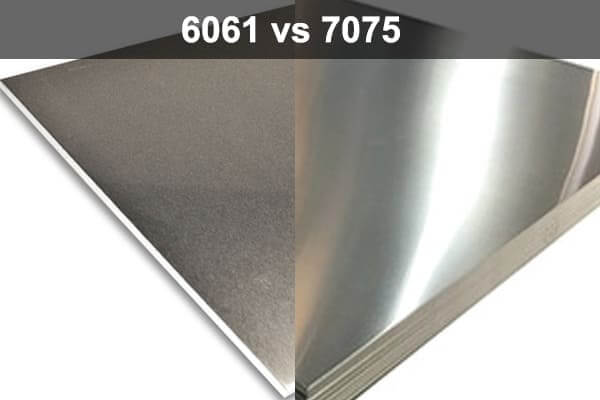
Comparison with 7075 Aluminum
- Mechanical Strength:
7075 aluminum surpasses 6061 in ultimate strength and is often used in high-stress aerospace applications. Yet, 6061’s superior weldability and ease of forming make it preferable in applications where these qualities matter. - Cost:
6061 aluminum typically costs less than 7075. This cost-effectiveness suits large-scale manufacturing where budget constraints play a role. - Application Scope:
While 7075 caters to specialized high-stress environments, 6061 proves more versatile in general manufacturing and structural applications.
Comparison with 6063 Aluminum
- Aesthetic and Finishing:
6063 aluminum usually appears in architectural extrusions and decorative applications due to its excellent surface finish. Although 6061 can also accept various surface treatments, it usually delivers higher mechanical performance. - Mechanical Properties:
6061 aluminum maintains a higher strength profile compared to 6063. Designers often select 6061 when additional load-bearing capacity is necessary.
A comparative table summarizes these differences:
| Property | 6061 Aluminum | 2024 Aluminum | 7075 Aluminum | 6063 Aluminum |
|---|---|---|---|---|
| Strength | Good balance post-heat treatment | Higher tensile | Superior ultimate strength | Lower, optimized |
| Weldability | Excellent | Moderate, prone to cracking | More difficult due to alloy | Excellent |
| Corrosion Resistance | High | Moderate to low | Moderate | High |
| Formability | Versatile | Less | Challenging in some applications | Very good |
| Cost | Cost-effective | Higher due | Highest among the compared alloys | Generally lower cost |
| Primary Applications | Aerospace, automotive, general manufacturing | Aerospace and high-performance components | High-stress aerospace parts | Architectural extrusions |
Engineers select 6061 aluminum when they require a versatile, well-balanced material that meets both structural and aesthetic demands.
8. Langhe Quality Control and Standards
Manufacturers of 6061 aluminum sheet adhere to stringent quality control standards.
One prominent example includes Langhe’s quality control system, which sets high benchmarks for production consistency and material performance.

Quality Control Protocols
Engineers at Langhe implement comprehensive quality checks at every stage of production.
These protocols include:
- Raw Material Inspection:
Suppliers must provide certificates of analysis. Engineers verify chemical composition through spectrometric analysis. - Process Monitoring:
Real-time data logging during smelting, rolling, and heat treatment guarantees that temperatures, pressures, and chemical levels remain within tight tolerances. - Dimensional Inspection:
Automated systems measure thickness, width, and flatness, ensuring sheets meet strict dimensional criteria. - Mechanical Testing:
Engineers conduct tensile, yield, and hardness tests to validate that the final product meets or exceeds specified mechanical properties. - Surface Quality Checks:
Visual and microscopic inspections identify any surface imperfections, while adhesion tests verify the durability of any applied coatings. - Final Certification:
Each batch undergoes final quality assessment before certification. Engineers document every stage, ensuring traceability and accountability.
International Standards and Compliance
Langhe quality control aligns with numerous international standards, including:
- ASTM B209:
Governs aluminum sheet and plate specifications. - ISO 9001:
Ensures quality management systems meet rigorous process and production standards. - EN 573:
Details the chemical composition and formability requirements for aluminum alloys in Europe. - MIL Standards:
Some aerospace applications require compliance with military specifications, which Langhe achieves through specialized production lines.
Manufacturers emphasize transparency and traceability. Every production run includes detailed reports accessible to customers who require full documentation for certification purposes.
9. FAQ
This section answers common questions concerning 6061 aluminum sheet.
Each question addresses a frequent area of concern for engineers, fabricators, and end-users.
Q: What is the difference between T6 and T651 tempers?
A: Engineers achieve the T6 temper by solution heat-treating the alloy, rapidly quenching it, and then artificially aging it to develop strength through uniform precipitation hardening.
In contrast, the T651 temper follows the same process as T6 but adds a controlled stretching or “stress-relief” step before aging.
This stretching minimizes residual stresses and enhances dimensional stability.
Consequently, T651 provides similar strength levels as T6 but exhibits improved resistance to distortion during subsequent machining or forming operations.
Q: Can 6061 aluminum be welded? Which welding process is best?
A: Yes, engineers regularly weld 6061 aluminum using various methods.
Gas tungsten arc welding (GTAW/TIG) offers precise control and produces clean welds.
Metal inert gas welding (MIG) also proves effective, especially for thicker materials.
Although weld zones may experience a minor reduction in strength, proper cleaning, pre-weld surface preparation, and post-weld heat treatment mitigate these issues.
Fabricators often select the process based on joint configuration, part thickness, and desired mechanical properties.
Q: Is 6061 aluminum resistant to corrosion in salt water?
A: The alloy exhibits good corrosion resistance in many environments, including salt water.
Engineers enhance its corrosion resistance further by applying surface treatments such as anodizing and powder coating.
Although 6061 aluminum naturally forms a protective oxide layer, rigorous exposure to marine conditions may require periodic maintenance or the use of additional protective coatings.
Q: What are the common applications of 6061 aluminum?
A: Engineers and designers choose 6061 aluminum for its balanced properties across various industries. Common applications include:
- Aerospace components (e.g., fuselage panels, wing assemblies)
- Automotive parts (e.g., chassis components, engine brackets)
- Marine structures (e.g., hull panels, deck components)
- Construction materials (e.g., window frames, facades)
- Transportation equipment (e.g., rail car components, truck parts)
- Bicycle frames and sporting goods (e.g., golf club heads, tennis rackets)
- General manufacturing components (e.g., consumer electronics, industrial machinery)
10. Conclusion
6061 aluminum sheet stands as one of the most versatile and reliable aluminum alloys in modern engineering. Its well-balanced properties—spanning high strength, excellent corrosion resistance, and outstanding formability—make it indispensable across a wide range of industries. Engineers and fabricators enjoy the alloy’s compatibility with various processing techniques, from rolling and heat treatment to multiple surface finishing methods.
Throughout this article, I explored the detailed chemical composition and physical properties of 6061 aluminum, highlighting the roles of magnesium, silicon, and other alloying elements.
I examined its mechanical performance in various temper conditions (O, F, T6, and T651), and I detailed each stage of the manufacturing process, including raw material selection, smelting, milling, rolling, and surface treatment technologies.
I then discussed its many applications in aerospace, automotive, marine, construction, transportation, and sporting goods, providing comparative analyses with other aluminum alloys such as 2024, 7075, and 6063.
Engineers benefit from the alloy’s advantages, including its cost-effectiveness, ease of fabrication, and reliable performance in structural applications.
As technology advances and market needs evolve, 6061 aluminum continues to play a vital role in innovation and sustainable design.
Its adaptability and proven performance secure its status as a material of choice for engineers who demand both precision and versatility.
Langhe other service: https://langhe-metal.com/
Related products
-
 Aluminum Sheet Plate, Products
6082 Aluminum Sheet Plate
Name
6082 Aluminum Sheet PlateThickness
0.3-200mmWidth
100mm – 2600mm,CustomizeSurface
Bright, polished, hair line, brush, sand blast, checkered, embossed, etching, etc.Technical
Hot rolled (DC)、Cold rolling (CC) -

 Aluminum Sheet Plate
High‑Strength 2024 Aluminum Sheet Plate – Superior Lightweight Performance
¥6,800.00Elevate your projects with 2024 Aluminum Sheet Plate, offering an exceptional strength‑to‑weight ratio, outstanding corrosion resistance, and reliable fatigue strength—ideal for aerospace, automotive, and marine applications.
-
 Aluminum Sheet Plate
5454 Aluminum Sheet Plate
¥3,600.00Choose 5454 Aluminum Sheet Plate for lightweight strength in marine decks, chemical vessels, and pressure containers. Proven reliability, easy fabrication.
-
 Aluminum Sheet Plate
5083 Aluminum Sheet
¥3,780.00Discover high-performance 5083 aluminum sheet, engineered for shipbuilding, automotive, and structural applications. Superior corrosion resistance, weldability, and durability.
-

 Aluminum Sheet Plate
Honeycomb aluminum panel
¥4,500.00Discover how honeycomb aluminum panel deliver superior flexural stiffness, thermal insulation, and fire safety—all at 70% less weight than solid metal. Ideal for façades, aerospace, and industrial design.
-

 Aluminum Sheet Plate
1070 Aluminum Sheet Plate
¥3,300.00Explore the chemical composition, corrosion resistance, and manufacturing process of 1070 aluminum sheet. See why engineers choose it for bus bars, heat exchangers, and decorative panels.
-

 Aluminum Sheet Plate
3105 Aluminum Sheet
¥3,450.00Learn why 3105 aluminum sheet is the go-to for packaging, construction, and transportation. With tensile strength up to 210 MPa (H34 temper), food-grade safety, and easy deep drawing, it delivers…
-

 Aluminum Sheet Plate
1000 Series Aluminum Sheet
¥3,250.001000 series aluminum sheet: known for its excellent corrosion resistance, high electrical conductivity, and formability. Ideal for applications in chemical equipment, food processing, and architectural projects
-

 Aluminum Sheet Plate
1060 Aluminum Sheet
¥3,468.001060 aluminum plate is a common lightweight material belonging to the 1000 series aluminum alloy. It is popular in the market due to its low price, strong corrosion resistance and…
-
 Aluminum Sheet Plate
2219 T37 Aluminum Sheet
¥10,714.002219 T37 aluminum sheet is a high-strength alloy sheet in the 2000 series aluminum alloy, which is widely used in aerospace, marine engineering, high temperature environment and other fields.